Distant Allies? Explaining U.S. Allies’ (In)action Over the Prospect of a Taiwan Strait Contingency

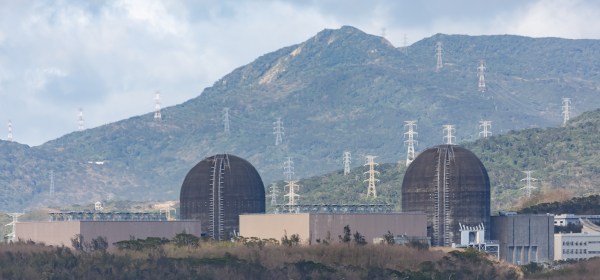
Written by Carlos Francisco Torres Morales. Using an alliance framework, this commentary argues that Tokyo and Seoul’s reluctance to convey support to Taipei publicly stems from strategic caution, since this could provoke the undesired effects they would seek to deter by extending clear security assurances, but also to retain flexibility in their redefining their stances vis-à-vis Taiwan (and China).

How Young Taiwanese Women’s Views on Romantic Romance Are Shaping Taiwanese Society

Written by Elspeth Lewis. Taiwan has the lowest birthrate in the world. This article explores this trend by putting women at its centre, challenging what we thought we knew. Beyond the vague idea of becoming more liberal, it explores the difference between the younger generation and their parents. Moreover, the traditional society does not condone the newly created ideas around dating, sex and relationships either.

A New Era for UK-Taiwan Relations: Explaining the UK’s New Interests in the Indo-Pacific and Taiwan

Written by Peter (Hung-Yao) Chu. This article explores the development of UK-Taiwan relations since the Tsai Ing-wen administration until the current William Lai administration. It suggests that Brexit and China’s increasing assertiveness serve as two of the most important factors that contribute to the UK’s reassessment of its approach toward the Indo-Pacific and Taiwan.

How Tsai Ing-Wen’s fashion sense can provide explanations for gender inequality within Taiwanese politics

Written by Carlotta Rose Busetto. This article examines Tsai Ing-wen’s fashion in her two successful presidential campaigns and how posting certain outfits online increased her electability. It finds that clothes matter in Taiwan and Tsai was not free to wear what she wanted. Moreover, clothes matter more than gender because Tsai also utilised them to promote her own political agenda.

Indigenous Identity in Taiwan’s Contemporary Cinema: From Screen to Self

Written by Ana Paloma Martínez Gómez. This article explores how Indigenous identity is portrayed on screen and how film supports cultural revitalisation and self-representation through a decolonial and gendered lens. As a new Taiwanese national identity emerges, the gap between official recognition and ongoing cultural marginalisation reveals the complex space Indigenous communities occupy.

Gender, Remittances, and Taiwan’s Migrant Worker Financial Ecosystem: Beyond the Numbers

Written by Renee Te-Jung Chen. This article looks beyond the numbers of Taiwan’s Small-Amount Remittance Services for Foreign Migrant Workers from a gender perspective. It argues that the milestone of becoming the primary remittance channel obscures the gendered patterns in adopting the new platform. It suggests that the collection of sex-aggregated data is necessary.

Divided Not Doomed: Domestic Challenges for the Lai Administration’s Foreign Policy

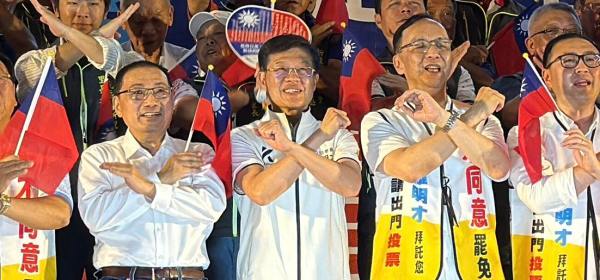
Written by Nils Peterson. This article analyses the domestic challenge for the Lai administration’s foreign policy under a KMT-aligned Legislative Yuan. The divided government poses two potential hurdles: the risk of domestic gridlock and fights over defence appropriation funding. These challenges will require some degree of compromise between the KMT and the DPP, reinforced by the recent recall campaigns.

The Strategic Defence Review 2025: Is The United Kingdom Finally Sticking Up For Taiwan?

Written by Alexandra Whitehead. This article assesses the importance of Taiwan in the UK’s Strategic Defence Review (SDR) published in June 2025. It argues that the SDR recognises Taiwan’s global significance in the context of countering China, both in security and economic terms. However, it lacks explicit contingency planning to support Taiwan and remains ambiguous towards China.

Resolution 2758 and Taiwan’s Global Struggle for Recognition

Written by Yenting Lin. This article examines the misinterpretation and misuse of UN Resolution 2758, which defines China’s representation in the UN but not the status of Taiwan. But it has been used by Beijing to endorse the “One China Policy”. Pushback against China’s interpretation has begun to emerge in recent years as Taiwan’s contributions to international society are recognised.

1 2 3 4 5 26