The Great Recall Movement: An Attempt to Restage 2016 That Instead Turned Out to be 2018?

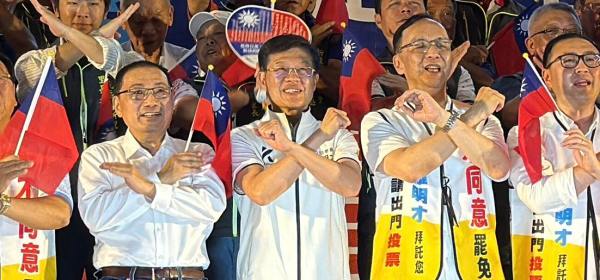
Written by Brian Hioe. This article argues that the great recall movement is more reminiscent of the 2018 than the 2016 elections. The recall movement is sometimes interpreted as the successor of the Bluebird movement last year, but the spectre of the Sunflower Movement still haunts it. Ultimately, however, the dynamics of it are fundamentally different from those of an election.

Choosing Between Confronting China or Reviving the Economy: Why Taiwan’s Recall Campaign Backfired on the Ruling Party

Written by Chang, Chunhao. This article argues that the defeat of the recall campaign indicates that Taiwanese voters are unwilling to reverse electoral outcomes through post-election manoeuvres. The DPP fails to understand the priorities of moderate, unaffiliated, or floating voters. They want responsible governance, not political revenge, and are deeply committed to the democratic process.

Beyond Tragedy and Beijing’s Cultural Monopoly: Taiwan’s Democracy Is the True Future of Chinese Civilisation

Written by Bright Isle. This article argues that the true value of Taiwan’s democracy is to be the future of Chinese civilisation, in contrast to the authoritarian CCP. Taiwan demonstrates Confucian values in its political leadership and civic education. However, Taiwan’s democracy has to be constantly defended, including deepening democratic governance and strengthening national defence.

What I saw and heard: Vatican Diplomacy and Taiwan

Written by Thomas Ching-Wei TU. This second part of the article presents possible suggestions for promoting Taiwan-Vatican relations. For instance, it could review the visa difficulties of foreign clergy and nuns and strengthen educational and technological exchanges. Only through a greater understanding of the Vatican’s special diplomacy can the friendship with Taiwan’s only European diplomatic partner be deepened.

What I Saw and Heard: Triangular Relations among Taiwan, China, and the Holy See

Written by Thomas Ching-Wei TU. This two-part article reflects on Taiwan’s diplomacy with the Holy See from a high-level politics perspective and examines how Taiwan can enhance cooperation. It argues that in addition to calling for religious freedom in China, the Taiwanese should understand the primary goals of the Vatican’s diplomacy and its differences with secular states. 

Be Water: The Dragon’s Identity and Pride Flow Across Borders

Written by Meng Kit Tang. This commentary explores how Bruce Lee’s legacy offers a compelling, non-political model for redefining Chinese identity in Taiwan.  By reframing Chinese identity as values-based, Lee serves as a bridge across generations, borders, and political divides. The article proposes civic and youth-centred initiatives that leverage Lee’s enduring appeal to foster intergenerational confidence, cross-cultural empathy, and peaceful dialogue in the Taiwan Strait.

KMT Likely to Cry Foul Over Referendum Decision by Central Election Commission

Written by Brian Hioe. The Central Election Commission (CEC) has approved a referendum on resuming operations for the recently shuttered Ma-anshan nuclear power plant, while rejecting a referendum on capital punishment. Although the KMT pushed for both referendums as part of its electoral strategy, it did not appeal to the general public with either referendum, perhaps reflecting weakness of the KMT at the local level.

China and Russia’s Cognitive Domain Influences: The Strategic Use of Narrative Manipulation

Written by Wen-Qing (Sarah) Jiang. This article studies the increasing use of cognitive tactics in information operations by China and Russia. The internal political polarisation makes Taiwan and the EU especially vulnerable to these campaigns. The article contrasts the responses of Taiwan and Transnistria to cognitive warfare, highlighting the importance of a resilient government and a vibrant civil society.

1 2 3 4 5 6 25