Remembering Shih Ming-teh 

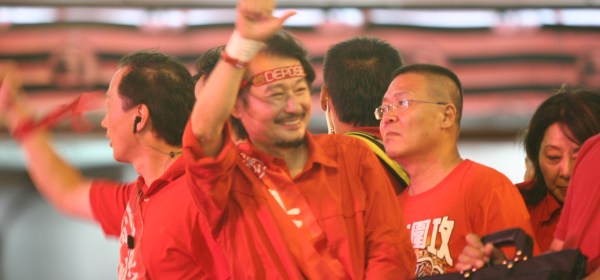
Written by Thomas J. Shattuck. On January 15, 2024, only a few days after the election, longtime democracy and human rights advocate, Nobel Peace Prize nominee, and politician Shih Ming-teh passed away. Given his place in Taiwan’s history and democratic development, it is important to remember him and his legacy. Shih is a widely known figure in Taiwan for his legacy in Taiwan’s democratisation and his role in the Kaohsiung Incident and Tangwai movement. He’s also famous for his role in the anti-corruption protests against then-President Chen Shui-bian in the early 2000s. Shih consistently called for Chen’s resignation and led the “Million Voices Against Corruption-Chen Must Go” campaign. For decades, he held politicians to high standards, and understandably so.  

Election win for the DPP, but a split legislature 

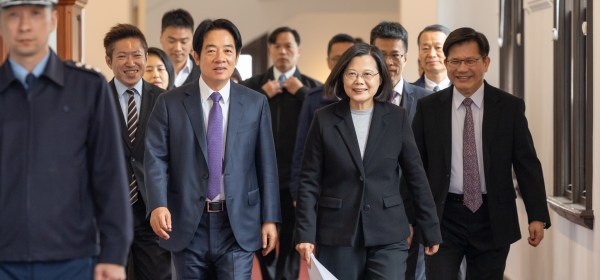
Written by Gerrit van der Wees. After a hard-fought campaign, the DPP candidate “William” Lai Ching-te and his running mate Hsiao Bikhim emerged victorious in Taiwan’s presidential election race with 40.1 % of the vote. They were elected Taiwan’s President and Vice-President respectively. The total turnout was 71.8% of the eligible voters, a bit lower than the 74.9% in the 2020 elections. The main opposition candidate in the three-way race, Messrs. Hou Yu-ih of the Chinese Nationalist Kuomintang Party, and his running mate, pro-China media personality Jaw Shaw-kang, received 33.5% of the vote, while Mr Ko Wen-je of the Taiwan People’s Party (TPP) and his running mate Cynthia Wang, came in a respectable third with 26.5% of the vote.

How Czechia Engages Taiwan 

Written by Filip Šebok. While it has been over the past few years that the Czech-Taiwanese relations have grabbed headlines over the world, the two sides’ ties have not come from nowhere. In fact, the recent intensification of cooperation has been built on a very solid foundation jointly forged by the two sides since the early 1990s. Taiwan has become an important investor in the Central European countries already in the 2000s, especially through the investment of electronic manufacturer Foxconn, which has become a major exporter and tax payer in the country.  

Taiwan-Netherlands relations: strong ties with historical weight

Written by Sense Hofstede. Taiwan and the Netherlands share a long history. The island’s central position on the critical trading networks of its time sparked Dutch interests both in the 17th century and today. Dutch-Taiwanese economic ties are strong but also increasingly under intense scrutiny as the chip war heats up. Next to strong trade ties, a 1980s arms sale is the most high-profile of the Netherlands’ maritime ​​​​security involvement with Taiwan. The historical, security and economic ties all touch upon sensitive issues. 

The EU-China Summit and the Future of EU-Taiwan Relations: Reconstructing the Normative Agenda

Written by Dominika Remžová. A few days prior to this year’s EU-China summit (the first to take place in person since the COVID-19 pandemic), the Financial Times has published an opinion piece by Anders Fogh Rasmussen, former Secretary-General of NATO, calling for the Union’s stronger support for Taiwan. The article singles out security considerations as the main reason for such a principled stance, which the author acknowledges has been taken up by only a few Central and Eastern European (CEE) leaders. This focus on security issues and small states is noteworthy, as it provides the most fruitful avenue for further strengthening of ties moving forward.

Improving Conditions of Artistic Labour and Local Economic Sustainability 

The essence of cultural policy lies in nurturing and stimulating social creativity, which involves both the preservation of classics and the kindling of future possibilities. The durability of policy development hinges on the transmission of memory and skills. Rather than being a political display, citizens occupy a central role in artistic performance, whether as creators or audience members. Does the support for creators aim to ensure the vitality and competitiveness of society, to enhance cultural production, or does its impact merely extend to safeguarding welfare measures? 

Cultural Technology and Cultural Communication Sustainability: What Is the Next Step for the “Cultural Technology Agenda”?

The rapid advancement of digital technology has brought immense convenience to human society, transcending geographical boundaries that national and geographical divisions once imposed. Information, communication, and cultural content, as well as film, television, and audio products, can now circulate across vast distances, expanding the reach and influence of transnational culture. Nations that are actively developing cultural technology and communication systems are faced with multifaceted concerns, including issues related to information security, the preservation of national identity and voice, the cultural rights of their citizens, democratic participation, collective memory, artistic creation, labour security, as well as economic and industrial considerations.

Cultural Assets and Spatial Redevelopment for Sustainability 

Since the Ministry of Culture introduced the “Regeneration of Historic Sites” policy in 2017 to harmonise cultural and spatial governance, counties and cities have been grappling with a range of challenges involving restoration, repurposing, operational management, and interdepartmental coordination. While these issues are not new, the substantial investment in the “Regeneration of Historic Sites” policy has shed light on the ongoing struggles in cultural asset management. Today, cultural heritage is no longer solely a cultural concept; it has evolved into a medium and a realm for reflecting and reconstructing urban and rural environments. Whether we refer to it as “cultural heritage” or “cultural inheritance,” the emphasis remains on preserving cultural value. Consequently, alongside the growth of developmentalism, the spirit and techniques of preservation, maintenance, and reuse have become pivotal benchmarks for reshaping urban and rural environments.

Cultural Sustainability as A Practice of Democracy

In the context of sustainable development, culture is seen as an important component of development, along with the economy, society and the environment, which are all interrelated. For the development of a country, it is necessary to go beyond the economic perspective and adopt a cultural approach, incorporating cultural policies as a key element of the development strategy. This also implies the re-democratisation of culture in all policies and actions. To actively participate in cultural activities and give their voices in determining development goals and means of development. The bottom-up approach, with the idea of people as the subject, will promote the shaping of public culture on the one hand and the practice of cultural democracy on the other.  

TACPS Cultural Petition to the 2024 Presidential Election: The Sustainability of Culture and Democratic Governance in Taiwan

People are the mainstay of Taiwan’s culture, and “freedom” is at the centre of people’s thoughts and creations. Since the early 2000s, Taiwan has undergone a series of citizen-led cultural reforms, including a series of citizens’ cultural movements from 2000 to 2010 (such as the advocacy for community development and multicultural policies), the establishment of the Ministry of Culture in 2012, the National Cultural Conference in 2017/2022, and the White Paper on Cultural Policy in 2018. With the promotion of the Cultural Fundamental Act in 2019, Taiwan has, on the one hand, established the prototype of the country’s “cultural governance” system and civic and cultural awareness, and on the other hand, demonstrated its uniqueness in practising sustainable cultural democracy and participatory cultural governance among the global society.

An Unconventional Networking Workshop: Self-care, Wellness and Community 

Written by Yung-Ying Chang. In 2021, amid the global pandemic and the sheer transformation of lives that followed, the North American Taiwan Studies Association’s (NATSA) annual conference launched its first-ever mental health-centred networking session, “Networking? Or Working on Your Net: Care Companions & Love Objects for Mental Health.” The unconventional session invited participants to use the time during an academic conference to work on something that was not purely academic: participants shared their life setbacks and frustrations not only in academia as scholars but also in life as the various roles they have assumed in response to various expectations.

Indigenous Taiwan through Critical Lenses: Comparative and Place-Based Perspectives 

Written by Yi-Yang Cheng, Ssu-Chieh Jessica Fan and Susan Hou. Centring on Indigeneity in Taiwan, the interdisciplinary roundtable “Indigenous Taiwan through Critical Lenses: Comparative and Place-Based Perspectives” conceptualized Taiwan as a grounding point for multiple geographical perspectives. Instead of positioning Taiwan as a boundary object between the East and the West, it prompted a fresh envisioning and repositioning of Taiwan as a liminal space of unbounded and interconnected possibilities. Put differently, the roundtable discussions explored alternative ways of positioning Taiwan in/and the world, including perspectives which might have previously been marginalized or eluded consideration.

1 8 9 10 11 12 14