Taiwanese Horror Games and the Ghosts from the Past

Written by Chee-Hann Wu. Taiwanese horror (taishi kongbu) is a rising genre that has claimed an important space in Taiwanese popular culture, particularly in the video game industry since the debut of Detention in 2017. These video games often incorporate elements of Taiwan’s local religions, ritual practices, and mythologies, especially the ones associated with ghosts and other supernatural beings. Although mostly implicit, many Taiwanese horror games contain hints of historical references to the 228 Incident and the White Terror under Martial Law. Malevolent monsters and ghosts become physical incarnations of state-sanctioned violence by perpetrators and accomplices and the suffering of those who were arrested, executed, or silenced. 

How Much Money Could Ghosts Make? A Case Study on the Most Ferocious Female Ghost of Taiwan – Chen Shou Niang  

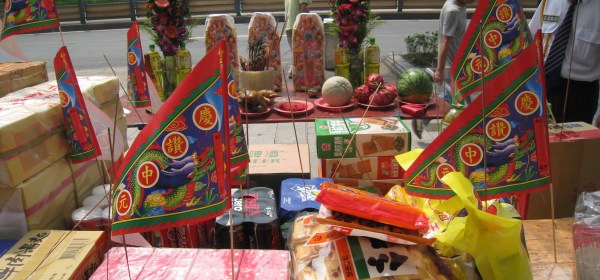
Written by Yi-Ping Wu. Staying at home, not going to the beach, or climbing mountains, and not even opening an umbrella indoors are just a few taboos everyone must remember when Ghost Month 鬼月 arrives. Although the origin of the concept of Ghost Month is uncertain, the Taiwanese still emphasize the rituals that must be practised and the taboos that must be prohibited during this period. What attracts our attention most is the colossal amount of money that the Taiwanese pay for the rituals, offerings, and joss paper (paper money) to honour their ancestors because their past loved ones could return to the world of living since the gate of the underworld would open on the first day of July on the lunar calendar. The huge income that the cultural concept of Ghost Month contributes reminds us of an interesting question to think about thoroughly: How much money the “ghosts” could make?

The Month of Wild Ghosts: Phenomenon and Thoughts on Pudu in Taiwan’s Government Organizations

Written by Liang Ting-Yu. Homeless ghosts are also known as “good brothers.” In Taiwan’s civil society, they are not Youying gong​ (有應公) who are sacrificed in ghost temples, but rather a kind of wandering spirits who do not have or appear on memorial tablets, tombstones, or graves, and who are not worshipped by anyone; there are no temples or shrines to which they can return, and no place in which they can take shelter. On the half of the seventh lunar month, commonly known as the “Ghost Month,” local families, stores and companies, temples and Wanshan shrines(萬善祠) offer sacrifices to homeless ghosts in the form of ​Zhongyuan Pudu​(中元普渡)ceremonies and ​Chaodu​ devotions(超渡法會), which are rituals that free ghosts from suffering and reincarnation.

It’s Time for the Ghost Month! 

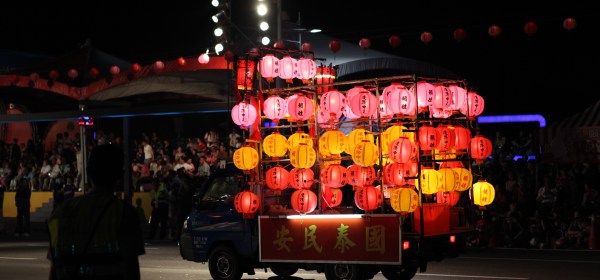
Written by Chee-Hann Wu. Beliefs in the afterlife and in spirits are universal and exist in different cultures and societies. Naturally, ritual practices, ceremonies, festivals, and customs arise, such as Halloween in Western countries and Día de Muertos in Mexico. Similarly, in Taiwan, the year’s seventh month in the lunar calendar is dedicated to ghosts and the deceased. The Gate of the Ghosts opens on the first day of Ghost Month and closes on the last day, during which the spirits enter through the gate and wander the world of the living.

Unveiling Contemporary Taiwan Identity: What Lesson can we Learn from Dcard’s Responses on the Hong Kong Immigration Wave?

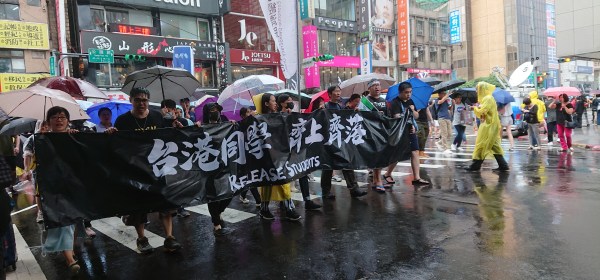
Written by Cheuk Kwan Lau. In January 2023, a BBC news article brought attention to the challenges faced by Hong Kongers who migrated to Taiwan. The news pointed out that Hong Kongers who migrated to Taiwan face institutional obstacles when applying for citizenship. Immigration laws in Taiwan were claimed to be outdated. The migrated Hong Kongers could legally inhabit Taiwan, yet they did not enjoy citizenship and civil rights.  

Instead of exploring the various institutional obstacles they face, this article takes a unique approach by examining the perceptions of the Taiwanese young generation regarding the influx of Hong Kong immigrants. It aims to uncover the contemporary Taiwanese identity constructed by this demographic, previously seen as a strong ally of Hong Kong protestors during the 2019 Anti-Extradition Law Movement.

Ethno-culture in national identity formation: what lesson can we learn from Taiwan?

Written by Olga Daksueva. The Russia-Ukraine war brought back discussions on national identity and how it is formed. National identity consists of two components: ethnocultural and political. Ethno-culture is often viewed as “the core of a nation and national identity,” which includes language, history, culture, and religion. It is argued to become the passé and to be replaced by the political component, which is designed through state sovereignty and territorial boundaries, delimiting the extent of nations and, by doing so, forming commonalities within the nations. However, the fact that we share a common territory is insufficient to get attached to the country. States also utilise various means to shape salient national identity through “rediscovery, reinterpretation and regeneration of [national] community.”

Taiwan and the Netherlands: What the East Asian Island Nation Can Learn from its Former Colonizer

Written by Charlie Smith. The King’s Field is a famous Japanese video game series created in the 1990s. But nearly 400 years ago, there was another King’s Field—the entire island nation of Taiwan. For 38 years in the 17th century, Taiwan was a colony of the Dutch Republic under the administration of the Dutch East India Company. And the Dutch king was the largest shareholder. 

“The Han people pioneers cleared the land, but the land they cleared was stolen from them, and they were forced to turn their labors toward tilling the so-called ‘king’s fields’,” wrote historian Su Beng in Taiwan’s 400 Year History. “Moreover, most of what they achieved was given over, in the form of rent or taxes, called ‘king’s field rent contributions,’ for the use and enjoyment of the Dutch.”

What is the significance of the dialogue with the Dutch community in Vancouver for 2023 TAIWANfest in Canada? 

Written by Charlie Smith. The Dutch Cultural Association of B.C. is trying to tell a more nuanced and complete story of the Netherlands, including the experiences of those who lived under Dutch colonial rule. Moreover, the association’s goal is to provide a richer understanding of how Dutch descendants should act as visitors on the unceded lands of Indigenous nations in Canada’s westernmost province. Oostindie believes that this has set his organization up well for a collaboration with this year’s TAIWANfest in Vancouver and Toronto. Oostinde discusses how Taiwan, the Netherlands and Canada can “have heartfelt discussions that bring these hidden histories forward. And we can learn about what it means for contemporary politics, how we work together, and how we consider democracies.” 

Beyond Chinese: The Evolution of Taiwanese-Canadian Identity in Canada

Written by Charlie Smith. At the height of the pandemic in 2020, a cultural producer generated considerable discussion within the Taiwanese diaspora in North America. It came when Charlie Wu wrote an article declaring: “I’m a Taiwanese Canadian, not a Chinese Canadian.” It was the managing director of the Asian-Canadian Special Events Association’s personal response to being constantly labelled as Chinese in his adopted country. In fact, Wu was even included in the list of the top 100 influential Chinese Canadians in British Columbia in a 2006 article in the Vancouver Sun. 

Time Travel Dialogue of Two Iconic Artists: Emily Carr (Canada) & Chen Cheng-Po (Taiwan)

Written by Charlie Smith. Emily Carr (1871-1945), who grew up on the West Coast of Canada, made her mark with vivid paintings of local scenery. She depicted changes in the landscape of British Columbia, touching upon industrialization. Carr was strongly influenced by Fauvism, which was advanced by Henri Matisse, André Derain, and other artists in France. Similarly, Taiwanese artist Chen Cheng-po (1895-1947) devoted much of his career to painting the natural landscape in bold, vivid colours. His oil paintings touched upon industrialization in Taiwan, and he, too, was influenced by Fauvism. 

Touring Indigenous music from Taiwan in Canada—the lessons of Kanatal

Written by Charlie Smith. Last September, when the band Kanatal walked onto the stage in front of the Vancouver Art Gallery, it marked a milestone. This was the culmination of the first Canadian tour by a group of Indigenous musicians from Taiwan. After performing in several Canadian cities, the four members—guitarist Masaw Ali, keyboard player Suana Emuy Cilangasay, singer Abus Tanapima, and drummer Vangacu Kalevuwan—were eager to impress a crowd that had gathered for the signature event of TAIWANfest Vancouver. 

A Dialogue between Taiwan and Canada

Written by Chee-Hann Wu. The world is filled with diverse cultures and histories, each with its unique narratives and connections. This special issue explores Taiwan and Canada’s fascinating cultural and historical ties. Despite their geographical distance, these two nations share surprising parallels that have shaped their identities and fostered mutual understanding. From immigration patterns to artistic influences, this special issue demonstrates how the cultural and historical connection between Taiwan and Canada is a testament to the power of shared experiences and the ability of diverse nations to forge meaningful bonds.   

1 10 11 12 13 14