Teasing Romantic and Literary Appetite: Reading Taiwan Travelogue

Written by Mu-Hsi Kao Lee. The article explores the experience of reading Taiwan Travelogue as a translated historical yuri novel. Kao Lee reflects on how the narrative, despite its clear genre and straightforward plot, evokes a sense of both satisfaction and longing in the reader. The article highlights the story’s ability to interweave historical and cultural details with the protagonists’ emotional connection, examining themes of desire, identity, and the complexities of relationships within a specific historical context.

Savouring Taiwan’s History and Experience: Reflections on the Taiwan Travelogue and Its Book Talk

Written by Tun-Jung Kuo and Li-Ting Chang. This article reflects on a book talk discussing Taiwan Travelogue, highlighting how the novel uses food to narrate Taiwan’s colonial history, cultural hybridity and female perspectives. Through detailed depictions of cuisine and memory, it challenges historical narratives and deepens understanding of Taiwan’s evolving identity amid Japanese colonial influence and localisation.

Food is politics, and so is travel. 

Written by Chee-Hann Wu. This article discusses Taiwan Travelogue and its US book tour earlier this year. It highlights the controversial marketing strategy, the extensive use of footnotes to enrich the historical context, and the categorisation of the novel as queer literature due to the evident, though subtle, romantic undertones between the two female protagonists.

Who Are the Victims of Taiwan’s Cultural Budget Disputes? The Invisible Right to Cultural Participation for People with Disabilities

Written by Hsin-Yi Chao. This article discusses cultural equity and the rights of persons with disabilities in Taiwan. It examines cultural equity subsidies since 2016, noting that despite overall budget growth, cultural equity funding remains unstable. The author highlights a case where budget cuts led to the suspension of sign language interpretation services and proposes policy recommendations to strengthen cultural equity implementation.

Love is Impossible, but Justice will not Suffice.

Written by Patricia Huang. This article analyses the budget cuts to Taiwan’s Ministry of Culture, including the freezing of funds for museums and the possible impacts of under-budgeting. It explores the debate around subsidising culture and the concept of “Cultural Exception”. The author also examines alternative funding sources for culture, taking examples from other countries, such as lotteries and TV licensing fees.

Black Cat and Black Dog: Gendered Modernity and Youth Identity in Colonial Taiwan

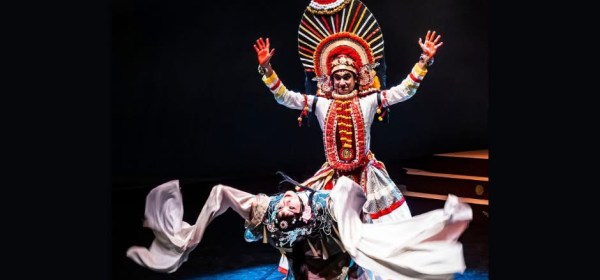
Written by Wei-chi Chen. This article explores the terms “Black Cat” and “Black Dog” in colonial Taiwan during the 1920s and 30s. These terms, originating from a Taiwanese opera song, were used to translate the Japanese “moga” and “mobo,” describing emerging gender identities and a new social identity in modern urban culture. They also reflected a shift towards liberation and a contrast with existing gender norms at that time.

Taiwan’s NSP Enabling a Better World: Perspectives from the Next Generation

Written by Ian Yi-Rong Su. Taiwan is enhancing its New Southbound Policy (NSP) in response to Chinese threats, focusing on sharing economy, technology, and youth empowerment. The NSP strengthens ties with ASEAN countries and promotes Taiwan’s role in global supply chains, especially in semiconductors. The upcoming NSP+ aims to further enhance international partnerships and Taiwan’s global presence.

1 2 3 4 5 6 14