
Written by Theodore Taptiklis. In Taiwan established internet infrastructure is being overlaid with new levels of creative functionality. These are opening up and transforming the polity and the meaning of citizenship in a range of mutually reinforcing ways. For example, Pol.is is enabling public consultation to be scaled to large numbers. Citizens can create a Pol.is identity using Facebook or Twitter and can see themselves and their concerns in relation to one another much more clearly with the help of a visual interface.
Author: Editor

Sustainable Universal Health Coverage: Lessons from Taiwan’s Single-Payer National Health Insurance – A Tribute to Uwe Reinhardt
Written by Tsung-Mai Cheng. 1 March 2020 will mark the 25th anniversary of Taiwan’s National Health Insurance (NHI), a government-run single-payer health care system that covers the health care needs of Taiwan’s 23.5 million citizens and approximately 800,000 foreign residents. Before the NHI’s Implementation in 1995, 41% of Taiwan’s population had no health insurance coverage. Access to health care depended on the ability to pay for it, which often led to bankruptcy and impoverishment; or at its worst, meant no care.

Obituary for J. Bruce Jacobs, Emeritus Professor of Asian Languages and Studies, Monash University, Melbourne
Written by Jens Damm. Bruce belonged to the almost lost generation of professors who were able to be promoted without having to write long books early in their careers. Instead he was able to write books later in his lifetime, summarising his collected experience and wisdom. His two books which I recommend are The Kaohsiung Incident in Taiwan and Memoirs of a Foreign Big Beard (Leiden and Boston: Brill, 2016) and Democratizing Taiwan (Leiden and Boston: Brill, 2012). He was most recently working on Taiwan’s history. I and all who knew him will miss him greatly!

TAIWAN AND ASIA’S YOUNGER GENERATIONS: INSIGHTS FROM THE YUSHAN FORUM
Written by Yuri Baral. At the time of Taiwan’s New Southbound Policy’s (NSP) inception, the core focus was on the value of cooperating with neighbors to better exploit each partners’ respective comparative advantages… Initial discussions aimed at defining the scope and goals of the policy did not explicitly mention a new platform for engaging with youths in Asia.

TAIWAN CAN PLAY AN IMPORTANT ROLE IN ASIA’S NEW MIDDLE POWER DIPLOMACY
Written by Hunter Marston. As great power rivalry between the US and China intensifies, Taiwan finds itself exposed to a growing number of security and economic risks. Nonetheless, current trends in middle power diplomacy present Taipei with new opportunities to mitigate these external pressures. If the Tsai Ing-wen administration can better leverage Taiwan’s unique assets and advantages, and broaden the scope of its non-traditional cooperation with other regional players, it can bolstering the island’s strategic position.
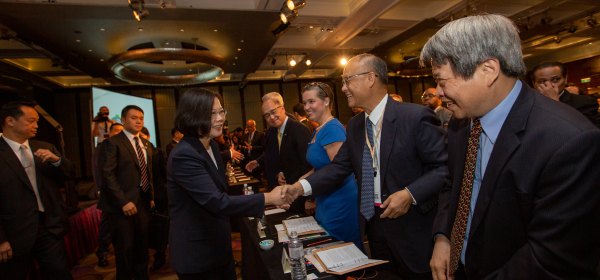
WHY TAIWAN’S NEW SOUTHBOUND POLICY SHOULD STEER CLEAR OF AMERICAN GEOPOLITIK
Written by Corey Bell.
The 2019 Yushan Forum, hosted earlier this month by the Taiwan-Asia Exchange Foundation, lived up to its hype as a major forum on Asian trade and security. In a major coup, this year’s programme succeeded in attracting a number of prominent speakers, including Taiwan’s President Tsai Ing-wen, who delivered the event’s opening address, her Vice President Chen Chien-jen, India’s former foreign secretary Shivshankar Menon, and Sandra Oudkirk, the U.S. State Department’s Deputy Assistant Secretary for Australia, New Zealand and the Pacific Islands.
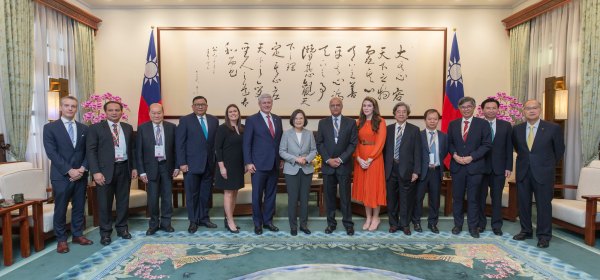
THE YUSHAN FORUM: DEMONSTRATING TAIWAN’S FLEXIBLE APPROACH TO PUBLIC-PRIVATE PARTNERSHIPS IN ASIAN DEVELOPMENT
Written by Alan H. Yang and Ding-Liang Chen. Taiwan has lost several of its diplomatic allies in recent years. These setbacks have prompted Taiwan’s government to devise new approaches to improving its international presence and foreign relations strategy.
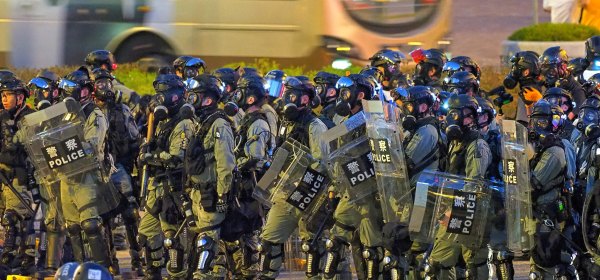
Carrie Lam is Failing Hong Kong
Written by Gerrit van der Wees. I just finished watching a powerful video of a street singer standing on a street corner in Hong Kong, singing pro-democracy songs. Some policemen moved in to stop him from singing, but despite the menacing position of the police, the presence of a surrounding crowd prevented them from acting. In the end, the singer wins, and the police lose.
Taiwan as a Symbol of Resistance and Democratic Aspiration for Protesters in Hong Kong
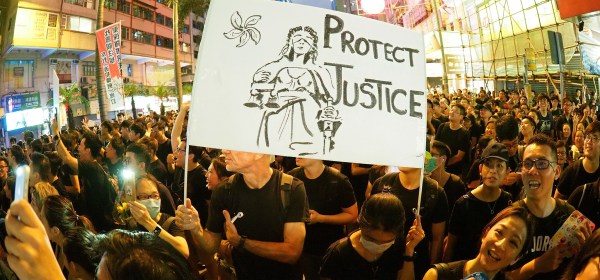
Written by Michael Chan. The months-long protests have generated much interest and sympathy from Taiwan’s citizens. Prominent pro-democracy activists in Hong Kong have gone to Taiwan to appeal for assistance and support, and commentators have noted that the protests may have altered the dynamics of Taiwan’s 2020 election. This essay, however, looks at Taiwan from a Hong Kong perspective and how the ‘idea’ of Taiwan has been appropriated as symbols of resistance against the Hong Kong and Chinese governments.
Understanding and Fostering Hong Kong-Taiwanese Solidarity
Written by Milo Hsieh. As the protests in Hong Kong continue, Hong Kongers and Taiwanese around the world have demonstrated a surprising level of solidarity. Taiwanese have mobilised to send protest gear to Hong Kong, and coordinate activists to speak at events, organise protest support rallies and create “Lennon Walls” to raise awareness. But just what explains such spontaneous, global demonstrations of Hong Konger-Taiwanese solidarity?
Are We Overstating the Importance of the “Hong Kong Factor?”
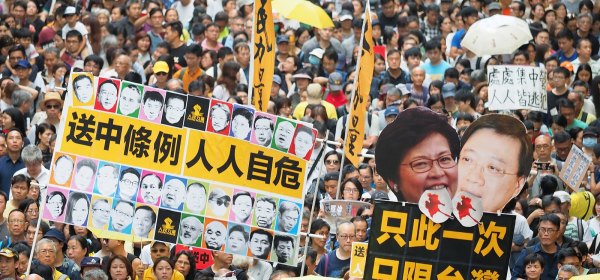
Written by Lev Nachman. Since the protests began five months ago, Taiwan watchers have commonly attributed Tsai’s growing success and Han’s continued decline to the protests. But to what degree have the Hong Kong protests actually impacted domestic politics in Taiwan? What if the Hong Kong protests never happened? What would Tsai’s position be?
Extradition Wars: How the Chinese and Hong Kong Governments Fell into a Trap They Laid for Taiwan
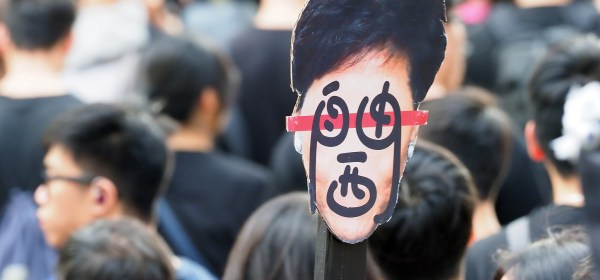
Written by Jean-François Dupré. Hong Kong’s extradition bill and the mass protests it triggered have garnered much international attention. Presumably motivated by a dual attempt to infringe on Taiwan’s sovereignty and to increase Beijing’s grip over Hong Kong, the extradition debacle exposed in quite unambiguous terms the Hong Kong government’s incompetence and intractable pandering to Beijing.
 Taiwan Insight