
Written by John F. Copper. But the facts also say that Lee did not adopt a policy of making China a pariah or isolating and punishing China for the events of June 1989. In fact, Taiwan’s relations with China did not get worse; they got better.

Written by John F. Copper. But the facts also say that Lee did not adopt a policy of making China a pariah or isolating and punishing China for the events of June 1989. In fact, Taiwan’s relations with China did not get worse; they got better.
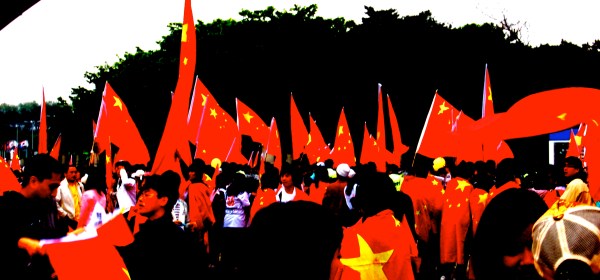
Written by Rowena He. The hijacking of history by the Chinese Communist Party, together with the manipulation of nationalistic sentiments, promotes historical amnesia, fosters a narrow and xenophobic nationalism, impedes reflection on historical tragedies and injustice, and stokes enthusiasm for China’s growing international assertiveness. And such state-sponsored made-in-China nationalism, compounded with the soft power exported through agencies such as Confucius Institutes, has profound implications for the future of China, its relationship with Taiwan, and the world.
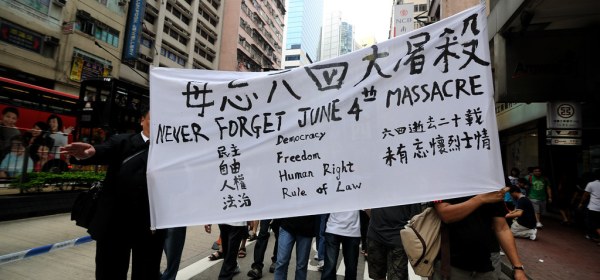
Written by Joseph A. Bosco. The 30th anniversary of the Tiananmen Square massacre reminds us of what remains unchanged in China’s authoritarian government despite decades of Western engagement. The “China dream” espoused by President Xi Jinping is not the same as what the Chinese people dream for their country.
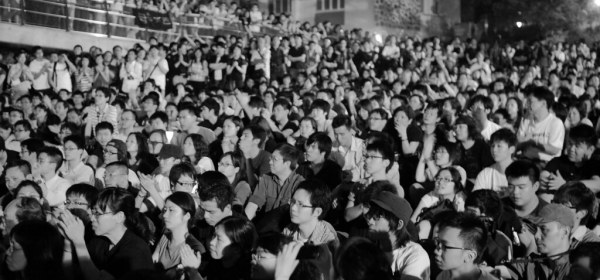
Written by Mark Wenyi Lai. The differences between China’s June Fourth Incident in 1989 and Taiwan’s Wild Lily Student movement in 1990 indicate the cross-Strait increasing divergence of political paths over the past thirty years. The former ended with Type 59 tanks on Tiananmen Square and a more tightened and illiberal CCP governance.

Written by Margaret K. Lewis. The thirtieth anniversary of the massacre in Beijing highlights Taiwan’s importance as a site of protest and its precarious situation as a refugee host.
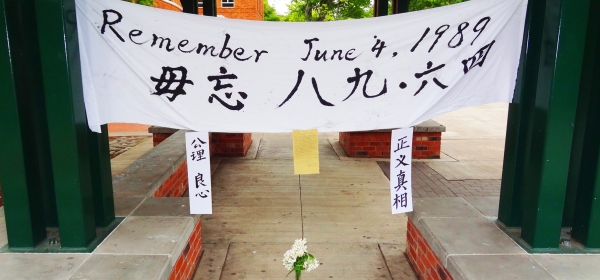
Written by Mab Huang. The struggle for human dignity, basic rights and a better life, to be sure, will be long and hard, but there is no alternative to commitment by, and engagement from, every individual, civil society organization, government and the United Nations, or what is left of it.

Written by Ying-Chu Chen, Rio, Peifen Hsieh, Jessie Tang, Evonne Tsai, Hsin-I Chiu, Crystal Tu. ‘Technical communities, forums for women may help to change for a while. But the most important is to make the whole society to be a safe place to minority groups, not only for women.’
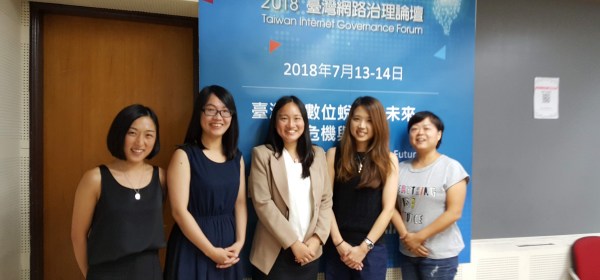
Written by Ying-Chu Chen, Rio, Peifen Hsieh, Jessie Tang, Evonne Tsai, Hsin-I Chiu, Crystal Tu. We all agreed that women in Taiwan enjoy more rights and are more blessed than women in many other countries. But after I attended the Women in ICT session in APNIC 44 and APRICOT 2018, I found there are some differences in Taiwan and other countries, and these problems exist in the whole world.

Written by Vincenzo R. Palmisano. This article was inspired by an application filed before the Rome Court of Appeal in Italy concerning the recognition of a final judgment issued in Taiwan by the District Court of New Taipei. It provides a curious case of how Taiwan’s de facto statehood can be interpreted abroad.

Written by John F. Copper. For more than two years the liberal Western media, especially in the United States, have talked and written extensively about America’s relations with Taiwan under Donald J. Trump. During this period their narratives embraced two different themes: first, the relationship was managed badly and second, Taiwan is a “card” Trump is playing against China.

Written by Joanna Zylinska. Chen Shui-bian’s presidency has been said to be a period of polarization, typified by aggressive nation-building policies and worsening cross-Strait relations. He became president in May 2000 and at first enjoyed widespread support.

Written by the CWLF.
In order to counter the declining birth-rate in Taiwan, in August 2018 the Executive Yuan enacted new childcare policies to support families with children aged zero to five. The new policies mainly consist of expanding the scale of public childcare services, establishing a set of mechanisms for quasi-public childcare providers, and raising childcare subsidies.
 Taiwan Insight