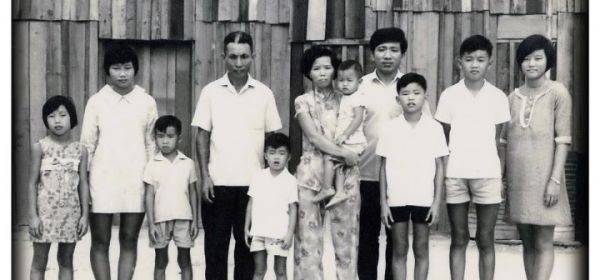
What is ‘Home’ and Who are the ‘Overseas Chinese’?

Written by Yun Seh Lee. This year marks the 100th anniversary of that first KMT-CCP coalition, and the competition across the Taiwan Strait is still going strong. Focusing on the Overseas Chinese communities across the globe – a term populated by the prominent scholar Wang Gungwu – both players have been enthusiastically trying to win the hearts and minds of this diaspora. The label ‘Overseas Chinese’ itself hints at an ongoing link to China, but the PRC and Taiwan dispute the nature of that link and its contemporary manifestation.
Gender Politics: Public Views of Women in Politics

Written by Timothy S. Rich, Madelynn Einhorn, and Isabel Eliassen. Taiwan’s efforts at gender parity for electoral offices have resulted in a legislature where women currently hold 41.6% of seats. This leaves Taiwan ranked 12th globally, with only one Asian country (Timor-Leste) with similar rates. However, despite the success of President Tsai Ing-wen, the vast majority of executive offices (mayors and magistrates) are still held by men. Gender equality and the rise of women in national politics are common narratives when discussing Taiwanese politics.

A Geothermal Solution to the Problems and Risks in Taiwan’s Electricity System

Written by Yeh-Tang Huang. On May 13th, 2021, Taiwan was paralysed by a national blackout. For five hours, multiple regions all over the country experienced periodic power outages that lasted for as long as 50 minutes at a time. Hundreds of people got stuck in elevators. The Central Epidemic Command Centre COVID-19 press conference that was happening was forced to end early. Traffic became a mess as traffic lights stopped working. Then on May 17th, another wave of blackout swept across the country. As disruptive as these blackouts were, they are only the tip of the iceberg.

Zenly, Dumplings, and Bad Girls: surveillance and social work in Wanhua

Written by Peijun Guo, translated by Sam Robbins. When Amber had asked Hsiao-hao what he had been doing since dropping out of high school, Hsiao-hao said he had been looking for a job but couldn’t find one, and now has nothing to do. Amber then went to talk to Mei-mei, asking her, “Hsiao-hao isn’t going to school, he’s not looking for a job, he’s not doing anything, what do you think? Do you think this is good? I’m not trying to take sides; I wanna know what you think.” Mei-mei gave Amber a thumb’s up and said, “I think it’s great; if my dad didn’t try to stop me, I’d want to do exactly what Hsiao-hao is doing”

The Taiwan-Australia Partnership: An Observation

Written by Ek-hong Ljavakaw Sia. Few bilateral relationships between any other two countries in the world can be as balanced, reciprocal, and complementary as the Taiwan-Australia partnership. Located in the southernmost and westernmost parts of the Pacific, Australia and Taiwan have many features in common: nearly the exact size of the population, an equally prosperous economy, a vibrant civil society, and a healthy democratic polity.

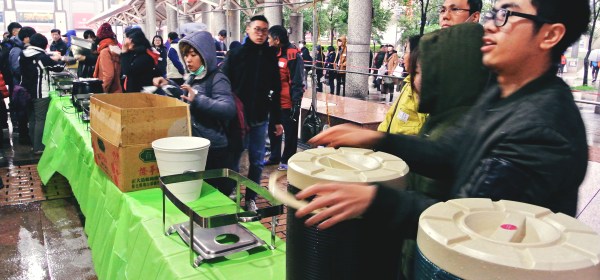
A Place for Homeless People? :The Pandemic and Homelessness in Taipei

Written by Huang Yi-Ching, Translated by Sam Robbins. Although everyone is at risk of catching COVID-19, the impact of the disease and preventative measures fall most harshly on already marginalised communities. Wanhua district of Taipei, which has a relatively high proportion of such disadvantaged groups, was also one of the first places to experience community transmission. This outbreak has dramatically increased the stigma attached to Wanhua, and many shipping companies, food delivery services and other recourses stopped servicing Wanhua. In the face of these pressures, communities in Wanhua have had to rely on their collaboration and communal work to help provide the recourses that are no longer present.

Why Is the Revitalisation of Taiwan’s New Southbound Policy So Pressing?

Written by Huynh Tam Sang. Adopted by President Tsai Ing-wen in 2016, the New Southbound Policy (NSP) has helped fortify Taiwan’s international standing and promoted the spirit of “Taiwan helps Asia, and Asia helps Taiwan.” In recent years, the NSP has facilitated Taiwan’s participation in the Indo-Pacific society. At the same time, they ensure that Taiwan could get on board with other regional and middle powers, like China, Japan, South Korea, India, and Australia, which have been forging their ties with Southeast Asian countries. 

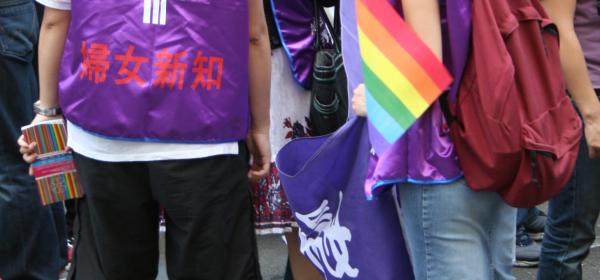
The Entangled Histories of Taiwan’s Women’s Movements: A look at Two Pioneering Groups

Written by Elizabeth Frost. Much of Taiwan’s impresive progress towards gender equality is thanks to the Taiwanese island’s women’s movement. Two groups that have been instrumental in the post-martial law era Taiwanese women’s movement are Awakening and the Homemakers United Foundation (HUF). The early stages of both groups were similar – Awakening began as a magazine in 1982, and HUF was initially established as the women’s auxiliary of the New Environment magazine in 1987. After the lifting of martial law, the groups were incorporated into independent foundations – Awakening in 1987 and HUF in 1989. Awakening is one of the most influential feminist groups in Taiwan, and HUF is now one of Taiwan’s largest environmental NGOs. 

Retaining Vietnamese Talents in Taiwan

Written by Huynh Tam Sang and Tran Hoang Nhung. In her 2020 inaugural speech, President Tsai Ing-wen (蔡英文) raised the issue of talent retention, underlined the need for “a diverse talent pool” with her commitment to attract “technical, R&D, and management talents to help globalize Taiwan’s workforce.” Furthermore, when attending the release of the Talent Circulation Alliance white paper in June, she said the government would be committed to “[developing] more innovative talent” to meet the shifting of supply change to Taiwan and navigate challenges caused by the COVID-19 pandemic.

The Good, the Bad and the Adaptive: Resilient Local Solutions to Tourism-Related System Shifts in Eastern Rural Taiwan

Written by Paulina G. Karimova and Kuang-Chung Lee. Discussion of resilience and adaptive capacity of Taiwan’s scenic rural areas has never been more pertinent than at the times of COVID-19. Over 2020-2021, these two seemingly academic terms have promptly secured their spot in local vocabulary (as 韌性 and 調適能力) and became an intrinsic part of hands-on local solutions.

How to Reduce Your Environmental Footprint as a Tourist in Taiwan

Written by Viola van Onselen. Tourism can significantly burden the natural environment, such as developing hotels or campsites in fragile ecosystems, pollution, or noise disturbance. The fact that tourism leads to environmental degradation has led to sustainable or eco-tourism, a concept that aims to minimise the impact on the natural environment and maintain tourism over a long period in one area while educating tourists and benefitting the social, economic and natural environment.

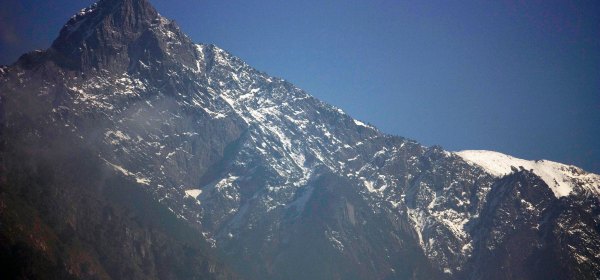
Mountain Hiking as Taiwan’s New National Pastime

Written by Ming-sho Ho. Sitting right at the fracture zone between Eurasian Plate and Philippine Sea Plate, Taiwan is an outgrowth of their incessant continental collision, thus making this island mountainous and ecologically rich. The Japanese archipelago shares a similar geological location. Still, Taiwan has ten times more peaks over 3,000 meters above sea level (268) than Japan, although the land size is only the latter’s one-tenth. From the tropical fluvial plain, one can drive through the temperate-zone mountain and reach the highest point of Taiwan’s highway (3,275 meters) in few hours, where flora and fauna are analogous to that in the frigid zone. Yet, until recently, most of the island residents did not have the opportunity to enjoy this natural heritage.

1 6 7 8 9 10 58