Transnational Relay: Lesbian Women’s Cross-Border Use of Assisted Reproductive Technologies and Reproductive Health Precarity in Taiwan

Written by Yu-Ying Hu. This article illustrates how Taiwanese lesbian women navigate cross-border assisted reproduction under conditions of legal exclusion. Moving beyond narratives about reproductive tourism, it conceptualises transnational ART as a precarious yet agentic relay process, showing how vulnerability and resistance intertwine as women coordinate fragmented medical, legal, and logistical systems while bearing unequal reproductive health risks.

Beyond Cisfertility: Expanding the Reproductive Imagination in Taiwan

Written by Yo-Ling Chen. This article illustrates how Taiwan’s Assisted Reproduction Act amendments, while expanding access for unmarried women and lesbian couples, continue to exclude many transgender people by anchoring eligibility to legal gender. Tracing legislative debates, activist interventions, and medical research, it exposes a regime of passive eugenics and considers whether recent parliamentary critiques signal a shift toward transgender reproductive justice.

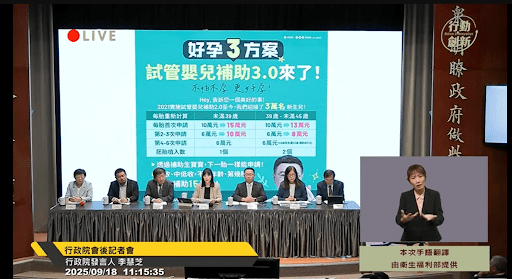
Subsidising Birth: Pronatalist Policy and the Rise of Assisted Reproductive Technologies

Written by Pei-Chieh Hsu. This article illustrates how state-subsidised assisted reproductive technology has reshaped reproduction in Taiwan, situating Taiwan’s In Vitro Fertilisation (IVF) within global pronatalist regimes, fiscal governance, and demographic anxiety. It analyses policy design, comparative fertility outcomes, and ethnographic IVF experiences to show how subsidies engineered technological dependence while reproducing new social, medical, and moral hierarchies.

Bluff or Substantial Deterrence: The Purpose and Implications of China’s “Mission for Justice 2025” Exercise Against Taiwan

Written by Shen Ming Shih. This article describes that China’s late-2025 “Justice Mission” exercise around Taiwan functioned more as political signalling than as a credible rehearsal for war. Despite the expanded scale and proximity, the drills exposed operational constraints, ineffective cognitive warfare, and diminished deterrent value while further internationalising the Taiwan Strait and underscoring Taiwan’s readiness.

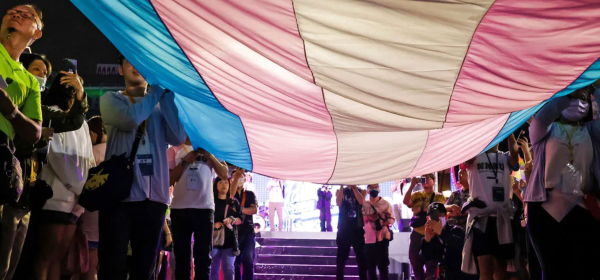
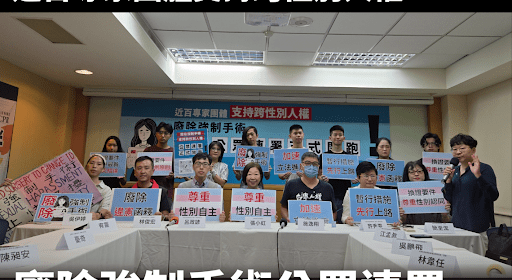
Taiwanese Government Continues to Flounder on Transgender Rights in 2025 Amidst Continued Transphobia

Written by Yo-Ling Chen. This article reviews the year 2025 for Taiwan, which saw growing civil society support for transgender rights alongside intensifying anti-gender mobilisation, often echoing U.S. conservative politics. Yet the government failed to deliver substantive policy reform, maintaining compulsory surgery for legal gender change while sidelining transgender needs in assisted reproduction and conscription policy. The result was political stagnation amid expanding grassroots advocacy.

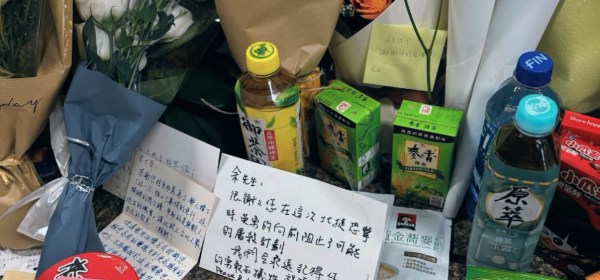
Shovel Superheroes: Taiwan’s Person of the Year—Social Resilience Under Political Deadlock

Written by Thung-Hong Lin. In 2025, Taiwan confronted overlapping crises, from political deadlock and geopolitical strain to extreme weather and public violence. As formal institutions slowed under polarisation, civic networks filled the gap. Volunteer mobilisation after the Hualien landslides and civilian intervention during the Taipei Main Station attack showed how everyday collective action became a quiet but decisive source of resilience.

Co-Listening as Defiance: The Facebook Soundscape of Taiwan’s Sino-Myanmar Gen Z and the 2021 Myanmar Spring Revolution

Written by Tasaw Hsin-Chun Lu. After Myanmar’s 2021 coup, Taiwan’s Sino-Myanmar Gen Z created a nightly revolutionary soundscape through Facebook Live. By co-listening to the clang of pots and pans, revived protest anthems, and newly sharpened hip-hop, they transformed distant violence into shared urgency. These circulating sounds stitched together a fragile yet insistent counterpublic, allowing young listeners in Taipei to grieve, rage, and imagine with those in Myanmar. Through this quiet, collective listening, they claimed a sense of belonging that crossed borders and defied the junta’s enforced silence.

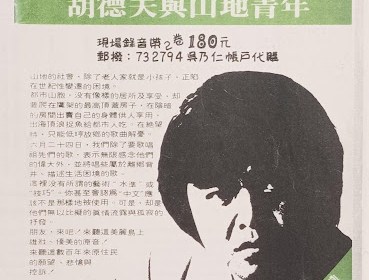
Singing for the Mountain Lands: A Pivotal Indigenous Music Concert in Taiwan

Written by Eric Scheihagen. The author illustrates the 1984 Singing for the Mountain Lands concert in Taipei, organised shortly after the Haishan Coal Mine Disaster, which killed mostly Amis miners. It details how Indigenous musicians and activists, led by Hu Defu, used the concert to raise funds and publicly address discrimination, harmful stereotypes, and political issues. The event became an important milestone in Taiwan’s growing Indigenous rights movement and helped catalyse later organising efforts, including the formation of the Taiwan Association for Promoting Indigenous Rights.

Water Nexus: Can Semiconductors and Sustainability Coexist in Taiwan?

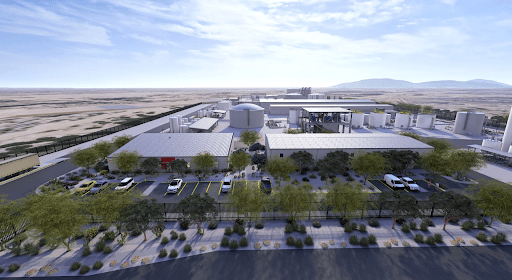
Written by Alexis Huang. This article examines Taiwan Semiconductor Manufacturing Company (TSMC)’s water–energy nexus, tracing its ecological costs, sustainability efforts, and infrastructural challenges. Despite advances in wastewater recycling and renewable integration, TSMC’s growth remains constrained by environmental limits, showing that long-term leadership depends on systemic reform, not technological fixes.

The Rise and Exclusion within Multicultural Discourses of Immigrant Integration in Taiwan

Written by Chien-Ping Liu. This article examines how transnational marriage migration has reshaped Taiwan’s demographic and civic landscape since the 1990s. It traces the shift from stigmatisation to multicultural recognition through grassroots advocacy and state developmental agendas. While bottom-up movements advanced inclusion, state-led multiculturalism often instrumentalised difference, reproducing class, gender, and geopolitical hierarchies within Taiwan’s immigrant integration discourse.

Vietnam Kinmen Association (Fuji Temple): A Symbol of Taiwan’s Soft Diplomacy in Saigon before 1975

Written by Meiyuan Kou. This article traces the history of the Kinmen Association (Fuji Temple) in Saigon-Cholon, established in the early 1970s as both a religious hub for Kinmen migrants and a channel of Taiwan’s soft diplomacy in South Vietnam. It examines how this small community institution fostered transnational ties, cultural continuity, and identity preservation across shifting political landscapes before and after 1975.

1 2