Excavating Ancient Knowledge: Climate Action and the Practice of Sustainability

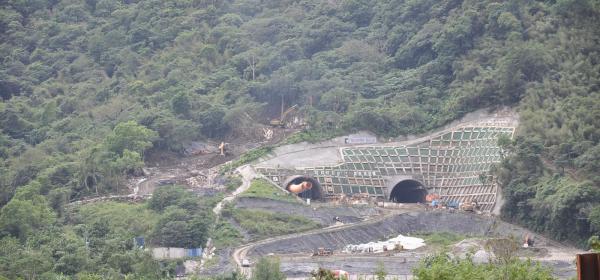
Written by Chung-chun Wang. Since museums are highly and closely related to society and the public with their transformation, the new definition demonstrates that accessibility, inclusiveness, diversity and sustainability are the key aspects that echo the contemporary trends. Therefore, museums usually aim to include these notions in their plans, research, and exhibitions. For example, the emphasis on “environmental education” is widely seen in museums, as it is directly linked with sustainability associated with the current energy and food crises. In this regard, how does archaeology, a discipline considered an old, ancient, and mysterious field with studying prehistories and peoples, respond to the vision of sustainability?
A Possible Blind Spot on Decolonisation in Taiwan’s Museums

Written by Pin-Hua Chou. When it comes to the Universal Exposition held in Paris in 1931, there are many criticisms of imperialism and colonialism appearing in all kinds of articles, both academic and non-academic. But, interestingly, speaking of the Taiwan exposition in commemoration of the first forty years of colonial rule in 1935, all the information in Mandarin that we can find at first glance seems to have a tendency to praise the Japanese government of the time by describing how valuable and grandiose achievements were made in this specific exposition under the rule of the Japanese empire and to belittle the ROC government at the same time. 

Japanese Colonial/Occupational Histories in the National Museums: A Comparison Between Taiwan and Singapore

Written by Pin-Yi Li. In the postcolonial Asian context, national museums reflect the countries’ colonial histories and their transformation, offering the country’s incumbent political elites the opportunity to reinvent or adjust the initial museum discourses framed by the colonisers. For example, respectively built by the Japanese and British colonial governments, both the National Taiwan Museum and the National Museum of Singapore are the oldest public museums in each country.

Displaying Indigenous People’s “Heirlooms” in Museums? Lessons from the Heirloom Exhibition of Pingtung Indigenous Peoples Museum

Written by Drangadrang Kaljuvucing. “The Family Heirlooms of Slop-Dwelling Peoples” exhibition was the fruit of a competition to discover Indigenous heirlooms that still exist in Indigenous communities. It was the Pingtung Indigenous Peoples Museum (PIM) partnering with four other Indigenous museums in Pingtung County, including Wutai Pavilion, Sandimen Pavilion, Laiyi Pavilion, and Shizi Pavilion, to conduct exhibition collection, field surveys, and promotion as part of a project with the Ministry of Culture in Taiwan. The thirteen heirlooms for the exhibition, which included clothing, accessories, paintings, weaves, wood carvings, clay pots, and other living implements, originated from seven Indigenous towns in Pingtung County, except for Chunri Township. While the exhibited pieces were grouped into three categories: “Living Etiquette,” “Decorating Life,” and “Cultural Heritage,” the exhibition highlighted the diversity and uniqueness of the heirlooms revealed by their owners through interview processes.

For the UK, Taiwan Could Provide an Alternative to Confucius Institutes

Written by Adrienne Wu and Marshall Reid. For the United Kingdom, 2022 was a year of significant change, particularly in its approach to the People’s Republic of China (PRC). Following years of relatively cordial UK-PRC relations, London followed the example of many other European states by shifting to a far more sceptical, confrontational policy toward Beijing. While this transformation was the product of various factors—from growing concerns regarding China’s human rights abuses to rising awareness of the PRC’s coercive economic policies—it was heavily influenced by domestic political manoeuvring. Nowhere was this more evident than in the competition between Liz Truss and Rishi Sunak to succeed Boris Johnson as prime minister, in which both candidates sought to frame themselves as the most tough-on-China. In a move emblematic of this game of China-sceptic one-upmanship, Sunak made the bold claim that he would close all of the UK’s remaining Confucius Institutes, the PRC’s international Mandarin language learning centres.

Chu Yun-han: Influential Political Scientist, Promoter of Taiwan Studies and Sinology in Europe

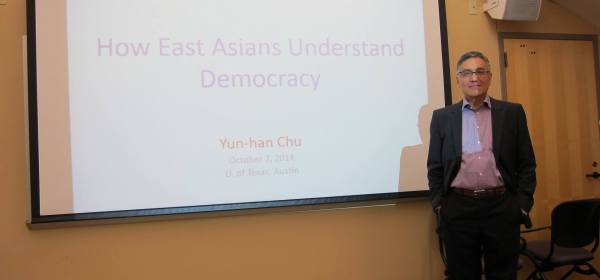
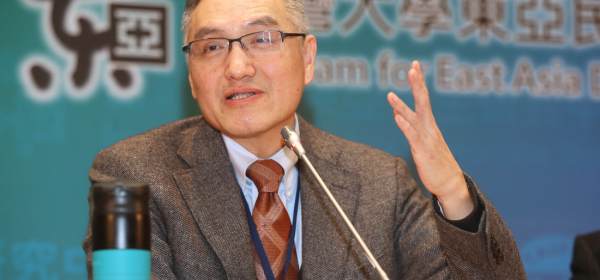
Written by Dafydd Fell and Robert Ash. It was with the greatest sadness that we heard of the passing of the influential Taiwanese political scientist Chu Yun-han. He died at home on 5 February 2023 – just two days after his 67th birthday. His loss is irreparable: through his own academic research and his tireless efforts as Executive Director of the Chiang Ching-kuo Foundation, he exerted an enormous influence on East Asian Studies throughout Europe, as well as in many other parts of the world.

“Kind and Gentle Soul”(「謙謙君子,溫潤如玉」): Remembering My Dear Friend Yun-han Chu (1956-2023)

Written by Tse-min Lin. The news came as a total shock. I had arrived in Taiwan just five days earlier to visit the new Taipei School of Economics and Political Science that Yun-han had helped establish. I knew he was ill and had been hoping to visit him after being unable to do so for five years. That is never going to happen now. Yun-han was a dear friend for 40 years. His passing is a heart-breaking personal loss.

Chu Yun-han (67), An Eminent Scholar and President of Taiwan’s CCK Foundation, Died on February 5th, 2023

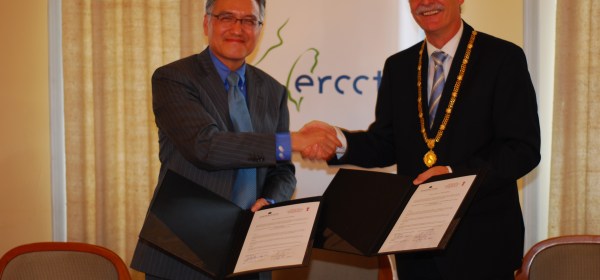
Written by Gunter Schubert. It was a spring day in 2007 when I entered the commercial building at Tun Hua North Road, where the headquarters of the Chiang Ching Kuo Foundation (CCKF) were located on one of the upper floors. I came to meet Chu Yun-han in his capacity as CCKF president and introduce to him my idea to establish a Taiwan research centre at the University of Tübingen. I had prepared a detailed presentation and pondered every detail that could jeopardise my proposal’s consistency.

In Memoriam: Missing Yun-Han

Written by Yu-Shan Wu. Gone is Yun-han, a true friend. We were colleagues at National Taiwan University and Academia Sinica for over half a century. He is a world-class political scientist, a gentle junzi in the finest Confucian sense of the term, a deep thinker who cares about the fate of the country and the world, and a master of delicate tastes in life. These are the four integral aspects of Yun-han’s personality that I am sure Yun-han would like us to keep in mind when thinking of him.

Revitalising Indigenous Weaving Cultures Across Borders: Conversations and Collaborations between Taiwan and the Philippines

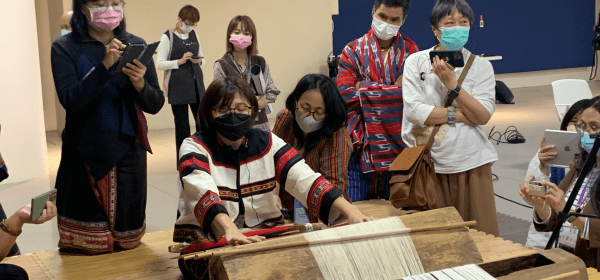
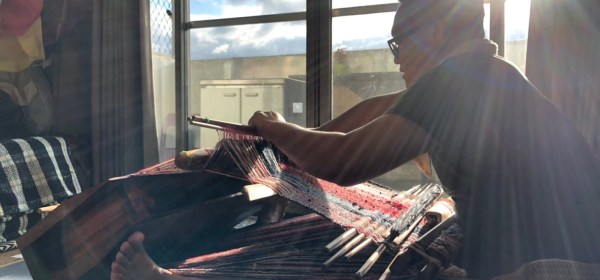
Written by Shau-lou Young. Weaving is a significant material culture in Indigenous Peoples’ society in Taiwan and the Philippines. In the past, hand-made textiles were necessities in their daily lives. However, with the introduction of fabrics into their society, only a few women continued to weave. Today, Atayal weavers in Taiwan and Ifugao weavers in the Philippines are working hard to revive their weaving culture. They brought back and conserved disappearing weaving techniques and knowledge and remade some long-lost textiles.

When You Weave, You Are Planting Seeds on the Land: An Indigenous Weaving Practitioner’s Experience

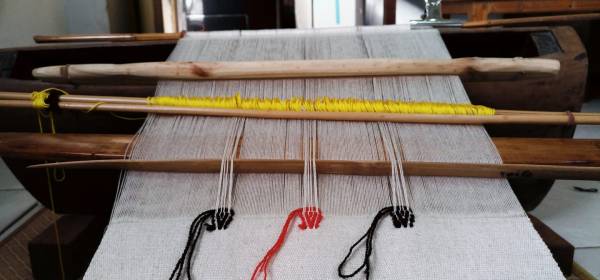
Written by Ipiq Matay. My name is Ipiq, which means “tiny” in Truku, and I am an Indigenous person from the Truku community of Taiwan. Despite my lack of height, I have a big heart. As a weaver in my community, I’d like to share ‘mhuma’, a Truku weaving skill which translates to “be planting”. This weaving technique can be seen in diamond-shaped patterns on women’s traditional clothing. Learning how to weave and create this pattern began my journey of connecting to my family history and the people of my community.

Tminun: Weaving from My Heart as an Indigenous Male

By Peydang Siyu (Chu, Hao-jie); translated by Huang, Hsing-hua. I am a member of the Truku people; the twelfth officially recognised Indigenous nation in Taiwan. We believe in our ancestors’ spirits (utux rudan) and adhere to their teachings (gaya) throughout our entire lives. Cloth weaving (tminun), similar to facial tattooing (ptasan), is a significant part of Truku culture, and many of our customs are related to it. For example, there is a strict gender division of labour in traditional Truku society, with men hunting and women weaving. Men were prohibited from learning how to weave or even touching the tools. As a male, it wasn’t until 2018 did I dare to learn it. But once I began, I never stopped. It was definitely a dream-come-true journey that I would forever remember.

1 2 3 4 9