Weave for an Identity: Learning Indigenous Weaving as a Han Person

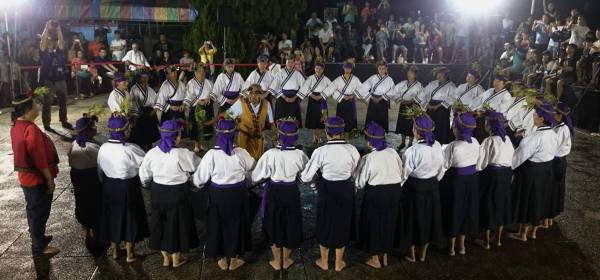
Written by Nai-Wen Chang. It all started from my experience representing Taiwan at an international youth forum in 2010. A section required every participant to introduce one’s country, offering a chance to engage in cultural interactions. It was our turn to present after India, Russia, Germany, the United States, and China. Everything went smoothly until an Indian participant in a dazzling sari raised a question. The Indian representative, out of pure curiosity, asked, “What does your traditional dress look like?” A moment of embarrassed silence filled the air. My senior, the eldest of us, eventually replied, “We don’t wear traditional dress much, but we do have cheongsams.” A Chinese participant immediately countered, “Cheongsam is Chinese dress, not Taiwanese.”

Encountering Ancestors Along the Path of Weaving

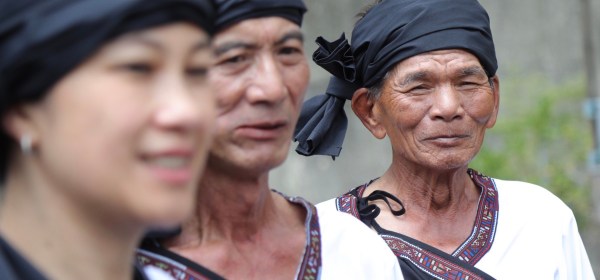
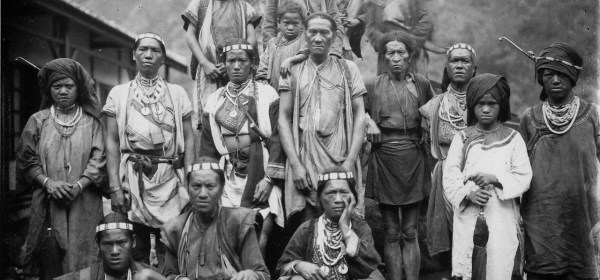
Written by Langus Lavalian. Ibu is currently the youngest weaver in Haitutuan Township. When she was learning to weave with our grandmother, she had a dream in which she met a silent elderly female who requested Ibu to watch her weaving process. Traditionally, outsiders are not allowed to watch or learn the weaving process. However, this old lady appeared to be weaving purposely for Ibu and instructing her step by step. Since taisah, which refers to dream, is vital to the Bunun, Ibu believes that this is the path guided by our ancestors. 

Addressing the Elephant in the Room: The California Shooting and the “Political Problem”

Written by His-Yao Lin and Yi-Lan Lin; translated by Yi-Yu Lai. It has been a while since the mass shooting at the Irvine Taiwanese Presbyterian Church in Southern California, United States, occurred last year. Many pieces of evidence are still ambiguous and cannot be determined. This shooting was not a unique case that sparked political tensions between the Chinese, Taiwanese, and Americans. In January 2023, a series of mass shootings also occurred in California, and two of them were emphasised since the suspects and victims seemed to be Asian. If we focus on the moment when the shooting happened, the “political” reaction in Taiwanese public opinion demonstrates the complexity and difficulties of Taiwan’s ethnic politics since 1949. 

Return to the Land and People: Contemporary Indigenous Knowledge System Project in Taiwan

Written by Yi-tze Lee. Following the Construction of the Taiwanese Indigenous Knowledge System (hereafter IKS) Project initiated by the Council of Indigenous Affairs (原住民族委員會), the establishment of the regional Indigenous Knowledge System Center is booming in 2022. The commissioned project results from a long fight for the indigenous cultural right, an example of autonomy in indigenous studies, and efforts on identity awakening. This article will explain the background of the IKS project, discuss the expectation, and reveal some critiques of the project in general. 

Lessons from the Strike by Taiwan Railway Workers

Written by Kuei-Chih Yang. In 2018, the Puyuma Ziqiang train derailed on Taiwan Railway, and then in 2021, the Taroko overturn accident occurred again on Taiwan Railway. Two major railway accidents happened one after another within three years. Many innocent lives were lost, and the safety management of Taiwan Railway was questioned. In March 2022, the Taiwan government proposed a draft of the “Act for Establishment of State-owned Taiwan Railway Co., Ltd.” to respond to the social demands of reforming Taiwan Railways since the accidents.

The Procrastinating Progress of Transnational Same-Sex Marriage Rights in Taiwan

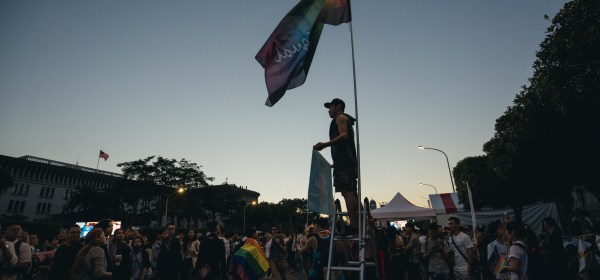
Written by Annie Huang. One historical human rights progress Taiwan made happened in 2019 when the government legalised same-sex marriage. It was a rainy morning, and hundreds of LGBTI groups and activists were standing outside the Legislative Yuan waiting for results. When the president of the Legislative Yuan announced the legalisation of same-sex marriage, the rain stopped, and a rainbow appeared in the sky. People hugged and wept with joy for this historical first in Asia. However, at the same time and in the same plaza, a group of Taiwanese same-sex people burst into tears not because of happiness but because of sadness and discrimination. Transnational same-sex couples are left out of the legalisation content in the same-sex marriage bill without much reasonable reason.

Police’s Right to Use Firearms? Lessons from the Murder of Two Police Officers in Taiwan

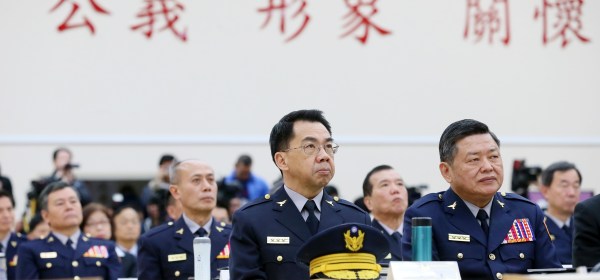
Written by Ting-Yi Bai. In August 2020, the murder of two police officers shocked Taiwanese society. The police officers, Tu Ming-Cheng, and Cao Ruei-Jie, investigated larceny after receiving a report that a stolen motor had been seen near Chikan Tower in Tainan. While searching for the suspect separately, Tu Ming-Cheng was suddenly attacked by the inmate Lin Xin-Wu, who had escaped from Mingde Minimum-Security Prison. Cao Ruei-Jie was also stabbed after failing to halt the culprit. Both died in the end.

The Long and Unfinished Fight: The Constitutional Court’s Decision on Pingpu Recognition in Taiwan

Written by Wei-Che Tsai; Translated by Yi-Yu Lai. The case of Indigenous status for Siraya people has challenged Indigenous peoples’ composition and boundaries. Currently, around 580,000 Indigenous peoples are legally recognised in Taiwan. It is estimated that the population of the Pingpu peoples will increase the total number of Indigenous peoples to as high as 980,000 if the Act is declared unconstitutional, although this number may be inflated for political purposes by Taiwan’s Indigenous authorities. As a result, the authorities are worried about this judgement.

An Insider or Outsider? Lessons from the Recognition of Mixed-Background Indigenous and the Pingpu Peoples in Taiwan 

Written By Nikal Kabalan’an (Margaret Yun-Pu Tu). Regarding identity formation in Taiwan, the historical context of colonialism plays a crucial role because the arrival of each foreign ruler has resulted in varying degrees of assimilation. Such a theme has inspired numerous Taiwan Studies scholars who have produced a great number of pertinent works, including “Is Taiwan Chinese?” by Melissa Brown,“Becoming Japanese” by Leo Ching, and “Becoming Taiwanese” by Evan Dawley. One of the contestable issues in this field is the Indigenous status and recognition.

Unsettled Transitional Justices: Indigenous Sovereignty and the Limit of Democracy

Written by Yu Liang (Leeve Palrai). The justice revealed in Siraya’s ruling is in response to the national project of Indigenous transitional justice. Specifically, it responds to the promise of President Tsai Ing-Wen in her 2016 presidential apology that Pingpu groups shall be granted the equal rights and status as fellow Indigenous Taiwanese have. Yet, influential as it is, the idea of indigenous transitional justice in Tsai’s account remains unclear: Who should be held accountable for the erasure of Siraya and other Pingpu groups’ identity and status? When and how did it happen in the first place?

Kuomintang Through the Ages

Written by Pradeek Krishna. The Kuomintang Party (KMT), established in 1912, ruled China from 1927 until 1948 before moving to Taiwan. The origins of the Kuomintang could be traced back to the decline of the Qing Empire. However, the party that held the mantle of the Chinese Revolution and ushered China into an era without Imperial rule had been forced to retreat outside of China. In recent years, the KMT failed to win the presidency in the 2016 and 2020 elections in Taiwan, raising questions over its legitimacy and relevance in a younger world.

Taiwan’s Relationship with its Last Remaining African Ally – Eswatini

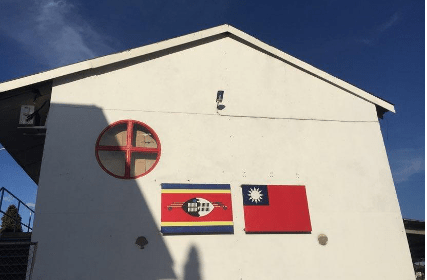
Written by Kristina Kironsk. Taiwan did not always have such a limited presence in Africa as it does now. Its official relations with the countries on the continent began in 1949, shortly after the Nationalists were driven out of China by the Communists during the Chinese Civil War. Altogether 30 African countries at one time or another maintained formal relations with Taiwan, but today the country is a politically marginalised actor with a minuscule presence mostly confined to the pursuit of economic interests.

1 2 3 4 5 9