Voices Lost Between the Frames: On Island in Between

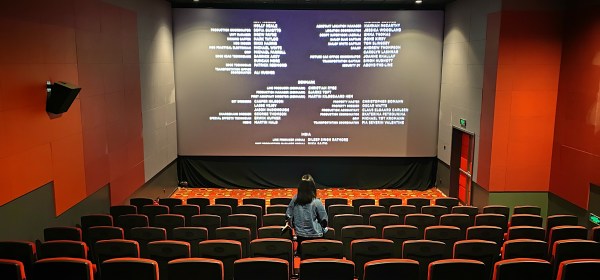
Written by I-Lin Liu. This article provides a critical analysis of the Oscar-nominated short documentary Island in Between, asking who the film is for and what lies beyond the representations. The author traces the history of when and how nonfiction films became a medium for intercultural communication, which resonates with the director’s experiences and goals for the film. Despite the film’s deliberate distance from forms of government-produced propaganda, connections can still be seen, particularly that government-sponsored or produced films, in fact, dwindled from the Best Documentary Short Film category decades after its establishment. In addition, the depiction of Kinmanese in the film, in conversation with national identities and boundaries, remains contested through the director’s lens.

Taiwanese Horror Games and the Ghosts from the Past

Written by Chee-Hann Wu. Taiwanese horror (taishi kongbu) is a rising genre that has claimed an important space in Taiwanese popular culture, particularly in the video game industry since the debut of Detention in 2017. These video games often incorporate elements of Taiwan’s local religions, ritual practices, and mythologies, especially the ones associated with ghosts and other supernatural beings. Although mostly implicit, many Taiwanese horror games contain hints of historical references to the 228 Incident and the White Terror under Martial Law. Malevolent monsters and ghosts become physical incarnations of state-sanctioned violence by perpetrators and accomplices and the suffering of those who were arrested, executed, or silenced. 

How Much Money Could Ghosts Make? A Case Study on the Most Ferocious Female Ghost of Taiwan – Chen Shou Niang  

Written by Yi-Ping Wu. Staying at home, not going to the beach, or climbing mountains, and not even opening an umbrella indoors are just a few taboos everyone must remember when Ghost Month 鬼月 arrives. Although the origin of the concept of Ghost Month is uncertain, the Taiwanese still emphasize the rituals that must be practised and the taboos that must be prohibited during this period. What attracts our attention most is the colossal amount of money that the Taiwanese pay for the rituals, offerings, and joss paper (paper money) to honour their ancestors because their past loved ones could return to the world of living since the gate of the underworld would open on the first day of July on the lunar calendar. The huge income that the cultural concept of Ghost Month contributes reminds us of an interesting question to think about thoroughly: How much money the “ghosts” could make?

Three Musketeers against Mis/disinformation: Assessing Citizen-led Fact-checking Practices in Taiwan 

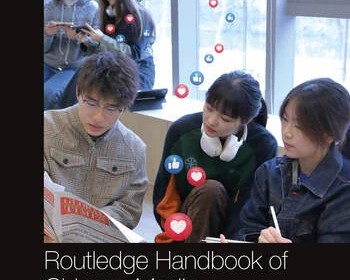
Written by Chiaoning Su and Wei-Ping Li. From sophisticated disinformation campaigns to patriotic trolling and clickbait, the flood of mis/disinformation has become a global phenomenon. Studies have shown that Taiwan’s young democracy ranks as one of the countries most exposed to misleading viewpoints or false information from foreign forces, especially China. These campaigns often seek to demonise high-profile Taiwanese politicians and divide Taiwanese society. They also aim to steer Taiwan away from anti-China policies or international alliances, notably with the United States.  

Small Step from You, A Great Leap for Migrant Workers: Documentary, ‘Civil Society’ and ‘And Miles to Go Before I Sleep’ (2022) 

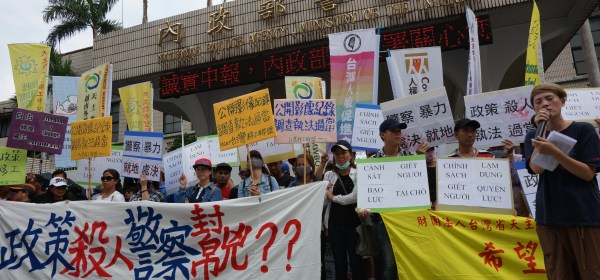
Written by Hsin-Chin Evelyn Hsieh. The award for the best documentary feature at the 59th Golden Horse Awards held in November 2022 in Taipei, Taiwan, went to And Miles to Go Before I Sleep (2022), directed by Tsung-Lung Tsai. At the ceremony, film producer Kim Hong Nguyen, dressed in the Vietnamese traditional garment áo dài, read out a message from Quoc Phi Nguyen’s family expressing their grief and hopes. It was the first time a documentary on migrant workers was presented with the Golden Horse Award, thereby creating a platform for voiceless migrants and drawing attention to the related issues in mainstream society. 

No Island Left Behind: Cross-Strait Relations in China’s National Museums

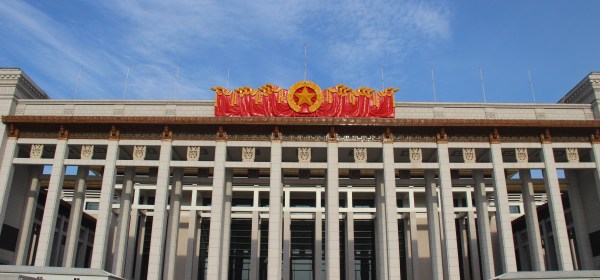
Written by Shih Chang. On October 25th, 2020, an exhibition commemorating the 75th anniversary of the recovery of Taiwan from Japanese colonial rule was held at the National Museum of China. The exhibition is divided into six sections that aim to show the “complete history” of the island of Taiwan from ancient to modern times. The first four sections: “Treasure Island, Taiwan,” “Nine States of Common Sorrow,” “Protecting Sovereignty against Japanese” Sovereign,” “Long Song as a Sword,” “Taiwan fending off the Japanese,” and “Cross-Strait Dreams,” objectively recreates the history of Taiwan’s “return to the motherland” and the development of cross-strait relations.

From Meteor Garden to BL? 20 Years of Taiwanese Pop Culture in The Philippines

Written by Yi-Yu Lai. “Have you ever watched Meteor Garden (流星花園) before? I was so crazy about Dao Ming Si and his gang before!” Many Taiwanese might be familiar with the similar conversation when they first met their Filipino friends. Since my friends know I am from Taiwan, they sometimes asked me to sing its theme song Qing Fei De Yi (情非得已) for them. They also love to hum the tune to me, though they cannot speak Mandarin at all.

Remembering Chiang Kai-shek in Japanese Media

Written by Robert Hoppens. Just before midnight on April 5, 1975, Chiang Kai-shek (b. 1887), long-time leader of the Chinese Nationalist Party (KMT) and president of the Republic of China (ROC), died at his home in Taipei at the age of 87. Around the world, Chiang’s death occasioned media retrospectives on his long career and speculation about the future of Taiwan, where his government had spent the last quarter-century in exile.

Embracing Taiwan in Vietnamese Media

Written by Huynh Tam Sang and Tran Hoang Nhung. Taiwan’s popular culture—actors, idols, music, and dramas, usually known as the “Taiwanese Waves,” has gained popularity on Vietnamese media sites. The 2004—2008 period saw a boom of Taiwanese idol dramas, e.g. “It Started with a Kiss, 2005” (惡作劇之吻), “The Prince Who Turns into a Frog, 2005” (王子變青蛙), “The Tricks of Boys and Girls, 2006” (花樣少年少女), “My Lucky Star, 2007” (放羊的星星), screened on Vietnam’s TV channels. Taiwan’s singers and bands, e.g., F4, 183 Club, 7 Flowers, S.H.E, Jay Chou, were once familiar among Vietnamese youths.