There Is No Such Thing As Creativity or Lack Thereof; There Is Only Fun and Not Enjoyable: An Interview with an Artist Pei-Ying Lin

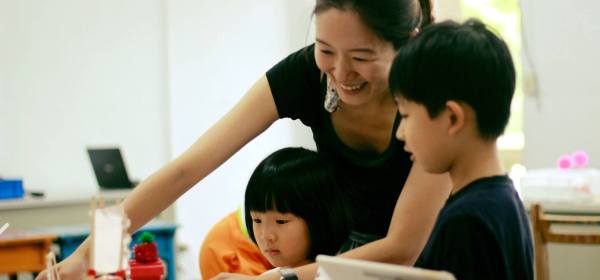
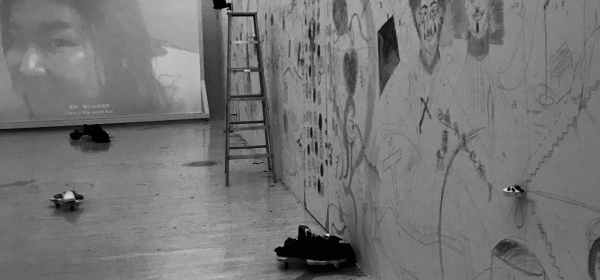
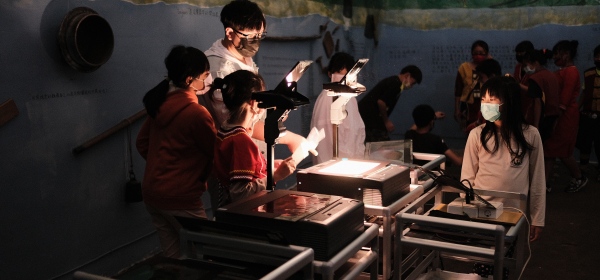
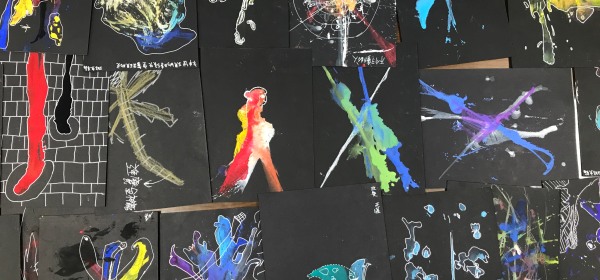
Written by Yi-Cheng Sun; translated by Yi-Yu Lai. This interview attempts to explore the metaphors of “workshops as classrooms” and “art creation as a learning process” in response to my curiosity about the phenomenon of “workshops, each with its own expression,” especially because artist Pei-Ying Lin frequently employs workshops in her art creation. 

Exploring the Undefined Creativity in Youth Theatre Education: An Interview with Wen-Qi Yu, Artistic Director of Flying Birds Theatre Group

Written by Yi-Cheng Sun; translated by Yi-Yu Lai. Before starting the interview, during lunch, Rei-Tzu, the production coordinator of Flying Birds Theatre Group, told us about the “earliest university.” In English, “University” is derived from the word “universe.” In Latin, “universus” is composed of “unus” (one) and “versus” (towards a particular direction), giving it the literal meaning of “towards a specific direction.” According to our limited knowledge of history, the University of Bologna, established by students in 1088 in Italy, is the first university in Europe, earning it the title “mother of universities.” The “earliest university” topic quickly sparked our discussion about knowledge and the essence of education, with art being the primary focus.

Plasticising Cultures through Art Education: An Interview with an Artist Wei-Lun Chang

Written by Yi-Cheng Sun; translated by Yi-Yu Lai. Before my interview with Wei-Lun Chang, I felt isolated and distant from her previous paintings. However, I experienced a contrasting feeling upon entering her home on the interview day. The toys in the corner and the children’s graffiti scattered around the walls made me feel the presence and interdependence of growing lives in this space. Wei-Lun’s role is not only that of an artist and educator, as I knew her to be, but also that of a mother––the mother of two children. The role of motherhood always brings significant changes, growth, and understanding in the continuous process of life, and Wei-Lun’s life journey is no exception.

Creating Artworks with Experience: An Interview with an Artist-Teacher Shao-Gang Wang

Written by Yi-Cheng Sun; translated by Yi-Yu Lai. In 2022, at the Taipei Fine Arts Museum’s “Taipei Art Awards” exhibition, artist Shao-Gang Wang was honoured with the Excellence Award for his artwork titled “The Bird’s Still Singing.” This piece continues his collaboration with young actors that began in 2019 with the works “AppleGreen” and “DeepBlue.”

The Director-Sensei of Shadow Puppetry: An Interview with an Artist-Teacher Yun-Hsuan Kao

Written by Yi-Cheng Sun; translated by Yi-Yu Lai. The night following the conclusion of the 2022 National Creative Drama Competition, residents of the Ciwidiyan community (Shuilian village) learned that their representative troupe had won the Modern Shadow Puppetry Excellence Award of the Elementary School Division. The community members prepared drinks and delicacies to celebrate, eagerly awaiting the return of the students and teachers from Shuilian Elementary School. The fried chicken cutlets cooked long ago turned cold, and the elders holding congratulatory red envelopes were also a bit weary. Only when the firecrackers along the way burst into loud noises did the delight in the air, with flying paper scraps both inside and outside the houses, seem to repeatedly congratulate: “Finally, it’s here!”

Art Education for the Real World: An Interview with an Artist-Teacher Pin-Hsuan Tseng

Written by Yi-Cheng Sun; translated by Yi-Yu Lai. Pin-Hsuan Tseng taught art at Gongliao Junior High School in New Taipei City from 2012 to 2022. Besides being an art teacher, she is well-known for her 2017 initiative called the “Ordering Dishes to End Discrimination” movement. This gentle movement embedded in everyday life aimed to restore the proper name of “Fushan lettuce,” which is commonly referred to as “mainland girl”, with underlying discrimination against females from China. Regarding nationality and gender, Taiwanese media once used “mainland girl” to refer to Chinese prostitutes who arrived illegally in Taiwan, while the smooth appearance of Fushan lettuce was thought to correspond with this image.

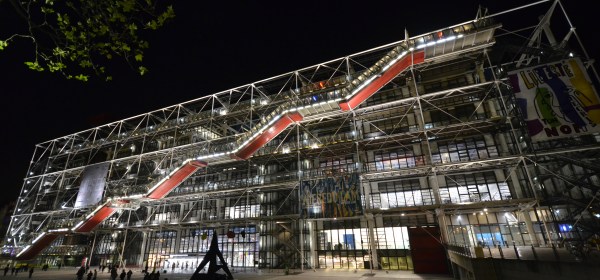
Staging and Restaging Taiwan at the Centre Pompidou: Taiwanese Art on Display 2020 to Present

Written by Gabriela-Alexandra Banica. In the third decade of the 21st century, Taiwanese artists and exhibitions have appeared at the Centre Pompidou in Paris and Metz, and this could serve as a compelling case study of Taiwan’s pursuit of international recognition through arts. Through this exploration, this article aims to address the gaps in the current scholarship related to curatorial practices concerning art from contested territories while enriching the field of France-Taiwan curatorial practices. By analysing the current subject of interest, it is hoped that art from more disputed territories can be made accessible to audiences in France, Europe, and around the globe.

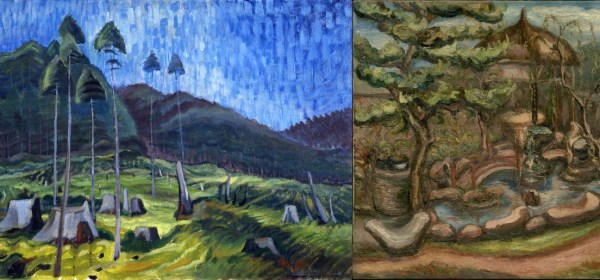
Time Travel Dialogue of Two Iconic Artists: Emily Carr (Canada) & Chen Cheng-Po (Taiwan)

Written by Charlie Smith. Emily Carr (1871-1945), who grew up on the West Coast of Canada, made her mark with vivid paintings of local scenery. She depicted changes in the landscape of British Columbia, touching upon industrialization. Carr was strongly influenced by Fauvism, which was advanced by Henri Matisse, André Derain, and other artists in France. Similarly, Taiwanese artist Chen Cheng-po (1895-1947) devoted much of his career to painting the natural landscape in bold, vivid colours. His oil paintings touched upon industrialization in Taiwan, and he, too, was influenced by Fauvism. 

Japanese Colonial/Occupational Histories in the National Museums: A Comparison Between Taiwan and Singapore

Written by Pin-Yi Li. In the postcolonial Asian context, national museums reflect the countries’ colonial histories and their transformation, offering the country’s incumbent political elites the opportunity to reinvent or adjust the initial museum discourses framed by the colonisers. For example, respectively built by the Japanese and British colonial governments, both the National Taiwan Museum and the National Museum of Singapore are the oldest public museums in each country.

Displaying Indigenous People’s “Heirlooms” in Museums? Lessons from the Heirloom Exhibition of Pingtung Indigenous Peoples Museum

Written by Drangadrang Kaljuvucing. “The Family Heirlooms of Slop-Dwelling Peoples” exhibition was the fruit of a competition to discover Indigenous heirlooms that still exist in Indigenous communities. It was the Pingtung Indigenous Peoples Museum (PIM) partnering with four other Indigenous museums in Pingtung County, including Wutai Pavilion, Sandimen Pavilion, Laiyi Pavilion, and Shizi Pavilion, to conduct exhibition collection, field surveys, and promotion as part of a project with the Ministry of Culture in Taiwan. The thirteen heirlooms for the exhibition, which included clothing, accessories, paintings, weaves, wood carvings, clay pots, and other living implements, originated from seven Indigenous towns in Pingtung County, except for Chunri Township. While the exhibited pieces were grouped into three categories: “Living Etiquette,” “Decorating Life,” and “Cultural Heritage,” the exhibition highlighted the diversity and uniqueness of the heirlooms revealed by their owners through interview processes.

Hybrid Taiwanese Opera: The Vitality of “Opeila”

Written by Jasmine Yu-Hsing Chen. In Taiwan, outdoor Taiwanese opera performances next to temples have been essential to Taiwanese religious traditions for decades. Most troupes adhere to the etiquette of performing “classical plays for matinees and opeilas for evening performances.” Unlike performances in the afternoon, which are mostly classical repertoires based on books and legends, evening performances are always energetic. With the accompaniment of an electronic piano and jazz drums, the actors on stage sing pop songs and dress in shining sequin robes, fancy suits, or colourful Japanese costumes. This hybrid performance style has been called “opeila” (oo-phiat-a), which is phonetically adapted from the Japanese pronunciation of “opera” (o-pe-ra オペラ) in Taiwanese. This unique subgenre of Taiwanese opera has livened memories in numerous Taiwanese people and is one of the most concrete testimonies of vital Taiwanese culture.

Innovating Tradition: The Interdisciplinary Practice of “Bodehi” Glove Puppetry Theatre in Taiwan 

Written by Chih-Ching Chester Tsai. Bodehi, Budaixi, or literal translation cloth sack theatre​ (布袋戲), is a form of traditional puppetry theatre in Taiwan. It was brought to Taiwan by early immigrants from southeast provinces of China during the Qing Dynasty. It has since developed into a unique form of theatre infused with local style and would later grow into one of the unofficial symbols of Taiwanese culture.​ 

1 2 3