Rosettating Between Minoritised Languages: How Taiwanese Readers Respond to Intermediated Translation

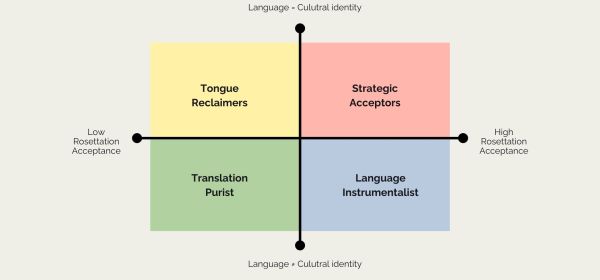
Written by Naomi Sím. The article introduces “rosettation,” a method of translating between minoritised languages like Tâigí and Gaelic via dominant ones. The Tâigael project explores linguistic solidarity, reader responses, and political tensions. Rosettation emerges as both a pragmatic strategy and a literary experiment, which enables new forms of intercultural dialogue despite inherent compromises.
Mandarin Soft Power with Taiwanese Characteristics: Values, Visibility, and Challenges

Written by Elaine Chung and Qipeng Gao. This article examines Taiwan’s efforts to promote Mandarin education abroad as a tool of soft power, particularly in the UK. Drawing on student interviews, it explores how political values, language ideologies, and structural constraints shape learners’ choices. It offers insight into how Taiwan can strengthen its visibility and appeal in global language education.

Teaching Taiwan by teaching languages – Performative Interpretation Strategies for Taiwanese Language Learning – A Case Study at Inalco

Written by Chan-yueh Liu. This article emphasizes the importance of teaching Taiwan through its multilingual heritage, advocating for the inclusion of Taiwanese languages (Tâi-gí in academic programs. It introduces “Performative Interpretation Strategies” at Inalco in France, which engages students through performance, music and digital content creation. The approach enhances language learning by fostering creativity, cultural immersion, and communicative competence.

“Mapping Taiwan Teaching” at Trier University: Teaching Taiwan in Script, Speech, and Performance

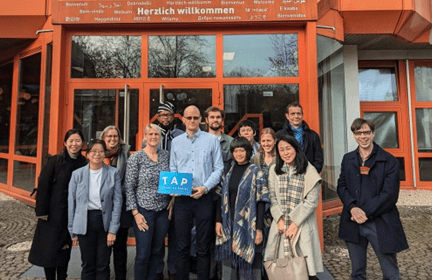
Written by Thomas Fliß. This article introduces the workshop “Mapping Taiwan Teaching – Teaching Taiwan in Script, Speech and Performance” at Trier University, which focused on teaching Taiwan through language, culture, and performance. Scholars and educators explored Taiwan’s geopolitical significance, linguistic diversity, and cultural identity. The event featured interdisciplinary panels on Taiwan’s literature, theatre, and education, highlighting the need for expanded Taiwanese language courses and intercultural learning methods.

Words of Influence: PRC terms and Taiwanese identity 

Written by Karen Huang. This article explores the growing use of PRC terms in Taiwan Mandarin and the social reactions to this trend. While some Taiwanese view this trend as a natural result of language contact, others perceive these terms as a form of cultural invasion. The debate among Taiwanese netizens reflects broader concerns about cultural identity, political influence from China, and the implications for younger generations in Taiwan.

Indigenous Language Education in Taiwan: From Language Preservation to Community-Based Learning 

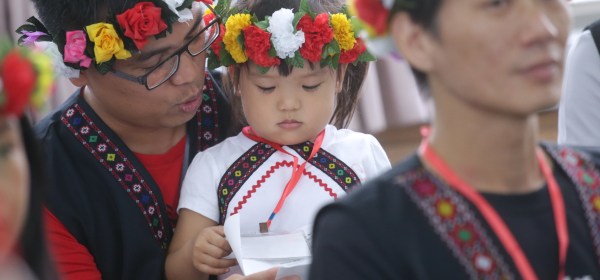
Written by Yang-Hsun Hou, Nikal Kabala’an (a.k.a. Margaret Yun-Pu Tu), and Huiyu Lin. As the Taiwan government has been pushing efforts for Indigenous Language Revitalization and Reclamation, this article highlights the importance of transitioning from government-led preservation to community-based, Indigenous-led education approaches, ensuring that culturally sustaining practices are truly integrated into Indigenous language teaching and learning.  

Decolonisation of Multicultural Taiwan

Written by Yulia Nesterova. Although Taiwan has made remarkable progress in transforming into a flourishing multicultural democracy over the past three decades, it still faces challenges in fully decolonising its multicultural vision. Focusing on education policies, this article highlights the need for further actions to address historical injustices and reconciliation.

The Search for a Shared Script: A Very Brief History of Writing Lyrics in Taiwanese 

Written by Cheng-Ting Wu. Imagine you are trying to write a song in Taiwanese Southern Min (hereinafter “Taiwanese”). After creating a soulful melody and heartfelt lyrics, you wonder: How should I write them down? You can choose any of the music notations you prefer for melody, from staff to numbered system. For lyrics, regardless of whether you are a native speaker or a learner of Taiwanese, you also have a choice. This brief article discusses this choice or the different strategies in the history of writing music in Taiwanese.

Hoklo Rap and Taiwanese Resistance Vernaculars 

Written by Meredith Schweig. Since the end of the 1980s, when rap music first took root in urban Taiwan, artists have explored the creative possibilities inherent to rhyming in the multiple languages spoken on the island. Early commercial pop-oriented performers like Yu Chengqing tended to rap in Mandarin; acts primarily associated with the underground folk and rock scenes, like Blacklist Workshop and Jutoupi, performed almost exclusively in Hoklo; and American-born Taiwanese teen sensations the LA Boyz peppered their Mandarin and Hoklo verses with English.

Indigenous popular music and language revitalisation in Taiwan 

Written by Karen Huang. In 2020, Paiwan singer Abao (阿爆) became an overnight sensation at the 31st Golden Melody Awards (GMA) when her Paiwan album ‘Kinakaian MOTHER TONGUE’ brought home multiple major awards, including the ‘Album of the Year’ and ‘Song of the Year’. The awards surprised many, as Mandarin popular music usually dominates these two cross-language categories. It was the first time an Indigenous-language singer had won both categories simultaneously.

Indigenous Storytelling in and Beyond the Classroom

Written by Yi-Yu Lai. One afternoon in 2011, Hong-sui Lim visited a Kaxabu village due to his participation in an anthropological camp. This marked his first encounter with the Kaxabu people, one of the Plain Indigenous groups inhabiting the Puli Basins in central Taiwan. Lim was astonished by the small number of Kaxabu elders who still speak their mother tongue, as it is commonly believed that Plain Indigenous peoples have been assimilated by Han Chinese culture and have lost their own languages and traditions. As a result, Lim returned to the Kaxabu communities as an undergraduate student to learn more about their endangered cultural heritage and began collaborating with the Kaxabu people. 

1 2 3