How Much Money Could Ghosts Make? A Case Study on the Most Ferocious Female Ghost of Taiwan – Chen Shou Niang  

Written by Yi-Ping Wu. Staying at home, not going to the beach, or climbing mountains, and not even opening an umbrella indoors are just a few taboos everyone must remember when Ghost Month 鬼月 arrives. Although the origin of the concept of Ghost Month is uncertain, the Taiwanese still emphasize the rituals that must be practised and the taboos that must be prohibited during this period. What attracts our attention most is the colossal amount of money that the Taiwanese pay for the rituals, offerings, and joss paper (paper money) to honour their ancestors because their past loved ones could return to the world of living since the gate of the underworld would open on the first day of July on the lunar calendar. The huge income that the cultural concept of Ghost Month contributes reminds us of an interesting question to think about thoroughly: How much money the “ghosts” could make?

The Month of Wild Ghosts: Phenomenon and Thoughts on Pudu in Taiwan’s Government Organizations

Written by Liang Ting-Yu. Homeless ghosts are also known as “good brothers.” In Taiwan’s civil society, they are not Youying gong​ (有應公) who are sacrificed in ghost temples, but rather a kind of wandering spirits who do not have or appear on memorial tablets, tombstones, or graves, and who are not worshipped by anyone; there are no temples or shrines to which they can return, and no place in which they can take shelter. On the half of the seventh lunar month, commonly known as the “Ghost Month,” local families, stores and companies, temples and Wanshan shrines(萬善祠) offer sacrifices to homeless ghosts in the form of ​Zhongyuan Pudu​(中元普渡)ceremonies and ​Chaodu​ devotions(超渡法會), which are rituals that free ghosts from suffering and reincarnation.

It’s Time for the Ghost Month! 

Written by Chee-Hann Wu. Beliefs in the afterlife and in spirits are universal and exist in different cultures and societies. Naturally, ritual practices, ceremonies, festivals, and customs arise, such as Halloween in Western countries and Día de Muertos in Mexico. Similarly, in Taiwan, the year’s seventh month in the lunar calendar is dedicated to ghosts and the deceased. The Gate of the Ghosts opens on the first day of Ghost Month and closes on the last day, during which the spirits enter through the gate and wander the world of the living.

#MeToo Cases Lead to Legal Hotline for Victims. But Will This Change Engrained Social Attitudes?

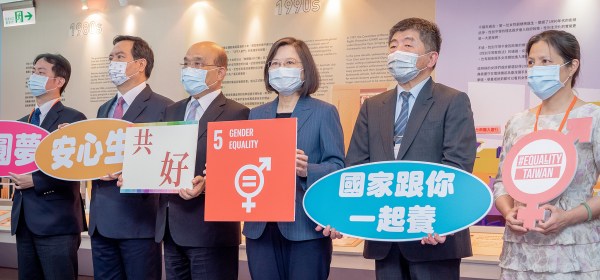
Written by Darice D. Chang, Caritta Lin, and Rita Jhang. The #MeToo movement blossomed in Taiwan in May 2023 partly due to a successful TV show, Wave Makers, which features sexual harassment in the political world and partly due to several high-profile sexual harassment cases brought to light in Taiwanese politics around the same time. While increased social awareness and scandal brought swift legislative action and increased support for victims in the form of both social support and legal aid, which we will delve into more detail, amendments to laws that have failed victims previously and increasing support are not a definitive solution to an entrenched social issue — instead, we should consider the various factors that have contributed to a society where power based gender violence could be an open secret.

#MeToo in Taiwan’s Music Industry: After Making Waves, Can We Forge a Better Workplace?

Written by Chen-yu Lin. In 2023, a watershed moment emerged in Taiwan’s #MeToo movement with the resounding success of the Netflix series “Wave Makers.” The show’s resonance was profound, shedding light on sexual harassment and abuse in the workplace. This spotlight inspired survivors from politics, education, arts, and entertainment to break their silence. The waves of #MeToo allegations have not spared Taiwan’s music industry.

#MeToo Movement in Taiwan: Reconfiguring the Intimate Life

Written by Mei-Hua Chen. #MeToo movement has been claimed as a global movement that connects women in the global North and the global South. Nonetheless, the MeToo movement must always confront various local social, economic, and cultural relations when it spreads across the globe. It also demands social, legal, and even material infrastructures to materialise. Global South countries that fail to deliver the MeToo movement might relate to the lack of efficient internet infrastructure and the taboo of talking about sex in public (e.g. Bangladesh), freedom of speech (e.g. China), or severe social stratification such as India in which the MeToo movement only circulated among the rich and well-educated elite women.

What have we learned from the still-unfolding #MeToo movement in Taiwan?

Written by Weiting Wu. The flames of Taiwan’s #MeToo movement have provided new opportunities to reflect on Confucian and patriarchal influences throughout society. To do so, however, Taiwan must act and work in solidarity to address the long-repressed suffering of #MeToo victims. Then, the transgender population, ethnic minorities, senior citizens, people with disabilities, and so on, may finally have the power to seek their justice.

Has the #MeToo Wave Passed in Taiwan?

Written by Brian Hioe. A short two months after a wave of #MeToo cases swept across the Taiwanese political landscape, it proves a question as to whether there have been genuine changes in social attitudes in the aftermath of these cases. Certainly, there has been no shortage of commentary on the matter, and the legislature responded by passing amendments to Taiwan’s “Three Gender Equality laws.” But whether there are lasting changes remains to be seen.

After #MeToo, where does Taiwan go?

Written by Shan-Jan Sarah Liu. Five years after the global #MeToo movement began, Taiwan has finally started its own. It began with a wave of sexual assault claims against several members of Taiwan’s ruling Democratic Progressive Party (DPP). While those alleged in the DPP have resigned, these claims led to allegations against others beyond the political sphere. Since May, more than 100 politicians, activists, intellectuals, and celebrities have been called out for their misconduct. The #MeToo movement has garnered much media attention and has been discussed widely.

The Green Party Taiwan’s Achievements and Challenges in Promoting Gender Equality

Written by Wang Yan-han, Dafydd Fell and Peng Yen-wen. Founded in January 1996, Green Party Taiwan (GPT) was the first Green Party to be established in Asia. It is one of the oldest movement parties in Taiwan, created through the efforts of student activists and several civil society groups, including activists from the eco-feminist Homemakers United Foundation. One of the main reasons Taiwan has made such impressive progress in the realm of gender equality has been due to civil society activism. Since Green Parties operate on the boundaries between civil and political society, an examination of the GPT’s case can bring a different perspective on Taiwan’s achievements and challenges in the realm of gender equality.

Treating the Faceless’ Art Experiences Equally: An Interview with an Independent Researcher Tze-Ning Hong

Written by Yi-Cheng Sun; translated by Yi-Yu Lai. Tze-Ning Hong, an independent researcher, designer, and artist, has been immersed in an artistic environment since childhood and graduated from the Department of Fine Arts at National Taiwan Normal University. Her father, a calligraphy teacher in elementary school, provided her with a unique perspective as she navigated between her family and school life during her childhood. From this vantage point, Tze-Ning constantly observed the subtle transformations between “her father as a teacher” and “her father as a dad.” This experience gave her a more nuanced understanding of the teacher’s role than the average person. She has captured and preserved unnoticed and delicate memories regarding art education due to her special position.

There Is No Such Thing As Creativity or Lack Thereof; There Is Only Fun and Not Enjoyable: An Interview with an Artist Pei-Ying Lin

Written by Yi-Cheng Sun; translated by Yi-Yu Lai. This interview attempts to explore the metaphors of “workshops as classrooms” and “art creation as a learning process” in response to my curiosity about the phenomenon of “workshops, each with its own expression,” especially because artist Pei-Ying Lin frequently employs workshops in her art creation. 

1 15 16 17 18 19 55