Is Going Green Hurting Indigenous Communities? Reflection from Participating in the United Nations Permanent Forum on Indigenous Issues 

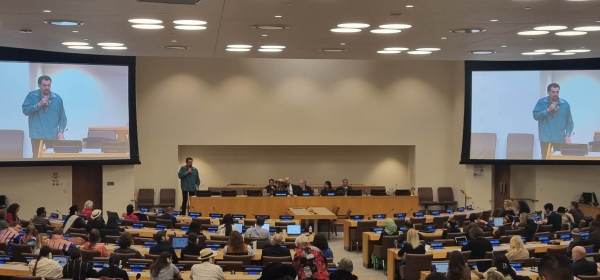
Written by Wasiq Silan. Is going green hurting Indigenous communities? Not necessarily. However, exclusionary conservation measures create a lose-lose outcome for non-Indigenous and Indigenous communities. Indeed, Indigenous peoples’ full and substantial participation is a prerequisite to achieving a sustainable future and halting the rapid loss of global biodiversity. This is true for the Indigenous communities in Taiwan, such as in the case of the solar panel controversy on the Katratripulr Pinuyumayan (Beinan in Mandarin Chinese) people’s traditional territory. Drawing from the experience of the Sámi, my recent participation in the United Nations Permanent Forum on Indigenous Issues (UNPFII) may shed light on this issue.

Taiwan and the Netherlands: What the East Asian Island Nation Can Learn from its Former Colonizer

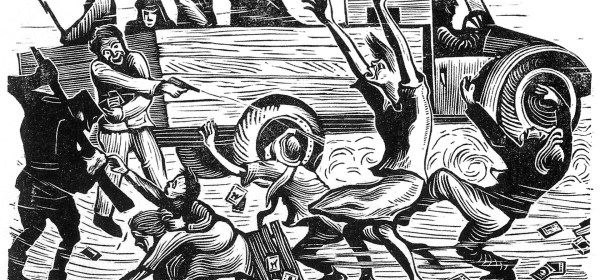
Written by Charlie Smith. The King’s Field is a famous Japanese video game series created in the 1990s. But nearly 400 years ago, there was another King’s Field—the entire island nation of Taiwan. For 38 years in the 17th century, Taiwan was a colony of the Dutch Republic under the administration of the Dutch East India Company. And the Dutch king was the largest shareholder. 

“The Han people pioneers cleared the land, but the land they cleared was stolen from them, and they were forced to turn their labors toward tilling the so-called ‘king’s fields’,” wrote historian Su Beng in Taiwan’s 400 Year History. “Moreover, most of what they achieved was given over, in the form of rent or taxes, called ‘king’s field rent contributions,’ for the use and enjoyment of the Dutch.”

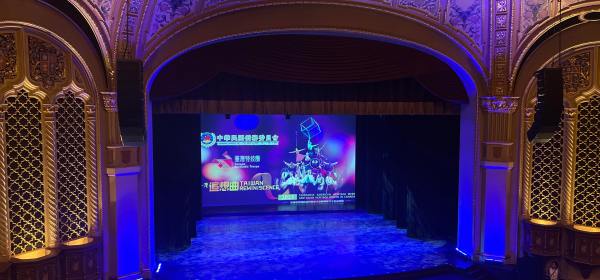
What is the significance of the dialogue with the Dutch community in Vancouver for 2023 TAIWANfest in Canada? 

Written by Charlie Smith. The Dutch Cultural Association of B.C. is trying to tell a more nuanced and complete story of the Netherlands, including the experiences of those who lived under Dutch colonial rule. Moreover, the association’s goal is to provide a richer understanding of how Dutch descendants should act as visitors on the unceded lands of Indigenous nations in Canada’s westernmost province. Oostindie believes that this has set his organization up well for a collaboration with this year’s TAIWANfest in Vancouver and Toronto. Oostinde discusses how Taiwan, the Netherlands and Canada can “have heartfelt discussions that bring these hidden histories forward. And we can learn about what it means for contemporary politics, how we work together, and how we consider democracies.” 

Beyond Chinese: The Evolution of Taiwanese-Canadian Identity in Canada

Written by Charlie Smith. At the height of the pandemic in 2020, a cultural producer generated considerable discussion within the Taiwanese diaspora in North America. It came when Charlie Wu wrote an article declaring: “I’m a Taiwanese Canadian, not a Chinese Canadian.” It was the managing director of the Asian-Canadian Special Events Association’s personal response to being constantly labelled as Chinese in his adopted country. In fact, Wu was even included in the list of the top 100 influential Chinese Canadians in British Columbia in a 2006 article in the Vancouver Sun. 

Time Travel Dialogue of Two Iconic Artists: Emily Carr (Canada) & Chen Cheng-Po (Taiwan)

Written by Charlie Smith. Emily Carr (1871-1945), who grew up on the West Coast of Canada, made her mark with vivid paintings of local scenery. She depicted changes in the landscape of British Columbia, touching upon industrialization. Carr was strongly influenced by Fauvism, which was advanced by Henri Matisse, André Derain, and other artists in France. Similarly, Taiwanese artist Chen Cheng-po (1895-1947) devoted much of his career to painting the natural landscape in bold, vivid colours. His oil paintings touched upon industrialization in Taiwan, and he, too, was influenced by Fauvism. 

Touring Indigenous music from Taiwan in Canada—the lessons of Kanatal

Written by Charlie Smith. Last September, when the band Kanatal walked onto the stage in front of the Vancouver Art Gallery, it marked a milestone. This was the culmination of the first Canadian tour by a group of Indigenous musicians from Taiwan. After performing in several Canadian cities, the four members—guitarist Masaw Ali, keyboard player Suana Emuy Cilangasay, singer Abus Tanapima, and drummer Vangacu Kalevuwan—were eager to impress a crowd that had gathered for the signature event of TAIWANfest Vancouver. 

A Dialogue between Taiwan and Canada

Written by Chee-Hann Wu. The world is filled with diverse cultures and histories, each with its unique narratives and connections. This special issue explores Taiwan and Canada’s fascinating cultural and historical ties. Despite their geographical distance, these two nations share surprising parallels that have shaped their identities and fostered mutual understanding. From immigration patterns to artistic influences, this special issue demonstrates how the cultural and historical connection between Taiwan and Canada is a testament to the power of shared experiences and the ability of diverse nations to forge meaningful bonds.   

Indigenous Storytelling in and Beyond the Classroom

Written by Yi-Yu Lai. One afternoon in 2011, Hong-sui Lim visited a Kaxabu village due to his participation in an anthropological camp. This marked his first encounter with the Kaxabu people, one of the Plain Indigenous groups inhabiting the Puli Basins in central Taiwan. Lim was astonished by the small number of Kaxabu elders who still speak their mother tongue, as it is commonly believed that Plain Indigenous peoples have been assimilated by Han Chinese culture and have lost their own languages and traditions. As a result, Lim returned to the Kaxabu communities as an undergraduate student to learn more about their endangered cultural heritage and began collaborating with the Kaxabu people. 

Beyond Maps: Indigenous 3D Mapmaking as a Path to Indigenous Resurgence

Written by Sra Manpo Ciwidian. To assert Indigenous sovereignty over our land, especially the traditional territories, the Indigenous peoples of Taiwan have employed various approaches to demonstrate our rights. Making a three-dimensional map model of Indigenous communities is the most prevalent among these approaches. Since the late 1990s, when the Kucapungane community of Rukai people produced the first Indigenous 3D map model in Taiwan, contemporary Indigenous communities in Taiwan have been developing this community-based mapping method for over three decades. 

Storytelling Behind the Overseas Taiwan Indigenous Collections: Material Cultures as a Means to Connect with International Indigenous Communities

Written by Nikal Kabalan’an (Margaret Yun-Pu Tu). Taiwan’s Indigenous artefacts were taken, bought, brought, or even got stolen and ended up miles away from the Indigenous communities where they were made by the hands of Indigenous ancestors. Some of these Taiwan Indigenous collections were already kept in a foreign museum overseas for almost a hundred years. Some of these museums are devoted to reflecting the devastating colonial history and decolonising the space by, for example, rewriting the narratives, displaying their collections in more inclusive ways, and collaborating with the cultural communities from which these cultural holdings originated. The Burke Museum of Natural History and Culture in Seattle, Washington States, United States, where I am currently leading the review and engagement plan for the Indigenous Taiwan holdings with my colleagues, is one example of decolonising the museums.

Indigenous Youth Actions in Taiwan: Connecting Our Voices to the Global Stage 

Written by Sra (Bo-Jun Chen). Taiwan’s Indigenous peoples are becoming increasingly concerned with various global issues that are also highly pertinent to our own situation in Taiwan, such as environmental, human rights, and cultural heritage issues. In recent years, for instance, Indigenous youth in Taiwan have realised the significance of language and identity revitalisation, which may assist us in combating oppression. Moreover, we have found that the insensitivity of our lands and ignorance of our history pose a far greater threat to us than the plundering of our resources and hazards to our lives. Some Indigenous youth are thus committed to overcoming obstacles influenced by colonialism and strive to bring our voices and agendas to the global stage. Through our participation on the international stage, we aspire to be heard and have more conversations about similar difficulties. 

The Mysterious Tsou Shaman: The Guardian of Traditional Culture

Written by tanivu yasiungu and Aaron Valdis Gauss. Living high up in quiet Ali Mountain, the Tsou shamans intimately connect with the earth and the ancestral spirits. But, of course, they are also connected with the most beloved god of the Tsou tribe––Hamo. Another important role of the Tsou shamans is to preserve, perpetuate and affirm Tsou myths, thereby maintaining a connection with the ancestors. Tsou shamans believe that working with nature is the most suitable way for everyone to live. We, the Tsou people, have always believed that being simple and pure in our beliefs is the only way to maintain the closest relationships with our god Hamo.

1 17 18 19 20 21 55