Leveraging Cultural Exports for Resilience: Insights from Taiwan and South Korea

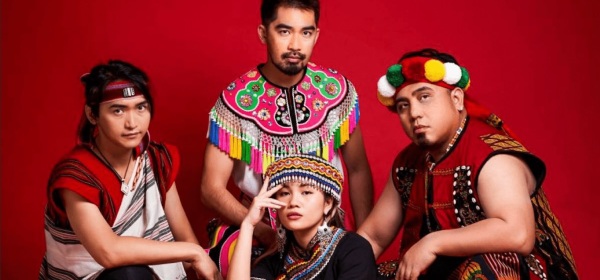
Written by Tommy Hall and Margaret Siu. Global discussions about Taiwan often focus on an invasion scenario, and many observers wonder if Taiwan is adequately preparing for war. These discussions often dissect Taiwan’s hard power—military and economic factors that may dissuade Beijing. However, soft power is crucial in conflicts between imbalanced parties. Current discussion would benefit from diversifying outside hard power calculations and examining Taiwan’s soft power. Taiwan should apply lessons from South Korea’s model to bolster its ability to co-opt global support. Describing Taiwan’s soft power vision and comparing both nations’ top-down cultural promotion efforts is helpful.

Will the KMT’s Generational Divide Harm its 2024 Election Prospects?

Written by Andrew LaRocca. Caesar, The Planet of the Apes protagonist who incites a rebellion to usher in a new civilization, was recently drawn into the KMT’s internal debates when Taipei City councillor Hsu Chiao-hsin changed her Facebook profile picture to Caesar amidst her escalating battle with senior legislator Fei Hongtai. In the comments, netizens joked: “How many terms can upper leaders serve? How old are those seniors?” Hsu’s Caesar reference reflected a sentiment expressed by many Taiwanese youths: the KMT and its leaders are out of touch with Taiwan’s younger generations.

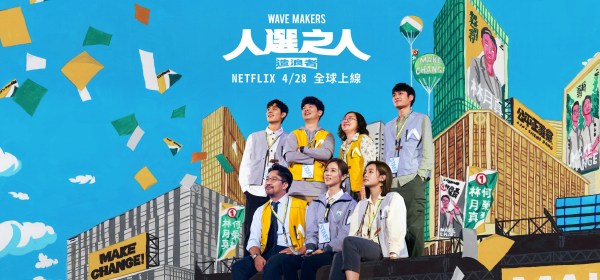
Wave Makers on Netflix: A Vision of Taiwanese Politics Not ‘Amid Tensions’  

Written by Chieh-Ting Yeh. “Wave Makers” (2023; ​人選之人-造浪者​) is a new drama on Netflix about political staffers trying to win a presidential election in the last few months of the campaign. This may sound like the premise of many television shows in the political intrigue genre, but it is the first of its kind from Taiwan to be available to a worldwide audience. The drama addresses various political issues relevant to contemporary Taiwan, including environmental concerns, energy policies, and workplace sexual harassment, reflecting the ongoing public debates on these topics. But it is glaring in what it is missing: Taiwan-China relations.

Queering the Intergenerational Remembrance of the White Terror

Written by Linshan Jiang. In 2020 and 2021, the National Human Rights Museum and Spring Hill Publishing released two literary collections on the White Terror in Taiwan (1947–1987): a four-volume novel collection entitled Making the Past in the Moment (2020) and a five-volume essay collection, entitled Soul and Ash (2021), co-edited by two Taiwanese writers, Hu Shuwen (1970– ) and Tong Weiger (1977– ). “White Terror” refers to the 50-year oppressive rule by the Chinese Nationalist Party (Kuomintang, KMT) in Taiwan after the Republic of China took over Taiwan from Japan in 1945. Then the KMT lost the Chinese Civil War (1945–1949) and was exiled to Taiwan in 1949. As a result, it is officially known as the martial law period. Although it should be admitted that the concept of “white terror” may not encompass every aspect of the martial law period, my focus is on the continuing oppression of the people due to KMT’s authoritarian rule, and I will mainly use White Terror to refer to this period in this article.  

Understanding Taiwanese Literature Beyond Borders

Written by Jenna Tang. Literature from Taiwan is considerably underrepresented in the English-speaking world. Several literary themes are specific to the place, its languages, cultures, and history that haven’t been fully explored over time. As a Taiwanese writer and translator myself, I am often questioned: “How do these books from Taiwan travel across borders?” 

Taiwanese Literature through the Lens of World Literature: Publications in 2022 and 2023

Written by Jessica Ssu-Chieh Fan. The past year, from 2022 to 2023, has witnessed some exciting achievements in Taiwanese literature. Malaysian-Chinese Taiwan-based novelist Chang Kuei-hsing won the Newman Prize for Chinese Literature, one of the most prestigious literary prizes for contemporary prose and poetry written in Chinese. From the discourses surrounding this literary event, including Chang’s acceptance speech and the remarks by Chang’s nominator E.K. Tan, some evolving trends related to broader paradigm shifts in Taiwanese literary studies can be discerned. Both Chang and Tan referenced the hybrid transcultural aesthetic influences epitomised by Chang’s literary style, which Tan described as “a unique branch of Chinese literature as world literature.” Another Taiwanese writer who has garnered significant international attention is Kevin Chen. His novel Ghost Town, translated into English by Darryl Sterk, was featured on the Best Books of World Literature of 2022 by Library Journal and on the longlist of the PEN Translation Prize 2023.

Situating Taiwanese Literature in the Framework of World Literature 

Written by Pei-yin Lin and Wen-chi Li. World literature, a term for which Goethe is usually credited as the first proponent, has generated discussions in the West since the second half of the 20th century, particularly since the late 1990s. Casanova’s sociological studies of the “world republic of letter,” Moretti’s call for a “distant reading” and attention to variations in the genre, and Damrosch’s shying away from the literary canon to the circulation of texts are oft-quoted examples. These discussions have left noticeable impacts on the discipline of comparative literature, encouraged us to step out of the usual aesthetics confined by “great tradition”, as Leavis notes, and expanded our understanding of a literary canon beyond Shakespeare and Flaubert to include Mahfouz and Cao Xueqin. Nevertheless, these narratives cannot escape their European and North American backgrounds. Examples proposed by scholars or readers, such as The Guardian’s “The 100 Greatest Novels of All Time,” are often coloured by the Euro-American centrism in which Western works emerge, receive canonisation, circulate within Europe and North America, and subsequently are distributed to the rest of the world.

Taiwanese Literature Beyond Taiwan

Written by Chee-Hann Wu. On 12 March 2023, Taiwan lost to Cuba in a World Baseball Classic qualifier, eliminating the former from the tournament. For most people, Taiwan and Cuba are like two parallel lines with almost nothing in common except their passion for baseball. If you use “Taiwan” and “Cuba” as keywords for a quick Google search, the first ten pages are all about baseball, with a few random advertisements from travel agencies. What if the relationship between the two is more than that? What if the fate of the two countries is intricately intertwined? Huang Chong Kai’s The Formosa Exchange begins with such a premise.

Excavating Ancient Knowledge: Climate Action and the Practice of Sustainability

Written by Chung-chun Wang. Since museums are highly and closely related to society and the public with their transformation, the new definition demonstrates that accessibility, inclusiveness, diversity and sustainability are the key aspects that echo the contemporary trends. Therefore, museums usually aim to include these notions in their plans, research, and exhibitions. For example, the emphasis on “environmental education” is widely seen in museums, as it is directly linked with sustainability associated with the current energy and food crises. In this regard, how does archaeology, a discipline considered an old, ancient, and mysterious field with studying prehistories and peoples, respond to the vision of sustainability?

A Possible Blind Spot on Decolonisation in Taiwan’s Museums

Written by Pin-Hua Chou. When it comes to the Universal Exposition held in Paris in 1931, there are many criticisms of imperialism and colonialism appearing in all kinds of articles, both academic and non-academic. But, interestingly, speaking of the Taiwan exposition in commemoration of the first forty years of colonial rule in 1935, all the information in Mandarin that we can find at first glance seems to have a tendency to praise the Japanese government of the time by describing how valuable and grandiose achievements were made in this specific exposition under the rule of the Japanese empire and to belittle the ROC government at the same time. 

Japanese Colonial/Occupational Histories in the National Museums: A Comparison Between Taiwan and Singapore

Written by Pin-Yi Li. In the postcolonial Asian context, national museums reflect the countries’ colonial histories and their transformation, offering the country’s incumbent political elites the opportunity to reinvent or adjust the initial museum discourses framed by the colonisers. For example, respectively built by the Japanese and British colonial governments, both the National Taiwan Museum and the National Museum of Singapore are the oldest public museums in each country.

Displaying Indigenous People’s “Heirlooms” in Museums? Lessons from the Heirloom Exhibition of Pingtung Indigenous Peoples Museum

Written by Drangadrang Kaljuvucing. “The Family Heirlooms of Slop-Dwelling Peoples” exhibition was the fruit of a competition to discover Indigenous heirlooms that still exist in Indigenous communities. It was the Pingtung Indigenous Peoples Museum (PIM) partnering with four other Indigenous museums in Pingtung County, including Wutai Pavilion, Sandimen Pavilion, Laiyi Pavilion, and Shizi Pavilion, to conduct exhibition collection, field surveys, and promotion as part of a project with the Ministry of Culture in Taiwan. The thirteen heirlooms for the exhibition, which included clothing, accessories, paintings, weaves, wood carvings, clay pots, and other living implements, originated from seven Indigenous towns in Pingtung County, except for Chunri Township. While the exhibited pieces were grouped into three categories: “Living Etiquette,” “Decorating Life,” and “Cultural Heritage,” the exhibition highlighted the diversity and uniqueness of the heirlooms revealed by their owners through interview processes.

1 18 19 20 21 22 55