The Unresolved Housing Problem in Taiwan 

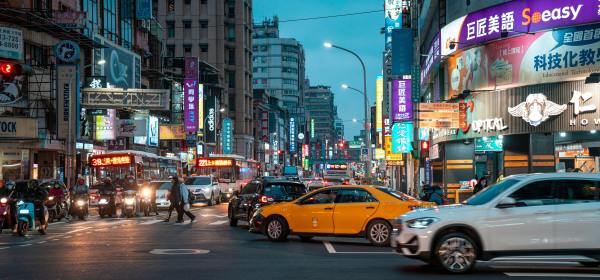
Written by Yi-Ling Chen. This article traces Taiwan’s housing transformation, arguing that the state’s role remains central, and that its interventions have facilitated commodification, speculation, and inequality in Taiwan’s housing sector. It calls for restoring housing’s use value and reimagining it as a basic necessity. 

Why Taiwan’s Family Businesses Still Rule and Why It Matters

Written by Zong-Rong Lee. As part of the Taiwan Insight–IJTS special issue on the Topical Section “Transitions and Challenges in Taiwan’s Economy and Society,” this article presents Zong-Rong Lee’s study on Taiwan’s enduring family capitalism. It traces how political patronage, kinship networks, and market reforms sustained family dominance, raising concerns about competition and long-term adaptability.

Introduction to The Topical Section on ‘Transitions and Challenges in Taiwan’s Economy and Society’ 

Written by Zong-Rong Lee and Thung-Hong Lin. This article introduces the Taiwan Insight–IJTS special issue on the Topical Section “Transitions and Challenges in Taiwan’s Economy and Society.” Initiated as an open invitation to scholars worldwide, the Topical Section reflects on Taiwan’s economic transformation, convening debate on structural shifts, their consequences, and the pressing challenges shaping Taiwan’s future. 

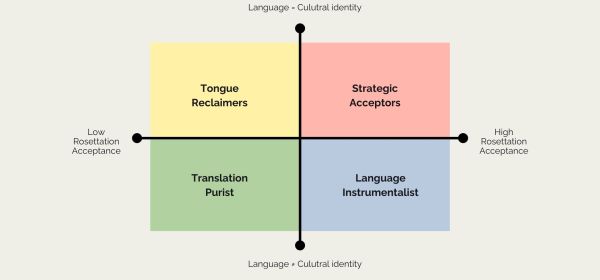
Rosettating Between Minoritised Languages: How Taiwanese Readers Respond to Intermediated Translation

Written by Naomi Sím. The article introduces “rosettation,” a method of translating between minoritised languages like Tâigí and Gaelic via dominant ones. The Tâigael project explores linguistic solidarity, reader responses, and political tensions. Rosettation emerges as both a pragmatic strategy and a literary experiment, which enables new forms of intercultural dialogue despite inherent compromises.

Orchids in the Wild

Written by Lisa LacDonald. This article reflects on orchids in Scotland and Taiwan as metaphors for translation. While Scottish orchids evoke resilience, Taiwanese orchids embody richness and locality. The author highlights the difficulty of conveying cultural nuance across languages, framing translation as both interpretation and resistance, balancing fidelity, accessibility, and the preservation of linguistic diversity.

Grandmother Islands: Oral Memory, Mother Tongues, and Literary Kinship between Taiwan and Scotland

Written by Elissa Hunter-Dorans. This article reflects on how maternal and grandmaternal figures embody the preservation of Taiwanese and Gaelic. Through Tâigael, the author explores oral traditions, familial intimacy, and the “mother tongue” as both metaphor and surrogate caregiver, showing how literature sustains endangered languages and fosters cross-cultural kinship.

Tâigael: Orchids, Maternal Care, and a New Rosetta Stone

Written by Hannah Stevens and Will Buckingham. The article introduces Tâigael: Stories from Taiwanese & Gaelic, a translation project linking two minoritised languages through English and Mandarin as bridges. Writers reflect on linguistic solidarity, maternal legacies in “mother tongues,” risks of reinforcing hierarchies, and ecological fidelity in translation. Together, their essays highlight translation’s generative, resistant, and collaborative potential.

The Island Is Our Canoe: Taiwan–Guam Exchange Finds Connection Beyond the Stage

Written by Eloise Phillips. This article examines the 2025 Taiwan–Guam cultural exchange, led by Taiwan’s National Museum of Prehistory, which wove song, canoe building, and shared practices into island diplomacy. Through workshops, performances, and informal encounters, the program connected Austronesian communities across the Pacific, highlighting resilience, mutual reclamation, and living traditions of cultural practice, language, and art.

How Young Taiwanese Women’s Views on Romantic Romance Are Shaping Taiwanese Society

Written by Elspeth Lewis. Taiwan has the lowest birthrate in the world. This article explores this trend by putting women at its centre, challenging what we thought we knew. Beyond the vague idea of becoming more liberal, it explores the difference between the younger generation and their parents. Moreover, the traditional society does not condone the newly created ideas around dating, sex and relationships either.

How Tsai Ing-Wen’s fashion sense can provide explanations for gender inequality within Taiwanese politics

Written by Carlotta Rose Busetto. This article examines Tsai Ing-wen’s fashion in her two successful presidential campaigns and how posting certain outfits online increased her electability. It finds that clothes matter in Taiwan and Tsai was not free to wear what she wanted. Moreover, clothes matter more than gender because Tsai also utilised them to promote her own political agenda.

Indigenous Identity in Taiwan’s Contemporary Cinema: From Screen to Self

Written by Ana Paloma Martínez Gómez. This article explores how Indigenous identity is portrayed on screen and how film supports cultural revitalisation and self-representation through a decolonial and gendered lens. As a new Taiwanese national identity emerges, the gap between official recognition and ongoing cultural marginalisation reveals the complex space Indigenous communities occupy.

1 2 3 4 5 55