Location, Location, Location: Renting in Taipei and New Taipei City

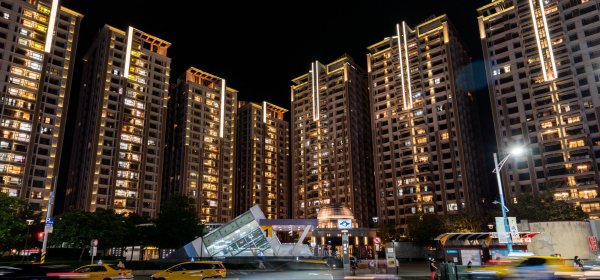
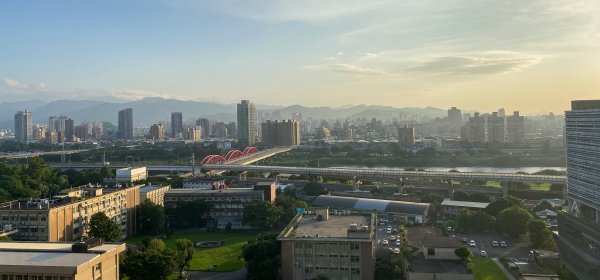
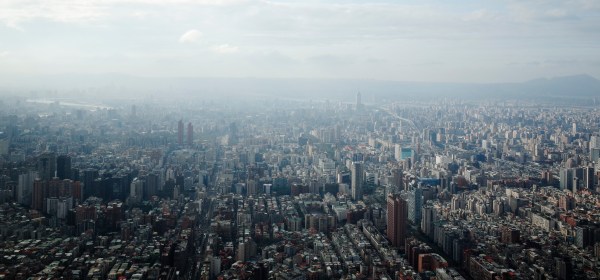
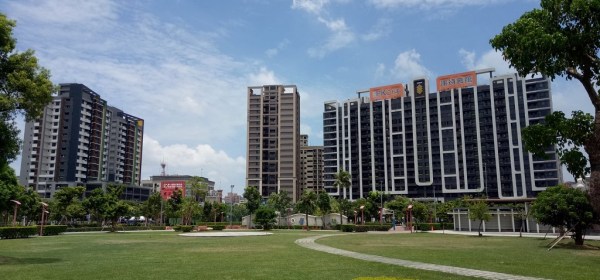
Written by Natalie Dai(戴淨妍), Jessica Hsu(徐卉馨), Sophia Lee(李昕儒), Dennis He(何正生); Translated by Sam Robbins. For recent graduates like Yi-ting, mostly all renters, rent typically takes up between one quarter and one-third of their monthly income. According to the Ministry of Labour, the average monthly salary for recent graduates in 2019 was 28,231NTD (£724; $1021). Judging by mean rental prices per region, if they are willing to move out to the suburbs of New Taipei City, they can expect to pay around 8,000NTD (£205; $289) a month for an eight ping (26 square meters; 285 square feet) apartment.

Taiwan’s Real Estate Development from the Cross-Strait Perspective

Written by Wei-Che Fu and Yu-Chih Tseng. global economic and political geolocation, the challenges of its local industry development and social inequality were still ahead during the Sino-American conflicts. The mass capital escape from China is generally regarded as another chance for attracting investment. Taiwan experienced a new wave of housing inflation since the global financial crisis in 2008.

A Tale of Two Cities: Taiwan’s Social Housing Policy Practice in Taipei and Taoyuan City, 2014-2018

Written by Chris Chih-Hua Tseng. Taipei has spawned some policy innovations. Meanwhile, in Taoyuan, an adjacent developing city that has built massive amounts of social housing, none of the above happened. Instead, the city government proudly announced it had built social housing the fastest. Why has social housing developped much more sluggishly in the capital than it has in Taoyuan? To answer the differences between these two cities, we need to expand our scope to broader urban politics and urban developmental processes.

Taiwan with a Side of New Public Diplomacy

Written by Martin Mandl. At about the same time as Bubble Tea made its first appearance in Vienna, President Ma Ying-jeou proclaimed “taking Taiwan’s food to the world a policy priority”. What followed was an economic stimulus plan, sometimes referred to by commentators as “All in Good Taste – Savour the Flavours of Taiwan”.

Is Taiwanese society ready to face a belligerent China?

Written by Gunter Schubert. Over the last decade, the world has seen a geopolitical shift whereby China has gained power and influence in the international arena, showing an increasing willingness to safeguard “national interests” and fulfil the “historic mission of rejuvenating the Great Chinese Nation”. Within this, unification with Taiwan has long been defined as a major objective, the pursuit of which has become increasingly urgent.

Reinscribing Taiwanese Americans into Transpacific History

Written by Catherine Chou. For a country that greatly restricts the ability of foreigners to acquire dual nationality, and that also has one of the lowest birth rates in the world, the second-and third-generation diaspora in the United States represent under-tapped human capital. Yet, for both US institutions like Pew, and Taiwanese government and civil society, it seems, fuller recognition of the demographics, diversity, social networks, identity formation, and political and professional commitments of Taiwanese Americans – and the impact of their “civic transnationalism” – remains elusive.

The Public Nature of Civil Disobedience: Lessons from the Sunflower and Umbrella Movement

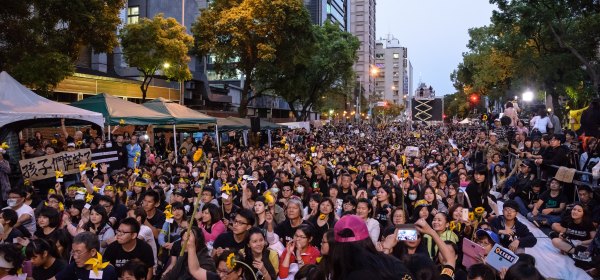
Written by Leon N. Kunz. In March 2014, participants in the Sunflower Movement peacefully occupied the main chamber of Taiwan’s parliament to block the ratification of a controversial trade agreement with the PRC that they viewed as a threat to Taiwanese democracy. In September of the same year, protesters involved in Hong Kong’s Umbrella Movement created street occupations to push for genuine democratic reform. In both cases, participants not merely occupied public space but claimed to engage in civil disobedience. According to the often-cited definition by liberal theorist John Rawls, civil disobedience is “a public, nonviolent, conscientious yet political act contrary to law usually done to bring about a change in the law or policies of the government.” To what extent did the occupations in Taiwan and Hong Kong conform to the dominant liberal civil disobedience script?

Not obedience but Dignity: A message from a former migrant worker

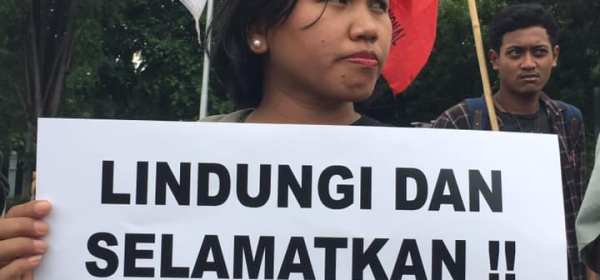
Written by Iweng Karsiwen and Ratih Kabinawa. Edited by Isabelle Cheng. A former domestic worker in Hong Kong for over ten years, Iweng Karsiwen is currently the Chair of Families of Indonesian Migrant Workers (Kabar Bumi). Initially she was recruited to work in Taiwan when the door opened for Indonesian women seeking domestic work there. However, instead of going to Taiwan, Iweng found herself arriving at a Hong Kong MTR station late one evening a year later. Knowing how the brokering industry functioned at home and abroad, after returning to Indonesia, Iweng was determined to help those who worked abroad and who faced similar challenges at various stage of their migration. She has particularly campaigned to outlaw salary reduction. This, as well as other practices mentioned by Iweng, are commonly adopted by brokers in Taiwan, Hong Kong, Malaysia and Singapore.

Fun Politics and the Politics of Fun in Taiwan’s g0v Community

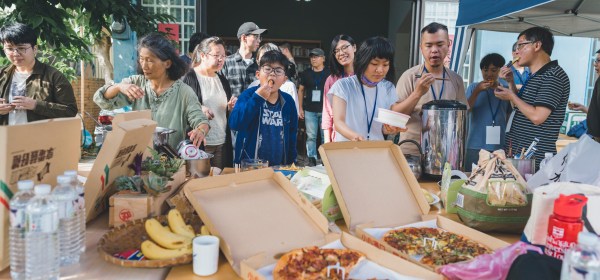
Written by Sam Robbins. The notion that emotions can inspire political action is not new. Research into social movements contains many examples of the motivating power of passion, anger, and disgust… What is seemingly much less common is the active cultivation of positive emotions, such as happiness or fun, in such social movements. If you’re feeling content about your situation, what need is there to engage in collective action or civil engagement?

Taiwanese Literature in Transition: Indigenous Writing and Eco-literature as Method

Written by Ti-han Chang. At the crossroad of the 21st century, we see the rise of a new transition in Taiwanese literature. In the era of anthropogenic climate change, environmental literature or ecocriticism, which was first established in the Anglophone literature begins to sow its seeds in Taiwan in the late 80s and early 90s. Alongside this new transition, aboriginal literature in Taiwan also underwent a phase of cultural renaissance in the same period. Work published by Syaman Rapongan 夏曼藍波安, Walis Nokan瓦歷斯諾幹, and Topas Tamapima 拓拔斯塔瑪匹瑪 (田雅各) enrich and diversify the literary scene in Taiwan. The work of Rapongan, which promotes sea-writing and oceanic cultural imaginary, deserves, especially our attention.

1 33 34 35 36 37 56