Joshua Wen-Kwei Liao (1905 – 1952): A Founding Theorist of Taiwanese Independence

Written by Kuan-Wei Wu 吳冠緯. Like his East-Asian contemporary intellectuals, Joshua was a product of both Western and Eastern traditions during those divided times. His reflection on statehood enfolds different trends of twentieth-century thought. This makes him a complex but intriguing thinker. When previous studies emphasise his political and nationalistic engagement, it should be noted that his way of thinking and philosophical methodology is also worthwhile to research.

Taiwan’s Green Diplomacy and the 1996 Taiwan Strait Crisis: The Legacy of Penny Kemp’s Taiwan Visit

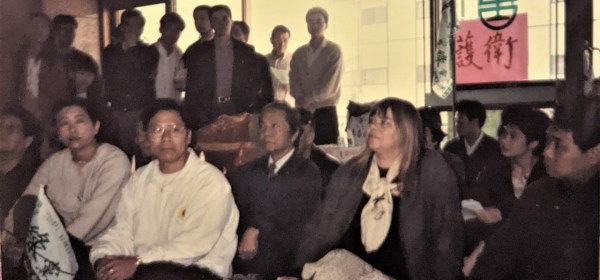
Written by Dafydd Fell. Twenty-five years ago, Taiwan was amid the 1995-1996 Taiwan Strait Crisis and its first direct presidential campaign. It was not only the closest China and Taiwan had come to military conflict since the late 1950s but also the moment that Taiwan was first internationally recognised as a full democracy. At this crucial moment in Taiwan’s modern history, the Green Party of England and Wales issued a press release with the headline ‘Penny Helps Taiwan Greens Win Seat.’

The Fashioning of Filipino Community in Taiwan: OFW Beauty Pageants in the Era of Social Media

Written by Yi-Yu Lai. As an anthropologist who studies Indigenous movements in the Philippine highlands, my experiences of beauty pageants’ are not rare. The beauty pageant has been culturally entrenched in the Philippines and its diasporic communities for many decades. Because these contests are very popular with Filipinos, some Indigenous youth advocates use them as an instrument for cultural activism, empowering participants and attracting those who were previously indifferent to political issues. Nevertheless, the Filipino beauty pageants of Taiwan are quite different from those I previously experienced.

Taiwan’s Museum Act: Culture’s Value as a Matter of Politics

Written by Susan Shih Chang. On the government’s side, the Museum Act has become a mechanism for exercising power through specific forms of knowledge and expertise; a technology that shapes society’s thoughts and understanding toward culture. On the applicant’s side, although the local government has control in the process of applying for the registration of a private museum, intentions and understanding from the private museum owners and their interaction with the public sector have added a new dimension and layer to the meaning and means of museums.

The Earth God and Personifying Climate Change

Written by Natasha Heller. Rising global temperature increases and predictions about sea levels can be abstract, even for adults. How can the phenomena of global warming be visualized? How can climate change and environmental degradation be made understandable by young children? The earth’s round shape, as imagined from space, lends itself to the addition of eyes and a mouth to convey unhappiness or illness on a global level. Distressed or lonely polar bears also convey the negative effects of global warming but are still quite distant from most children’s everyday lives.

Positioning Taiwanese Queer Cinema on the Global Stage

Written by Yi Wang. Significant progress and landmark rulings in advancing LGBTQ+ rights have been made across Asia in recent years, though many challenges and obstacles remain. Asians are among the fastest-growing ethnic groups in the UK, but Asian LGBTQ+ communities are not widely represented. Film reflects society and a medium capable of raising awareness amongst audiences in a direct and accessible way. Queer representation in the media is strongly linked to the wider public’s views on LGBTQ+ communities. I founded Queer East to amplify the voices of under-represented queer Asian and diasporic communities.

Challenges To Inclusive Education In Taiwan

Written by Elsa Sichrovsky. While government stipulations may appear to establish a strong structure of support and resources for students with a disability, the situation on the ground is often far from ideal. Most schools lack the trained staff and financial resources actually to implement IEPs for children with special needs. Many schoolteachers are already overloaded with large classroom sizes, stringent demands and requests from parents, and hosting extracurricular activities such as contests and art projects. With a child who has special needs added to the classroom comes the added stress of managing Individual Education Plans (IEPs) and attending IEP meetings with special education professionals and parents.

The History Of Literature about Disabilities in Taiwan

Written by Ta-Wei Chi. As a researcher of Taiwanese queer literature, I have found intersectionality between the queer and the disabled in literature since the late 1960s. Commonly lauded as the most influential gay text in the Chinese-speaking world, Hsien-yung Pai (1937-)’s Crystal Boys (serialised since 1978, published as a novel in 1983) mentions how a couple of sugar daddies take home the hunks with developmental disabilities as their intimate partners. Pai’s 1969 story, “A Sky Full of Bright, Twinkling Stars,” typically considered a prequel to Crystal Boys, tells how both the youthful male prostitutes and their senior patrons are made disabled once they are arrested and tortured by police.

The Right of Independent Living and Its Challenges in Taiwan

Written by Kuoyu Wang. The most important questions to be answered are the following. Is independent living actually suitable for Taiwan? Moreover, does independent living mean that the state rather than the family should bear the burden of providing care? If independent living is a right of people with disabilities, should it be satisfied through a generally designed service system or a totally customised system with an individual framework? Should there be a limit to the rights fully provided by the state?

How Well Does Taiwan Support People With Disabilities?

Written by Heng-Hao Chang. After the transition to democracy in the 1990s, all aspects of Taiwanese society changed very quickly, as did the approach to disability rights. The accessibility of public transportation certainly allowed more disabled people to participate in society. The ongoing long-term care policy also covered people with disabilities who needed long-term care. The ratification of the CRPD and international review gave civil society, Disabled People’s Organisations (DPOs), and the government a chance to enter into dialogue and collectively evaluate current policies and practices, including social and cultural challenges.

The Status of Taiwan Sign Language in Current Taiwanese Language Policies

Written By Jane Tsay. Since the outbreak of the COVID-19 pandemic in January 2020, Taiwan’s Central Disease Control Centre has been calling press conferences almost every day. However, TV viewers’ main focus during the latest pandemic news from Chen Shih-Chung seems to be on the CDC director and Minister of Health and Welfare. Because of this, many people’s attention has also been drawn to the Taiwan Sign Language interpreter standing next to him.

Keeping the Door Open: How Taiwan’s Gender Quotas Brought More Women into Office – and Why We Need More

Written by Rose Adams. At only 20 years since its first democratic transfer of power, Taiwan’s democracy is shockingly well developed. With a voter turnout of 74.9% in 2020’s national election and a female President, Taiwan has achieved democratic feats that even the United States has yet to realize with 200-plus years of democratic experience. One of the more impressive of these records is Taiwan’s current percentage of women in government: a whopping 38% of legislative seats, one of the highest of any democracy. Compare that 38% to Japan and Korea, two of Taiwan’s neighbours who have similar electoral systems. At 10% and 17 %, respectively, of Japan and Korea’s legislature seats filled by women, Taiwan’s success is miraculous.

1 35 36 37 38 39 55