Going To Paradise: The Online Gambling Industry And Taiwanese POGOs Workers In The Philippines

Written by Zihlun Huang. There is a pervasive ambivalent feeling working in online gambling for Taiwanese workers. On the one hand, Taiwanese POGOs workers have to take high-risk jobs in this industry, such as working conditions, legal issues, and unsafe environments. On the other hand, they enjoy their salary, social status, and lifestyle in the Philippines. Nevertheless, after all is said and done, one thing is true—they believe that they are heading toward paradise.

The Collaborative Potential of Alternative Food Movements Between Taiwan and the Philippines

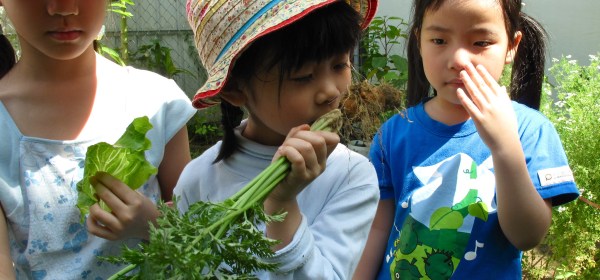
Written By Shun-nan Chiang. Taiwan and the Philippines have various points of connections regarding agricultural development. When I conducted my dissertation research on agriculture-nutrition linkages in the Philippines, I frequently encountered references to Taiwan in the Philippine agriculture sector. I was told by a Filipino geographer researching the Philippine agritourism policy that the government’s primary model was Taiwan’s farm tourism. Indeed, I soon discovered that a farm owner I met in a conference toured around Taiwan with a group of business owners to survey Taiwan’s farm tourism. The day I finished my fieldwork in the Philippines, I also met some governmental officers from Taiwan’s Council of Agriculture and other agencies. They have been collaborating on a project with the International Rice Research Institute (IRRI) since 2015.

Creating Alternative Futures Through Indigeneities: Between Taiwan and the Philippines: Part II.

Written By Yi-Yu Lai. ince the early 1980s, the PCT (The Presbyterian Church of Taiwan) intentionally organized groups visiting several countries, including Thailand, Malaysia, Singapore, and the Philippines, because they attempted to strengthen and magnify their overseas missionary work in Southeast Asia. In the Philippines, they not only collaborated with a Taiwanese pastor Jun-Nan Li (李俊男), who started to serve in the City of Cagayan de Oro since 1978, but also made contacts with the UCCP (United Church of Christ in the Philippines). At first, those Taiwanese people were all set to introduce their preaching works to the Filipinos during their first visit of 1983. However, they serendipitously found that the Philippine Indigenous resistance experiences might become a possible alternative to address their church land issue in Taiwan.

Creating Alternative Futures Through Indigeneities: Between Taiwan and the Philippines: Part I

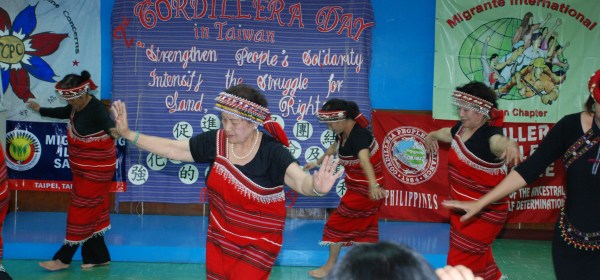
Written by Yi-Yu Lai. n the late summer of 1986, a small group of Indigenous people from the PCT (The Presbyterian Church of Taiwan) led a delegation through the Philippines’ Cordillera region. As a delegation that attempted to study minority rights, those people not merely approached Negrito, Bontoc, and Ifugao communities to learn local issues, but also visited several grassroots organizations such as the CPA (Cordillera Peoples Alliance). Although it was not the first time the PCT arranged the Philippines’ tour, their visit’s timing was noteworthy. While martial law was still imposed in Taiwan, people in the Philippines just overthrew the Marcos dictatorship through the People Power Revolution at the beginning of that year

What Is the Public Perception of Taiwan’s COVID-19 Policies, Along With Its Impact on Evaluations of President Tsai Ing-Wen?

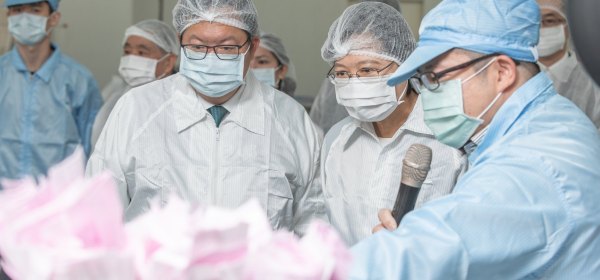
Written by Timothy S. Rich and Madelynn Einhorn. How does the Taiwanese public view COVID-19 policies and do these efforts boost evaluations of President Tsai Ing-wen? Taiwan received international acclaim for its aggressive response to the pandemic. Such policies included standard social distancing and mask mandates seen in most countries, with centrally coordinated quarantine and contract tracing policies, and fines of over $3000 US for violating quarantines. Due to these efforts, people in Taiwan are 3,400 times less likely to die from COVID-19 than people living in the U.S.

On the Margins of the Nuclear Family: Single-Parenthood Stigma in Taiwan

Written by Ming-shan Lee. Although single-parent families are increasingly common in Taiwan, this family-structure generally remains under-discussed in the public discourse and – if discussed – is framed negatively. Such stigma confounds other challenges that these families already face. Through family interviews, I have been trying to understand better the experience of such pressures, stigma and challenges.

Living in Precarity: Poverty AMONGST LGBTQ PEOPLE in Taiwan

Written by Yu-lien Cheng. 2019, Taiwan became the first country in Asia to legalize same-sex marriage. However, the long process of fighting for marriage equality was not without objections inside the LGBTQ+ social movement. In the 2014 Taiwan Nine-in-One Election, there was a new party called “Poor Queer Political Equality Party” (貧窮同志參政團, PQPEP ) whose main goal is improving the life quality of precarious gay people. The appearance of PQPEP highlighted a paradox: there were already many precarious gay people searching for help, but in the past twenty years, there has been hardly any LGBTQ+ NGO in Taiwan that stated “class” or “precarity” as its main focus.

Gods of Democracy: Divination and Epidemic Prevention in Taiwan, 2020

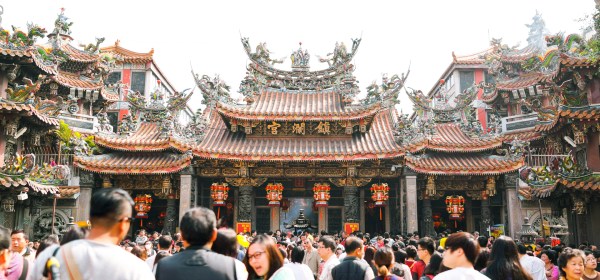
Written by En-Chieh Chao. Scientific epidemic prevention measures are essential and critical, but sometimes not enough. As demonstrated in Taiwan’s experience of 2020, other than an alert government, it takes a civil society and divine deities. After all, to prevent an epidemic literally requires human bodies to work together. The question is: what makes us work together? It could be democracy for some, and divination for others. Sometimes, it is both.

Rebellion, Loyalty, and Paths into Adulthood: Entering the Lifeworlds of Wanhua’s Wondering Youths

Written by Peijun Guo. As the rumbling from the exhaust engine ripped through the peaceful night, many youths are gathered in convenience stores and community parks of Taipei’s Wanhua district. Some smoke, some mess around, and then eventually the group moves on to the next place to hang out and waste some time. This group of youths who do not get on well at school and who wander about the city streets are part of the background murmur of parts of urban Taipei. They wander about as if they are waiting for something, whether it is to go to school, to find a job, or just for the juvenile detention center to take them in.

How Taiwan uses Buddhist literature for environmental education

Written by Natasha Heller. Climate change is one of the biggest challenges that the world faces. A United Nations report has cautioned that greenhouse gas emissions due to human activity are at a record high, “with no signs of slowing down.” Many nations are recording weather extremes, higher average temperatures and rising seas. Meanwhile, the first wave of increasing numbers of climate refugees points to how a changing environment will reshape human life.

Living with and through Patriarchy: My Experience as a Migrant Worker and Migrant Wife in Taiwan

Written by Nguyễn Thị Thanh Hà and Isabelle Cheng. It has been more than three decades since Southeast Asian nationals began to work and establish their families in Taiwan. Men and women from the Philippines, Thailand, Indonesia, Vietnam and Cambodia fill the labour shortage in construction, fishing, manufacturing, care and agricultural industries, whilst the women became members of Taiwanese society because of their marriage and family formations. This ongoing regional migration flow has enriched the socio-cultural landscape of Taiwan, where multiculturalism becomes the prevailing normative value that respects and appreciates differences. Nevertheless, this development has not been smooth or unchallenged.

The Problem of Taiwan’s Lost-Contact Migrant Workers’ ‘Illicit Enjoyment’

Written by Linh Le. Taiwan and its migrant workers are tangled in a bitter-sweet marriage: one needs another but cannot stand the flaws of the other. Like Director Tsai Tsung-lung’s attempt to show the human side of migrant workers through his latest documentary “Nine shots,” this article shares the same sentiment by highlighting these workers’ needs for leisure, enjoyment and entertainment like any other human being. However, these needs are rarely satisfied due to many unfortunate circumstances.

1 37 38 39 40 41 56