The Death Penalty in Taiwan: An Overview and the Impact of 113-Hsien-Pan-8 

Written by Szu-Yu (Suzy) Chen. This article provides an overview of Taiwan’s legal landscape of the death penalty, focusing on the Constitutional Court’s Judgment 113-Hsien-Pan-8 (2024), which upheld the constitutionality of the death penalty while imposing strict procedural restrictions. It examines the historical context, legal shifts, and the current impact of 113-Hsien-Pan-8, highlighting its influence on Taiwan’s death penalty practices and the ongoing debate.

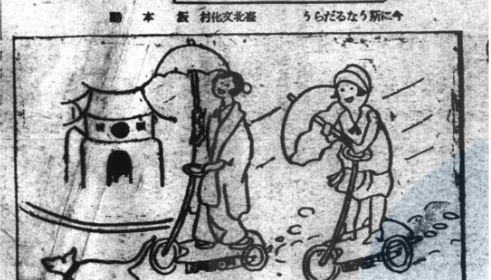
Black Cat and Black Dog: Gendered Modernity and Youth Identity in Colonial Taiwan

Written by Wei-chi Chen. This article explores the terms “Black Cat” and “Black Dog” in colonial Taiwan during the 1920s and 30s. These terms, originating from a Taiwanese opera song, were used to translate the Japanese “moga” and “mobo,” describing emerging gender identities and a new social identity in modern urban culture. They also reflected a shift towards liberation and a contrast with existing gender norms at that time.

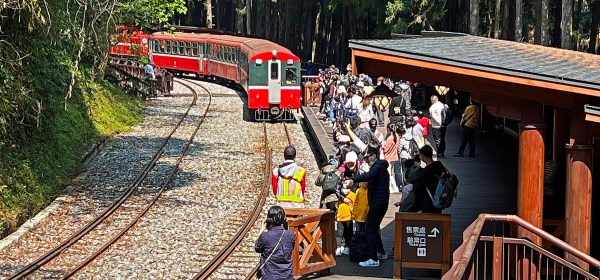
Tracks of Influence: How Taiwan’s Railway Heritage Fuels Soft Power

Written by Tang Meng Kit. Taiwan’s railway heritage, originating from its Japanese colonial past, has transformed into a vibrant symbol of soft power. Through thoughtfully curated museums, cultural events, and international collaborations, particularly with Japan, Taiwan weaves history and innovation into a compelling narrative. This approach not only nurtures cultural exchange and tourism but also reinforces Taiwan’s resilience and evolving national identity on the global stage.

Distance Between Goals and Actions: The Challenges of Implementing Legal Frameworks for Climate Change Adaptation in Taiwan 

Written by Chien-Liang Lee. This article examines the evolution of Taiwan’s legal framework for climate change adaptation, identifying gaps between the current framework and the adaptation goals. It argues that the most critical missing link is the lack of robust normative connections between the various special administrative laws. It calls for more cohesive legal mechanisms to better connect multiple relevant sectors involved in climate adaptation actions.

Rukai Tribe’s Millet Farming: Indigenous Knowledge and Climate Change Adaptation Wisdom 

Written by Tzu-Ming Liu. The article discusses how the Rukai tribe’s traditional millet intercropping system not only sustains their food security and cultural heritage but also serves as an effective adaptation strategy to climate change. It also critiques government policies and economic shifts that have neglected these Indigenous practices, leading to environmental injustice and increased vulnerability to extreme weather events.

Climate Change Adaptation in Taiwan: Empowerment Workers and Mental Health Challenges in Post-Morakot Reconstruction  

Written by Tzu-Ming Liu. Based on the author’s experience participating in reconstruction after the 2009 Morakot Typhoon, this article focuses on the role of disaster companions (empowerment workers) who connect disaster victims with external resources, highlighting the need for their mental health support for companions and strengthened communication with the government.

Conservation and adaptation go hand in hand: on the role of Taiwan Ecological Network in fostering resilient landscapes and seascapes 

Written by Paulina G. Karim and Kuang-Chung Lee. This article discusses how the Taiwan Ecological Network integrates conservation and adaptation strategies to build resilient landscapes and seascapes in the face of climate change, biodiversity loss, and pollution. The authors highlight community-based resilience assessments and adaptive co-management practices, demonstrating the role of Indigenous and local knowledge in safeguarding both ecological systems and community well-being in Taiwan’s socio-ecological production landscapes and seascapes.

Taiwan Studies Teaching: The Experience of Connecting Teaching and Event Programmes at SOAS University of London

Written by Dafydd Fell. The article traces the establishment of the Taiwan Studies Programme at SOAS and explores how it integrates Taiwan Studies courses with an extensive event program, including lectures, film screenings, and alumni talks. The strategy enhances student engagement, sustains interest in Taiwan-related studies, and fosters academic-community interaction. By combining teaching with real-world experiences, the Taiwan Studies Programme at SOAS successfully maintains a long-term and sustainable environment for Taiwan studies.

Teaching Taiwan by teaching languages – Performative Interpretation Strategies for Taiwanese Language Learning – A Case Study at Inalco

Written by Chan-yueh Liu. This article emphasizes the importance of teaching Taiwan through its multilingual heritage, advocating for the inclusion of Taiwanese languages (Tâi-gí in academic programs. It introduces “Performative Interpretation Strategies” at Inalco in France, which engages students through performance, music and digital content creation. The approach enhances language learning by fostering creativity, cultural immersion, and communicative competence.

“Mapping Taiwan Teaching” at Trier University: Teaching Taiwan in Script, Speech, and Performance

Written by Thomas Fliß. This article introduces the workshop “Mapping Taiwan Teaching – Teaching Taiwan in Script, Speech and Performance” at Trier University, which focused on teaching Taiwan through language, culture, and performance. Scholars and educators explored Taiwan’s geopolitical significance, linguistic diversity, and cultural identity. The event featured interdisciplinary panels on Taiwan’s literature, theatre, and education, highlighting the need for expanded Taiwanese language courses and intercultural learning methods.

Indigenous Sovereignty Under Threat: The Fight Against Recent Legislative Setbacks in Taiwan 

Written by Indigenous Youth Front. This article examines the 2024 amendment to the Organization Act of the Council of Indigenous Peoples. It places this controversial amendment within the broader context of the long-term marginalisation of Indigenous peoples in political participation and advocates for actions that uphold genuine Indigenous self-determination.

1 5 6 7 8 9 55