How can the WTO mitigate the challenges and difficulties Taiwan is experiencing associated with joining CPTPP?

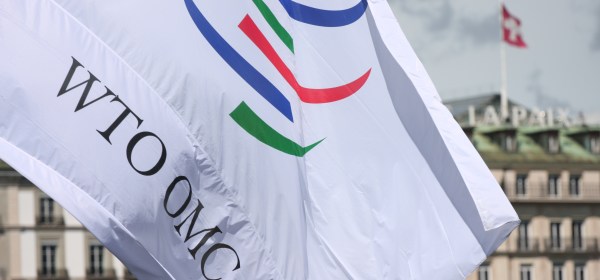
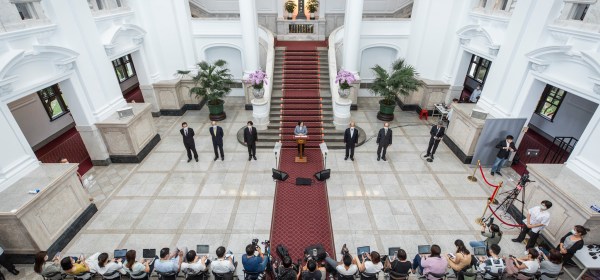
Written by Ming-Cheng Li. This article highlights the WTO as the fundamental economic pathway for Taiwan to join the CPTPP. Taiwan has demonstrated its willingness to conform to international standards of trade policies  and actively engage in the governance of the WTO. It also developed robust partnerships with substantial members of the WTO like Japan, Canada and the UK.

Taiwan’s Trade Dynamics in 2023: Challenges and Partners Shifting 

Written by Yun-Chieh Wang. In 2023, Taiwan’s international trade experienced a decline in growth because of global economic challenges, with a notable dependency on semiconductor exports. Despite this downturn, Taiwan’s trade gap widened positively, attributed to the reshoring of Taiwanese enterprises, and increasing foreign investment. Meanwhile, the Taiwanese government is actively diversifying its trade partners, reducing its reliance on China and forging ties with the U.S. and U.K. through trade agreements.

What Does Taiwan’s Presidential Election Outcome Tell Us About Its Economic Prospects?

Written by Min-Hua Chiang. William Lai (Lai Ching-te) of the Democratic Progressive Party (DPP) secured his election as Taiwan’s 16th president on January 13, 2024. As the DPP extends its rule for another four years, the administration is likely to maintain President Tsai Ing-wen’s economic policies, notably diversifying the economy away from China. Navigating Taiwan’s export-oriented economy through the evolving US-China relationship will pose the most significant challenge for the new administration. 

US-Taiwan Trade Agreement: It is More of Politics than Economic

Written by Raian Hossain. Taiwan has severe military security concerns, and the island has over-trade and investment dependency towards the PRC, which raises the question of economic security. As of 2022, the PRC accounted for 25% of Taiwan’s exports and 20% of its imports, making Beijing still the largest trading partner of Taipei. However, Taiwan made significant progress in growing trade by 25% with the U.S. in 2021 and expanded its trade volume with New South Bound countries under President Tsai Ing-wen. After a year of negotiations aimed at diversifying trade and commerce, the U.S. and Taiwan signed the first part of the US-Taiwan Initiative on 21st Century Trade. Meanwhile, the second round of negotiations has already started.

Taiwan-US Trade Initiative: A good start, but the beginning of a long road

Written by Chieh-Ting Yeh. In 2005, I understood the FTA to be an aspirational long-shot—something that we can press for but not something we should expect to see in the foreseeable future. Recent developments such as the 21st Century Trade Initiative are milestones for sure, but milestones to mark just the beginning of a long road for a true free trade agreement with the US, as well as meaningful participation in regional trade blocs.

The Prospect of a US-Taiwan BTA in an Era of Heightened Political Exchanges

Written by Brian Hioe. The US and Taiwan signed the first stage of the US-Taiwan Initiative on 21st Century Trade in June, paving the path for both to streamline customs and taxation procedures between both sides. The trade agreement will also boost economic cooperation regarding small-to-medium-sized enterprises, while implementing anti-corruption measures. Progress on the trade agreement has continued, with the second negotiating round of the agreement starting in August. In particular, an end to double taxation between the US and Taiwan is a concrete outcome that both sides may pursue, long a stumbling block for those that work and do business in both the US and Taiwan. As progress on the US-Taiwan Initiative on 21st Century Trade has continued, legislation to this effect has been introduced in the US Senate.

Fair Go for Taiwan: Perspectives from Taiwanese diaspora in Australia

Written by Mei-Fen Kuo. A recent exhibition mounted by Australia’s government office in Taiwan––“40 years, 40 stories”––highlights the importance of people-to-people ties linking Taiwan and Australia since the office opened in Taipei in 1981. These are timely stories. In an exhibition of its own, Beijing recently lobbed missiles over Taiwan’s people’s heads to show that its territorial claims to Taiwan will not be slighted. Australia does not challenge those claims, but it does maintain close relations with people in Taiwan through trade, education, technology, and cultural exchanges, which have flourished despite the lack of official recognition.

INDIA-TAIWAN RELATIONS: RIGHT TIME TO MOVE AHEAD

Written by Jasinder Singh Sodhi. Relations between India and Taiwan have improved significantly over the last two decades, even though the two nations do not have formal diplomatic ties. This is because India officially recognises China as part of its One-China Policy. In the political field, India and Taiwan are both grappling with the Chinese standoff in the Himalayas and Taiwan Strait, respectively. Therefore, reinforcing India-Taiwan relations can stand up to the expansionist plans of China since China is incapable of launching a two-front war on India and Taiwan simultaneously. Thus, the stronger relations India and Taiwan have, the better results it will have for mutual national interest and national security.

Truss or Sunak? Who is better for Taiwan?

Written by Ben Seal. In the previous general election, which took place in December 2019, just over forty million voters gave Boris Johnson a majority of eighty seats. This summer, after the resignation of Johnson, around 180,000 Conservative Party members are choosing who will be the UK’s next Prime Minister. Will they select Sunak or Truss? As the voting goes into the final days, polls suggest that Truss will be the most likely victor, but my piece attempts to examine how both contenders would affect the UK’s relationship with Taiwan.

Tension Across the Taiwan Strait: Perspectives, Concerns & Dynamics from South Asia

Written by Raian Hossain. This article looks into the reactions and concerns from Asian countries due to the complex triangular relationship of the US-China-Taiwan in the Taiwan Strait. While analysing the dynamics, it also unpacks whether this ongoing crisis would further shrink Taiwan’s space for engagements in the international space like trade, commerce, and people-to-people connectivity (not focused on diplomatic recognition). Therefore, this article takes the South Asian region as a case study to answer these two queries.

The Rivalry Between Mainland China and Taiwan: How They View Each Other’s Application to Join the CPTPP

Written by Liqiao Guo. This article clarifies how the mainland and Taiwan view each other’s applications and tries to find the similarities and differences by addressing three vital questions. First, what are the motivations for both sides, respectively? Second, Who and why do they think they can finally join? Third, what would the final result be and its impact on cross-strait relations and the Asian-Pacific region’s economic order? This research details some of the essential official statements and academic contributions to the overall debate on both sides. Although I primarily draw on official statements and academic contributions to elucidate the discussion, I also consider newspaper articles, mainly because they provide an insight into an influential and growing antagonistic perspective. 

1 2 3 4 5