Finding the Power of Quiet in a Noisy World: Listening to More-than-Human Soundscapes

Written by Laila Chin-Hui Fan. Taiwan joined the global initiative “Listening to Quiet,” reaffirming its leadership in soundscape conservation. From misty wetlands to the celebrated Quiet Trail, citizens practised deep listening as an ecological and philosophical act. These quiet walks are rooted in years of civic advocacy and reveal an emergent environmental ethic in Taiwan, where attentive listening becomes a form of humility, coexistence, and more-than-human care.
How placement in Kew led us to the world: paving the route to our PhD

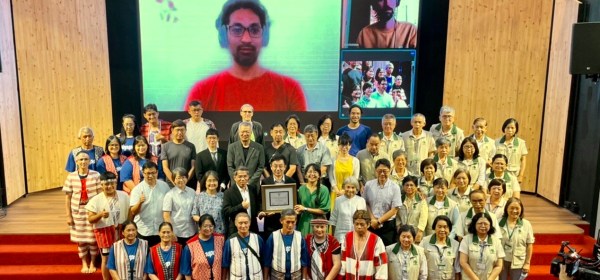
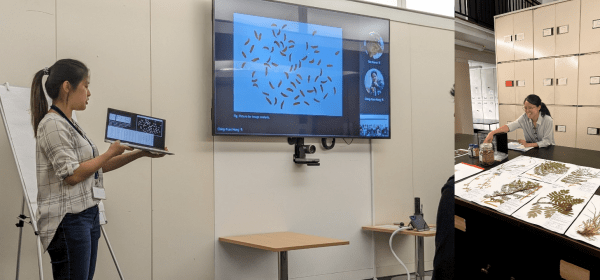
Written by Ching-yuan (Joy) Hung and Mu-Chen (Jenny) Liu. This article tells the shared journey of two NTU graduate students who interned at the Kew Gardens. Immersed in diverse experiences, including seed imaging, herbarium tours, and a culture of scientific exchange, they found renewed purpose in research, which led both to reimagine their paths toward doctoral studies and global collaboration.

Looking Ahead to 2030: Realising Five Strategic Objectives of the Satoyama Initiative in Taiwan 

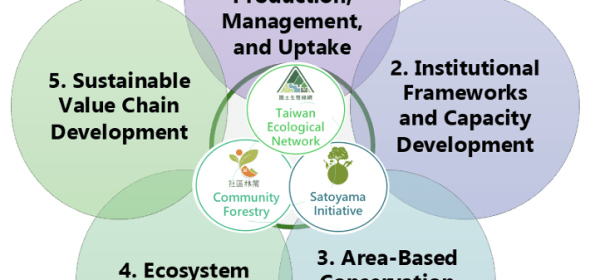
Written by Paulina G. Karim and Kuang-Chung Lee. This article outlines how Taiwan is advancing the Satoyama Initiative through five strategic objectives set out in the 2023–2030 IPSI Plan of Action. By integrating knowledge co-production, institutional capacity, area-based conservation, ecosystem restoration, and sustainable value chains, the authors highlight how Taiwan’s ‘3 in 1’ strategy contributes to global biodiversity goals through local and people-centred approaches.

Ecotourism Destination Marketing Organisation (DMO) – A Case Study of the Shih-ba-luo-han-shan Forest Reserve in Southern Taiwan 

Written by Mei-Hui Chen. This article introduces the concept of Ecotourism Destination Marketing Organisations (DMOs) and illustrates how they function through the case of the Shih-ba-luo-han-shan Forest Reserve in southern Taiwan. By fostering cross-sector collaboration and community participation, the DMO model supports sustainable ecotourism and biodiversity conservation.

Co-Weaving Taiwan Ecological Network – Satoyama in Practice 

Written by Paulina G. Karim. This special issue, co-produced by Taiwan’s Forestry and Nature Conservation Agency and the Taiwan Partnership for the Satoyama Initiative, presents a “3-in-1” people-centred conservation strategy combining the Taiwan Ecological Network, Community Forestry, and Satoyama approaches. It shows how Indigenous and local communities steward the island’s bio-cultural landscapes.

A Time of Extinction: Dedicated to Whom? Exploring Sustainability through the Lens of Theater, Let’s Be Consciously Wasteful

Written by Charles Lee. This article raises fundamental questions about theatre sustainability. It focuses on theatre venues and infrastructure in Taiwan by critically examining productions that attempt to respond to the concerns through distinct approaches. The author also investigates the unique dynamics Taiwanese The author also explores the unique dynamics that Taiwanese audiences have with the “aesthetics of Anthropocene theatre”.

Sustainable Traditional Knowledge: Land Ethics and Disaster Resilience in Cinsbu 

Written by Bayis Atung; translated by Yu-Chen Chuang. In recent years, due to climate change, community members have begun to think more about how to minimise the impact of disasters before they occur. When engaging in farming, we have started to think and take action to incorporate traditional land use knowledge from the past. We continuously experiment and face challenges, ultimately returning to traditional land use and cultivation ethics. We have discovered that this approach can be used to adapt to and address climate change, as it helps Cinsbu adapt to the ever-changing challenges posed by disasters. In this article, I share our land ethics and explain how sustainable land use relates to disaster prevention. Even though the intensity of climate change has increased, the Tayal people have not given up on using the land. Instead, there have been even more changes in how we use the land.

There Is No Such Thing As Creativity or Lack Thereof; There Is Only Fun and Not Enjoyable: An Interview with an Artist Pei-Ying Lin

Written by Yi-Cheng Sun; translated by Yi-Yu Lai. This interview attempts to explore the metaphors of “workshops as classrooms” and “art creation as a learning process” in response to my curiosity about the phenomenon of “workshops, each with its own expression,” especially because artist Pei-Ying Lin frequently employs workshops in her art creation. 

The Limits of “Ecological Development”: Making Existing Lifeworlds Visible on Taipei’s Shezidao

Written by Aaron Su. In March 2023, yet another round of protests broke out in response to development plans on Taipei’s Shezidao, a flood-prone peninsula on the outer edges of the city home to over 11,000 residents. Spanning multiple mayoral regimes, the Taipei government’s plans to construct on the currently development-restricted Shezidao has been met with dissatisfaction time and again from its residents, who worry about how seemingly optimistic promises of uplift and revitalization spell evictions and other drastic changes to their existing economies, social networks, and modes of life.