The national Committee on Climate Change: Also a security issue  

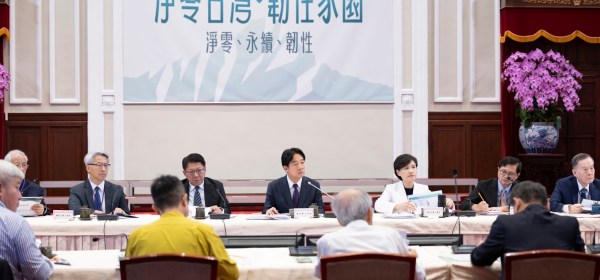
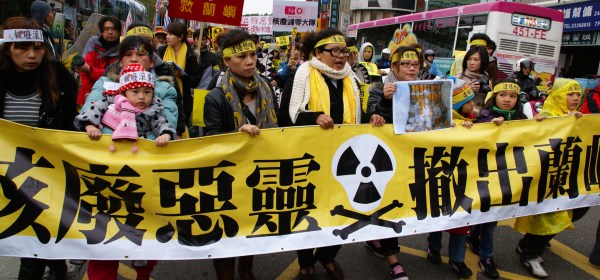
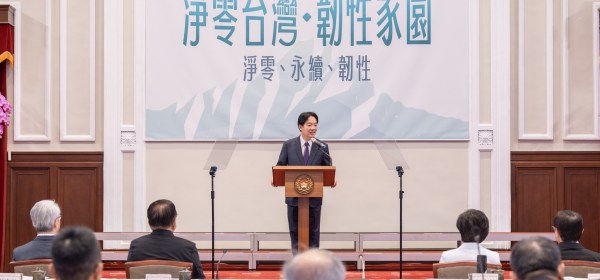
Written by Paul Jobin. This article discusses the challenges and strategic priorities of Taiwan’s national committees placed in the Presidential Office, addressing the issues of climate change, defence resilience, and health. This article reviews the first meeting of the National Climate Change Response Committee to assess the government’s stance on nuclear energy, the priorities of different stakeholders in climate policy, and the potential synergies with Taiwan’s defence and health strategies.  

Semiconductor and Renewable Energy: Taiwan-Vietnam Cooperation under New Leadership

Written by Tran Thi Mong Tuyen. Since the 1990s, Taiwan’s government has championed the “Go South” and “New Southbound” policies, catalyzing Taiwanese entrepreneurship across the Association of Southeast Asian Nations (ASEAN). Vietnam, boasting a stable economy, ample labour force, a youthful demographic, and rich natural resources, has emerged as a prime destination. This article focuses on the recent cooperation between Taiwan and Vietnam in different industries, and proposes potential future collaborative opportunities between the two.

Neither Green nor Just: The DPP’s Reckoning with Environmental Justice 

Written by Dominika Remžová. The Russian weaponisation of gas supplies has sparked a renewed interest in Taiwan’s energy security, placing the DPP’s anti-nuclear policies at the centre of attention. On the one hand, both energy and national security experts have criticised the DPP’s continuing nuclear phase-out for pushing Taiwan, which in 2022 imported more than 97% of its energy, into an increasingly precarious position. The opposition, on the other hand, has criticised the party’s 2025 energy mix formula (i.e., 20% renewable energy, 30% coal, and 50% LNG) for its inconsistency with international trends, namely the increasing role of nuclear energy in global decarbonisation efforts, which the DPP countered by referring to industry-wide trends, such as the renewable energy focus of the RE100 initiative, instead.  

Taiwan’s 2024 Presidential Candidates: How Do They Fare on the Climate?  

Written by Chia-wei Chao & Benjamin Yang. When it comes to the climate, all three candidates in Taiwan’s upcoming presidential election have emphasised the importance of taking action and committed to achieving net-zero emissions by 2050. The main driver behind this mainstreaming of climate policy is the fact that supply chain requirements have made the country’s export competitiveness highly connected to climate performance. Therefore, we must scrutinise the comprehensiveness of each candidate’s policy proposals, rather than solely relying on whether they are climate denialists, to distinguish their positions. Taiwan Climate Action Network (TCAN), a collaborative advocacy platform organised by five NGOs, has thus produced a climate commitment tracker to compare their positions on seven key climate-related policies: (1) 2030 emissions reduction target, (2) carbon pricing strategies, (3) 2030 power mix, (4) renewable energy development plan, (5) industrial decarbonisation, (6) public participation, and (7) just transition. In this article, we will focus specifically on their 2030 pledges, carbon pricing strategies, and just transition policies.

Taiwan’s energy policy at the crossroads in the presidential election in 2024? 

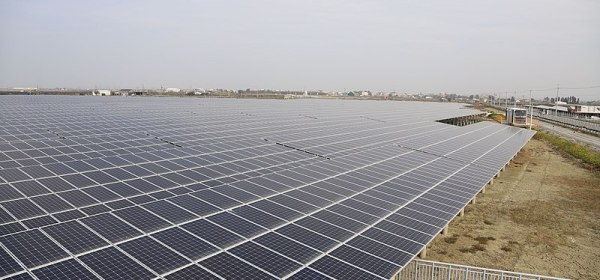
Written by Anthony Ho-fai Li. Energy policy remains a highly controversial policy arena in Taiwan after democratisation, given its importance for Taiwan’s security, environmental sustainability and economic development. Under the presidency of Tsai Ing-wen, the agenda of “Nuclear-free Homeland 2025” (2025非核家園) proposed by the Democratic Progressive Party (DPP) in 2016 has been subject to political challenges, which involved the debates about the use of nuclear energy beyond 2025 and the reduced capacity of coal-fired electricity plants for air pollution mitigation. The policy strategy to replace nuclear energy with rapid solar energy development has also faced enormous social challenges as its large-scale installation conflicts with the existing land uses. 

The Democratic Progressive Party’s Nuclear Policy Dilemma: An Unwavering Anti-Nuclear Stance Amidst Self-Contradictory Policies

Written by Minfan Yu. On May 28th, the DPP-affiliated presidential campaign candidate William Lai Ching-Te (賴清德) stirred controversy by responding to a question about whether the cross-strait tensions faced by Taiwan had resulted in a shortage of natural gas for electricity production. Despite being a staunch advocate for green energy and consistently promoting an anti-nuclear stance, Lai’s answer suggesting the potential reactivation of nuclear power plants in emergency situations appeared contradictory to the DPP’s anti-nuclear policy.

Energy transition in Taiwan: Generating electricity with love, or inclusive public engagement?

Written by Anthony H. F. Li. A stable electricity supply is vital for national security, economic development as well as the everyday lives of citizens in Taiwan. Since the Democratic Progressive Party (DPP) pursued an ambitious policy to decarbonise the electricity sector with renewable energies and to phase out nuclear energy by 2025, the discussion on whether Taiwan is facing a shortage of electricity amidst the process of energy transition emerges on the social agenda from time to time.

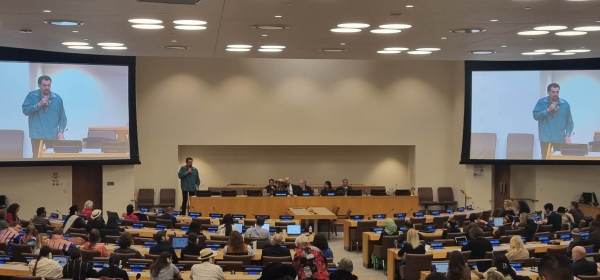
Is Going Green Hurting Indigenous Communities? Reflection from Participating in the United Nations Permanent Forum on Indigenous Issues 

Written by Wasiq Silan. Is going green hurting Indigenous communities? Not necessarily. However, exclusionary conservation measures create a lose-lose outcome for non-Indigenous and Indigenous communities. Indeed, Indigenous peoples’ full and substantial participation is a prerequisite to achieving a sustainable future and halting the rapid loss of global biodiversity. This is true for the Indigenous communities in Taiwan, such as in the case of the solar panel controversy on the Katratripulr Pinuyumayan (Beinan in Mandarin Chinese) people’s traditional territory. Drawing from the experience of the Sámi, my recent participation in the United Nations Permanent Forum on Indigenous Issues (UNPFII) may shed light on this issue.

1 2 3 4