An era of change: Taiwan’s unofficial diplomacy in Eastern Europe during the Tsai Ing-Wen presidency

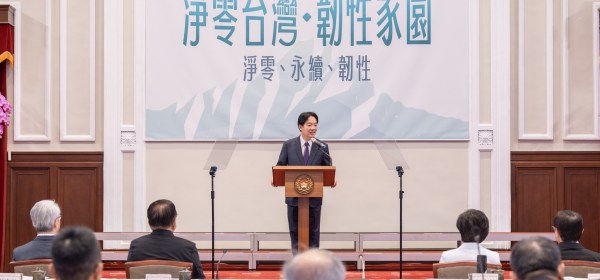
Written by Eason Leung. This article examines the unofficial diplomacy of Taiwan in Eastern Europe. It identifies a flexible approach of Taiwan in dealing with various Eastern European nations – deepening ties with friendly nations such as Lithuania, Poland and the Czech Republic, while seeking trade and investments opportunities for countries with closer ties with China like Hungary. 

Optimism From One Island to Another: Prospects for UK-Taiwan Relations Under the New Labour Government

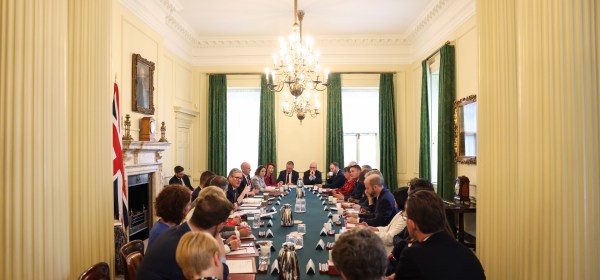
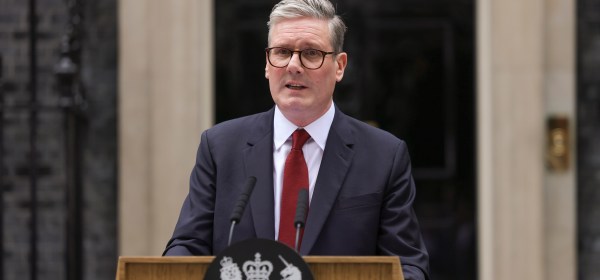
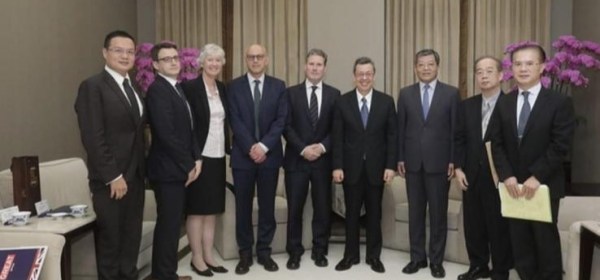
Written by Mariah Thornton. This article presents an optimistic case for Taiwan-UK relations under the new government. Labour’s holistic view of security offers room for Taiwan to provide valuable technical insight and support. The new administration’s refreshed security commitments and Keir Starmer’s personal experience of visiting Taiwan will inform the government’s policy towards Taiwan.

Progressive, Realist or both? British foreign policy and Taiwan under a Labour Government

Written by Max Dixon. This article argues that dealing with Taiwan is central to the new Foreign Secretary David Lammy’s notion of progressive realism, including its security commitment to Japan and South Korea, to the AUKUS pact and economic commitment to the CPTPP. Though Labour is conventionally focused on relations with Europe, the Taiwan issue is increasingly inevitable in the British approach to the Indo-Pacific.

Taiwan’s Inevitable Internationalisation in 2024

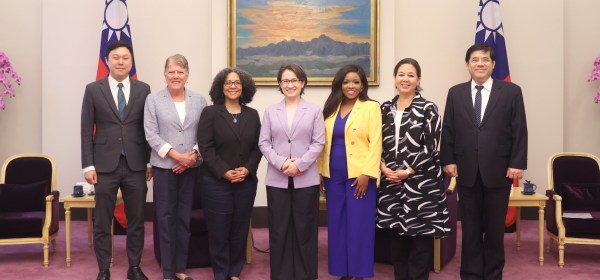
Written by Zsuzsa Anna Ferenczy. In 2023, Taiwan continued to present itself as a democracy internationally through subnational diplomacy. As it elected a new president and a new parliament in the new year, this article anlayses how the dynamics of cross-Strait relations are driving the internationalisation of Taiwan. It is expected that the two sides are likely to drift further apart in the coming years and this will further strengthen Taiwan’s identity as a democracy.

A Routine Election with Mixed Results 

Written by Jonathan Sullivan. Taiwan has concluded its eighth direct election of the Republic of China (ROC) President. It was not a pivotal, watershed or critical election, and it was not a contest between war and peace or the embodiment of democracy vs authoritarianism; it was an entirely normal election. The main issues (China, the economy), turnout (71%), the communications environment (parochial and partisan), the candidates’ micro-scandals (this time round requiring knowledge of esoteric building code and land-use regulation), the boisterous rallies and hustings etc were all familiar and part of the routine functioning of Taiwanese democracy. The Central Election Commission once again organised a flawless election. The nuts and bolts of voting stations in temples and school gyms, accurate and fast analogue counts, volunteers getting people lined up and in and out smoothly, etc, are the little things that add up to a big sum. 

The EU-China Summit and the Future of EU-Taiwan Relations: Reconstructing the Normative Agenda

Written by Dominika Remžová. A few days prior to this year’s EU-China summit (the first to take place in person since the COVID-19 pandemic), the Financial Times has published an opinion piece by Anders Fogh Rasmussen, former Secretary-General of NATO, calling for the Union’s stronger support for Taiwan. The article singles out security considerations as the main reason for such a principled stance, which the author acknowledges has been taken up by only a few Central and Eastern European (CEE) leaders. This focus on security issues and small states is noteworthy, as it provides the most fruitful avenue for further strengthening of ties moving forward.

US-Taiwan Trade Agreement: It is More of Politics than Economic

Written by Raian Hossain. Taiwan has severe military security concerns, and the island has over-trade and investment dependency towards the PRC, which raises the question of economic security. As of 2022, the PRC accounted for 25% of Taiwan’s exports and 20% of its imports, making Beijing still the largest trading partner of Taipei. However, Taiwan made significant progress in growing trade by 25% with the U.S. in 2021 and expanded its trade volume with New South Bound countries under President Tsai Ing-wen. After a year of negotiations aimed at diversifying trade and commerce, the U.S. and Taiwan signed the first part of the US-Taiwan Initiative on 21st Century Trade. Meanwhile, the second round of negotiations has already started.

1 2 3 4 5 16