Taiwan’s New President: Continuity, Priorities, Vision

Written by Chieh-Ting Yeh. As recent developments transition into a period of stability, the focus shifts towards what lies ahead. The incoming government faces pivotal questions: How will President Lai’s four-year term compare to President Tsai’s preceding eight years? What key challenges await immediate attention from President Lai? Additionally, it’s crucial to consider the direction in which Taiwan is heading to carve its unique identity in the global landscape.

Taiwan People’s Party as the Kingmaker: What future holds for the party?

Written by Brian Hioe. The TPP has proven that it is a force with staying power in Taiwanese politics, then–for at least the next four years. Questions about the long-term viability of the party still remain. This is particularly regarding the party’s relationship with its chair, Taipei mayor Ko Wen-je, and how the TPP will relate to the KMT as the larger party in the pan-Blue camp.

Election win for the DPP, but a split legislature 

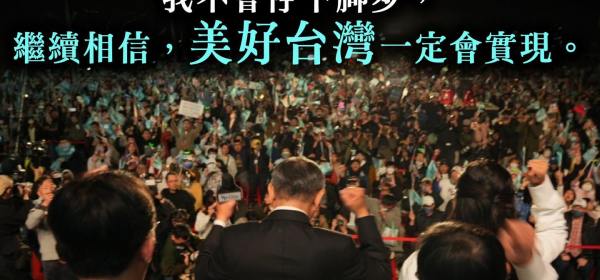
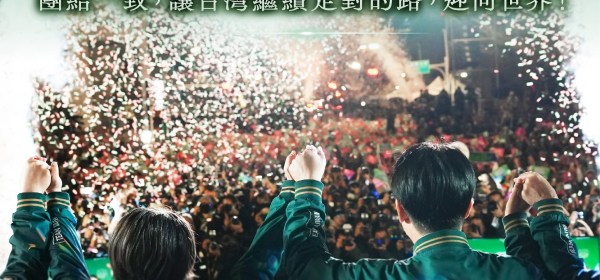
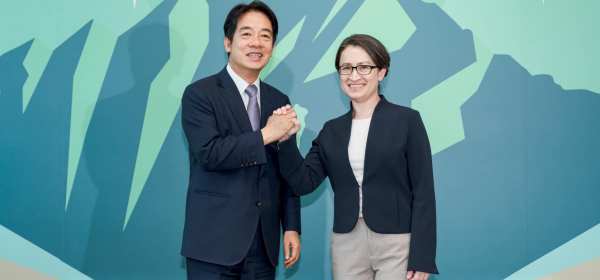
Written by Gerrit van der Wees. After a hard-fought campaign, the DPP candidate “William” Lai Ching-te and his running mate Hsiao Bikhim emerged victorious in Taiwan’s presidential election race with 40.1 % of the vote. They were elected Taiwan’s President and Vice-President respectively. The total turnout was 71.8% of the eligible voters, a bit lower than the 74.9% in the 2020 elections. The main opposition candidate in the three-way race, Messrs. Hou Yu-ih of the Chinese Nationalist Kuomintang Party, and his running mate, pro-China media personality Jaw Shaw-kang, received 33.5% of the vote, while Mr Ko Wen-je of the Taiwan People’s Party (TPP) and his running mate Cynthia Wang, came in a respectable third with 26.5% of the vote.

Taiwan’s energy policy at the crossroads in the presidential election in 2024? 

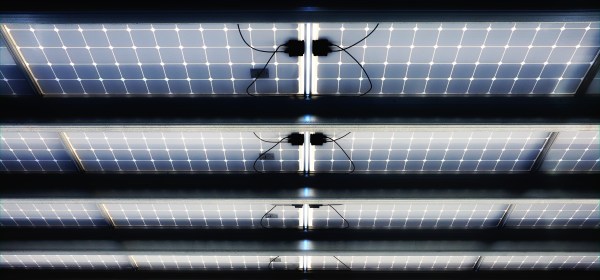
Written by Anthony Ho-fai Li. Energy policy remains a highly controversial policy arena in Taiwan after democratisation, given its importance for Taiwan’s security, environmental sustainability and economic development. Under the presidency of Tsai Ing-wen, the agenda of “Nuclear-free Homeland 2025” (2025非核家園) proposed by the Democratic Progressive Party (DPP) in 2016 has been subject to political challenges, which involved the debates about the use of nuclear energy beyond 2025 and the reduced capacity of coal-fired electricity plants for air pollution mitigation. The policy strategy to replace nuclear energy with rapid solar energy development has also faced enormous social challenges as its large-scale installation conflicts with the existing land uses. 

A Battle for Survival : The Crossroads of the New Power Party without Huang Kuo-chang

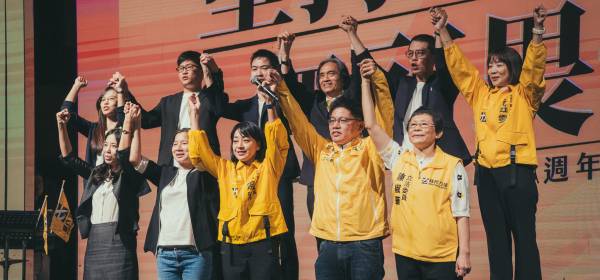
Written by Jonathan Leung. Throughout the years, there has been continuous withdrawal of significant party members. Most of them have joined the DPP or become its affiliates. Some core members quit the party for controversial reasons, like Kawlo Iyun Pacidal and Hsu Yung-ming. Most of the NPP’s notable social influencers, scholars, and intellectuals also withdrew from the party in the past few years. In a nutshell, the NPP is facing a serious problem of decomposition. Yet, the most updated and unexpected news is former leader Huang Kuo-chang, their most iconic and representable figure, defected to the Taiwan People’s Party (TPP) in November right before the legislative nomination. This article will examine the crossroads of the NPP without Huang to project the possible path of the party. 

Does “Hong Kong Influence” Linger in the 2024 Taiwan Election?

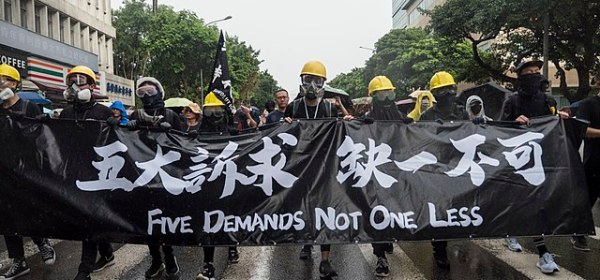
Written by Sanho Chung. It has been widely recognised that Hong Kong’s Anti-Extradition Movement in 2019 was the turning point of the 2020 General Election in Taiwan. In the last general election, Beijing’s hardline crackdown on the protests in Hong Kong gave rise to the Taiwanese’s mistrust of China and finally brought a big win to the Democratic Progressive Party (DPP), which was expected to lose both their majority over the Legislative Yuan and their presidency. But after three years of National Security Law (NSL) enactment in Hong Kong, the Hong Kong issue in this general election seems no longer as focal as it was. How should we make sense of this huge contrast in attention? Has “Hong Kong Influence” faded out totally?

As Two Go Blue, will Green be the Tertius Gaudens of Taiwan’s 2024 Elections?

Written by Jasper Roctus. What then transpired in November went completely beyond general expectations. While a desponded Gou could have been expected to go independent or join forces with Ko Wen-je, the former mayor of Taipei (2014–2022) and founder of the third force, “white” (白) Taiwan People’s Party, an outright electoral pact between Hou and Ko seemed out of the question. The idea that Ko, who in the past has been perceived as greener than even the DPP as he, for instance, mingled with student protestors during the 2014 Sunflower Movement and later stumped for deep Green rockstar Freddy Lim, would join forces with the KMT representative of the establishment he claimed to loathe, seemed a contradiction in terms.

Why are the 2024 elections seemingly less competitive than the 2020 elections?

Written by Brian Hioe. Compared to the 2020 elections, it has often been remarked that the 2024 elections have been decidedly less competitive. Certainly, this does seem to be true, in that for most of the election cycle, DPP presidential candidate Lai Ching-te has been ahead. Nevertheless, what are the structural factors at work here, which differentiate the 2024 elections from the 2020 elections? We might take a look.

Taiwan’s Presidential Elections in Full Swing

Written by Gerrit van der Wees. Mid-November has thus fundamentally changed the picture of the campaign. The addition of Hsiao Bi-khim as VP candidate has reinvigorated Lai Ching-te’s campaign, while on the Blue-White side, the move to attempt a merger of the tickets had backfired and set bad blood. With Hou Yu-ih and Ko Wen-je running separate campaigns, the differences are now becoming increasingly clear.

Computational Propaganda and Democracy in Taiwan: AI’s Impacts on Pre-Existing Challenges

Written by Tommy Hall and Margaret Siu. When generative, artificial intelligence (AI) programmes are used with malicious intent in the realm of politics, the resulting “deepfakes” can be both convincing (at a glance) and extremely damaging to the target’s image. This article will argue that a unified and proactive response is necessary for Taiwan to successfully navigate the gauntlet of challenges created by AI in a democratic political environment.

Taiwan and Europe – Partners of choice, not obligation

Written by Zsuzsa Anna Ferenczy. In January 2024, Taiwan will elect a new president. Facing an existential threat from China, for Taiwan cooperation with the EU as a partner is essential to strengthen its democratic resilience. To expand the partnership however, a better understanding of the complex nature of the EU and developing a greater sense of clarity about what Taiwan wants will be indispensable. 

1 2 3 4 5 17