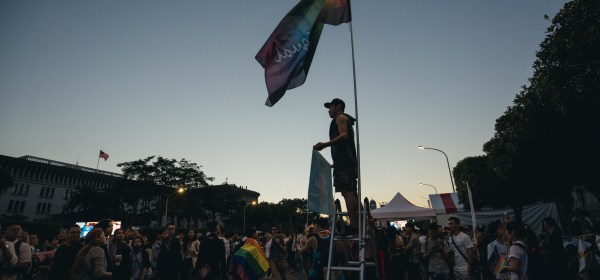
Who Are the Victims of Taiwan’s Cultural Budget Disputes? The Invisible Right to Cultural Participation for People with Disabilities

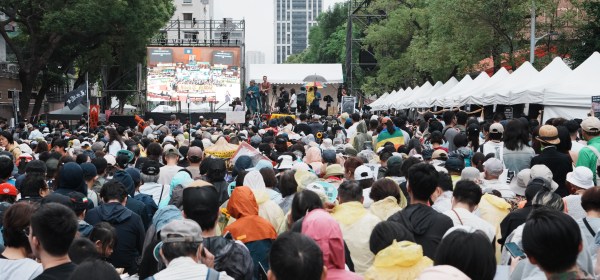
Written by Hsin-Yi Chao. This article discusses cultural equity and the rights of persons with disabilities in Taiwan. It examines cultural equity subsidies since 2016, noting that despite overall budget growth, cultural equity funding remains unstable. The author highlights a case where budget cuts led to the suspension of sign language interpretation services and proposes policy recommendations to strengthen cultural equity implementation.
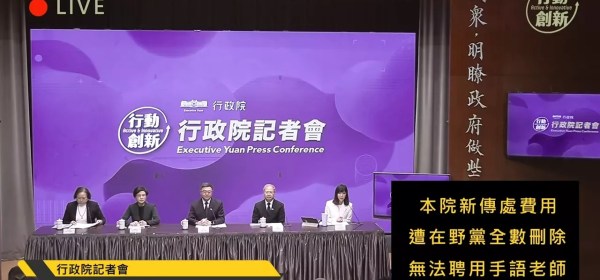
The Death Penalty in Taiwan: An Overview and the Impact of 113-Hsien-Pan-8 

Written by Szu-Yu (Suzy) Chen. This article provides an overview of Taiwan’s legal landscape of the death penalty, focusing on the Constitutional Court’s Judgment 113-Hsien-Pan-8 (2024), which upheld the constitutionality of the death penalty while imposing strict procedural restrictions. It examines the historical context, legal shifts, and the current impact of 113-Hsien-Pan-8, highlighting its influence on Taiwan’s death penalty practices and the ongoing debate.

Civic Efforts Fostering Rule of Law: Judicial Reform Foundation’s 2024 Recap and 2025 Aspirations  

Written by Cheng-Ching Lin and Grace Huang. The Judicial Reform Foundation (JRF) unites dedicated allies from Taiwan’s civil society to advance judicial reform. This article highlights their efforts and achievements in 2024, as well as their outlook for 2025. Despite the challenges posed by political turmoil in parliament, JRF remains committed to fostering public engagement, rebuilding trust in democratic governance, and upholding the rule of law.

Building a Regional NGO Hub in Taiwan

Written by Robert Wang. Over the past two years, with the support of AIT and MOFA as well as local NGOs, a Taiwan NGO alliance has successfully initiated a Fellowship Program to provide training for young NGO activists in the region and to create an NGO support network in Asia. It is important that this program be continued and expanded in order to strengthen civil societies and bolster democracies in the region.

Public Safety At Risk: Undetermined Responsibility for the Death Caused by Taichung Metro and Highwealth Corporation

Written by Yi-hsiang Shih. On May 10, 2023, a construction crane fell from a construction site of Highwealth Construction Corporation and entered the metro tracks in Taichung, resulting in one death and 15 injuries inside the train. This article aims to review the incident and shed light on the persistent structural problems with the outsourcing of construction projects, lack of staff training and inadequate emergency procedures.

How Will 2023 Gains in Transgender Rights Fair after the 2024 Elections?

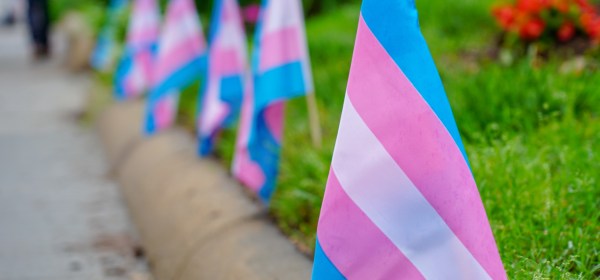
Written by Yo-Ling Chen. 2023 was a big year for Taiwan’s transgender rights movement. This article traces important legal cases regarding transgender rights in 2023, and explores how the growing public visibility of transgender issues and legal consensus around the need to abolish compulsory surgery for changing one’s legal gender play in the aftermath of the 2024 elections.

Envisioning Migrant Worker Policy: Toward Dignity and Well-being 

Written by Hang-Tang Chen; translated by Yu-Chen Chuang. Taiwan needs to refine its migrant worker policies to focus not only on labour contributions but also on the well-being and dignity of the workers. Personal stories of migrant workers in this article reveal the necessity for comprehensive policies that address the physical and mental health needs, acknowledging the humanity behind the workforce.

Remembering Shih Ming-teh 

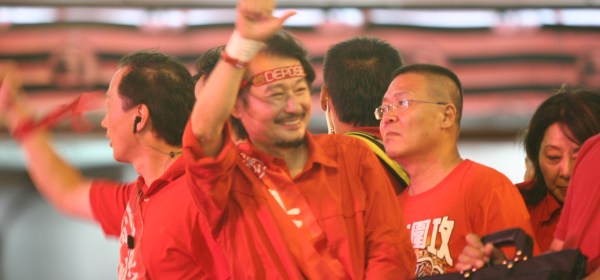
Written by Thomas J. Shattuck. On January 15, 2024, only a few days after the election, longtime democracy and human rights advocate, Nobel Peace Prize nominee, and politician Shih Ming-teh passed away. Given his place in Taiwan’s history and democratic development, it is important to remember him and his legacy. Shih is a widely known figure in Taiwan for his legacy in Taiwan’s democratisation and his role in the Kaohsiung Incident and Tangwai movement. He’s also famous for his role in the anti-corruption protests against then-President Chen Shui-bian in the early 2000s. Shih consistently called for Chen’s resignation and led the “Million Voices Against Corruption-Chen Must Go” campaign. For decades, he held politicians to high standards, and understandably so.  

Is Going Green Hurting Indigenous Communities? Reflection from Participating in the United Nations Permanent Forum on Indigenous Issues 

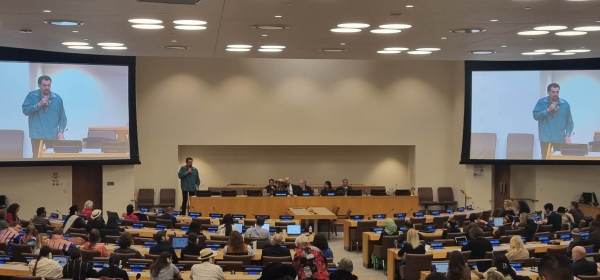
Written by Wasiq Silan. Is going green hurting Indigenous communities? Not necessarily. However, exclusionary conservation measures create a lose-lose outcome for non-Indigenous and Indigenous communities. Indeed, Indigenous peoples’ full and substantial participation is a prerequisite to achieving a sustainable future and halting the rapid loss of global biodiversity. This is true for the Indigenous communities in Taiwan, such as in the case of the solar panel controversy on the Katratripulr Pinuyumayan (Beinan in Mandarin Chinese) people’s traditional territory. Drawing from the experience of the Sámi, my recent participation in the United Nations Permanent Forum on Indigenous Issues (UNPFII) may shed light on this issue.

The Procrastinating Progress of Transnational Same-Sex Marriage Rights in Taiwan

Written by Annie Huang. One historical human rights progress Taiwan made happened in 2019 when the government legalised same-sex marriage. It was a rainy morning, and hundreds of LGBTI groups and activists were standing outside the Legislative Yuan waiting for results. When the president of the Legislative Yuan announced the legalisation of same-sex marriage, the rain stopped, and a rainbow appeared in the sky. People hugged and wept with joy for this historical first in Asia. However, at the same time and in the same plaza, a group of Taiwanese same-sex people burst into tears not because of happiness but because of sadness and discrimination. Transnational same-sex couples are left out of the legalisation content in the same-sex marriage bill without much reasonable reason.

1 2 3 6