Asian Migrants and Taiwanese Americans: A Dialogue on Identity, Activism, and History

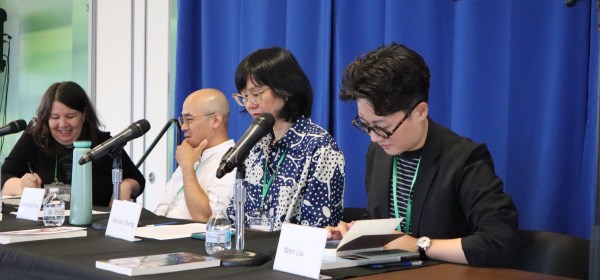
Written by Panchen Lo, Pei-Chen Cheng, and Ssu-chieh Jessica Fan (University of Texas, Austin). This article details a panel discussion at the NATSA conference featuring three scholars who discussed the experiences and identities of Taiwanese Americans. The panel focused on the intersection of Cold War geopolitics, class, and the complicated process of identity formation. It critically examined how historical context, class, and racial narratives have shaped the lives and experiences of Taiwanese Americans.
The coming of an overseas Hongkonger identity and Taiwan-Hong Kong connection: Reflection on the Legacy of the Umbrella Movement

Wriiten by Desmond Hok-Man Sham. The Umbrella Movement did not just construct the identity of local Hong Kongers but also overseas Hong Kongers, where Taiwan plays an important role in that process. This article reflects on how the identity was constructed overseas through diaspora mobilisation and activism and the future of Taiwan-Hong Kong connections.

Wandering Back and Forth in The Sea of Books and Cultural Holdings – In Searching of Indigeneity, Positionality, and Self-identity 

Written by Nikal Kabala’an (Margaret Yun-Pu Tu). This article presents a reflective account from my perspective as one of the curators. It primarily focuses on the “behind the scenes” aspects, adopting an “inside out” approach to share my personal life experiences and the journey of research and curation as a mixed-background Taiwan Indigenous person from the Pangcah/’Amis community and a Ph.D. Candidate studying abroad in the fields of Indigenous Studies, Taiwan Studies, and Law. Supported by the main organisers—the Taiwan Academy in Los Angeles, the Burke Museum, and the Tateuchi East Asia Library (TEAL)—along with the co-organizers and their collaborative and generous sponsorships, I hope to unfold the narratives and open the dialogues driven by a passion for interdisciplinary pursuits. 

Unveiling Contemporary Taiwan Identity: What Lesson can we Learn from Dcard’s Responses on the Hong Kong Immigration Wave?

Written by Cheuk Kwan Lau. In January 2023, a BBC news article brought attention to the challenges faced by Hong Kongers who migrated to Taiwan. The news pointed out that Hong Kongers who migrated to Taiwan face institutional obstacles when applying for citizenship. Immigration laws in Taiwan were claimed to be outdated. The migrated Hong Kongers could legally inhabit Taiwan, yet they did not enjoy citizenship and civil rights.  

Instead of exploring the various institutional obstacles they face, this article takes a unique approach by examining the perceptions of the Taiwanese young generation regarding the influx of Hong Kong immigrants. It aims to uncover the contemporary Taiwanese identity constructed by this demographic, previously seen as a strong ally of Hong Kong protestors during the 2019 Anti-Extradition Law Movement.

Ethno-culture in national identity formation: what lesson can we learn from Taiwan?

Written by Olga Daksueva. The Russia-Ukraine war brought back discussions on national identity and how it is formed. National identity consists of two components: ethnocultural and political. Ethno-culture is often viewed as “the core of a nation and national identity,” which includes language, history, culture, and religion. It is argued to become the passé and to be replaced by the political component, which is designed through state sovereignty and territorial boundaries, delimiting the extent of nations and, by doing so, forming commonalities within the nations. However, the fact that we share a common territory is insufficient to get attached to the country. States also utilise various means to shape salient national identity through “rediscovery, reinterpretation and regeneration of [national] community.”

Colonial Nostalgia and the Delegitimisation of Pro-democracy Forces in Hong Kong and Taiwan

Written by Zeng Ee Liew. The term ‘colonial nostalgia’, or 戀殖 (lian zhi), has appeared more and more since the 2000s in the discourse used by Mainland China to describe the politicians or activists who advocate for democracy or even independence in both Taiwan and Hong Kong. Very often, those democracy or independence activists will be described as ‘traitors’ who still harbour lingering love or affection and pander to the former Western or Japanese colonial power and fail to show full patriotic love to the motherland. The use of such discourse can be seen from the lens of a broader effort by the Chinese government to delegitimise those pro-democracy activists, which will be explored further in this article.

Han-Heterosexual-Male Supremacy across the Pacific? A Critique of The Taiwanese Reminiscence Acrobatic Show

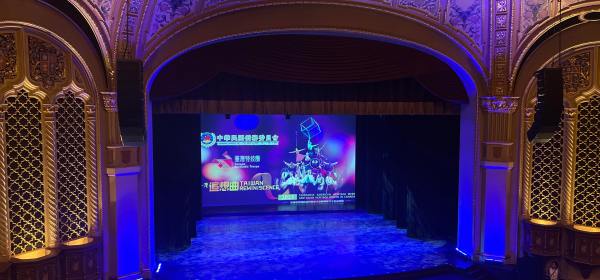
Written by Mark Hsiang-Yu Feng. Busy as usual was Highway number eighty, but Mother’s Day made downtown San Jose unexpectedly quiet. However, in front of the California Theatre, lively chat sounded out of the silence, marking this celebratory moment for the twentieth anniversary of the Taiwanese American Center of Northern California during Asian and Pacific Islander heritage month. Families came to fill most of the seats, and three languages—Hoklo Taiwanese, Taiwanese Mandarin, and English—were spoken to express the identity of these participants. To honour the culture of Taiwanese and Taiwanese Americans, the overall narrative of Taiwanese Reminiscence contextualises a mixture of stunts, acrobatic movements, and dance into a condensed representation of the twentieth history of Taiwan.

1 2 3 4 5