Triangulating the Taiwanese Spirit in Southern California: Colonial Hauntings at the 228 Commemorative Concert

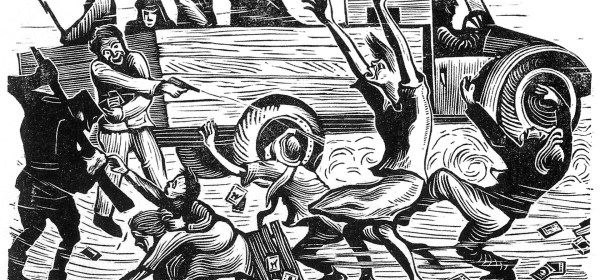
Written by Chun Chia Tai. In February, I saw a text message in a Taiwanese group chat promoting a concert commemorating the 228 massacre caused by the Kuomintang dictatorship in Taiwan on February 28th, 1947. The concert was called The Spiritual Day of Taiwan: 2-28 76th Commemorative Concert and was hosted by two Taiwanese American organisations: the Taiwanese United Foundation and the Taiwan Elite Alliance, since 2007. The performers were mainly Taiwanese. Many of them were not professionals but members of local Taiwanese church choirs. Most of the audience was familiar with the songs being performed; therefore, they sang along with the performers.
Reflecting on the Laguna Woods Shooting Tragedy: One Year Later

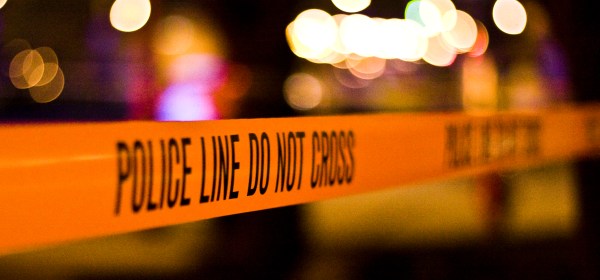
Written by Wayne Huang. On May 15, 2022, a fatal shooting occurred at the Irvine Taiwanese Presbyterian Church in Laguna Woods, California. During a lunch reception, the gunman locked the doors and opened fire with approximately a hundred people present. The church has been recognised for its significant role in Taiwan’s democratisation and independence movements since the 1970s. It has led to the suspicion that this historical connection motivated the assailant to travel over a hundred miles from Las Vegas to target the church. The shooting resulted in six individuals being shot, including Dr John Cheng, who lost his life while attempting to disarm the gunman. 

Beyond Chinese: The Evolution of Taiwanese-Canadian Identity in Canada

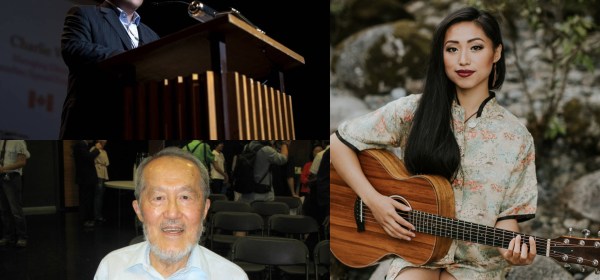
Written by Charlie Smith. At the height of the pandemic in 2020, a cultural producer generated considerable discussion within the Taiwanese diaspora in North America. It came when Charlie Wu wrote an article declaring: “I’m a Taiwanese Canadian, not a Chinese Canadian.” It was the managing director of the Asian-Canadian Special Events Association’s personal response to being constantly labelled as Chinese in his adopted country. In fact, Wu was even included in the list of the top 100 influential Chinese Canadians in British Columbia in a 2006 article in the Vancouver Sun. 

Indigenous Storytelling in and Beyond the Classroom

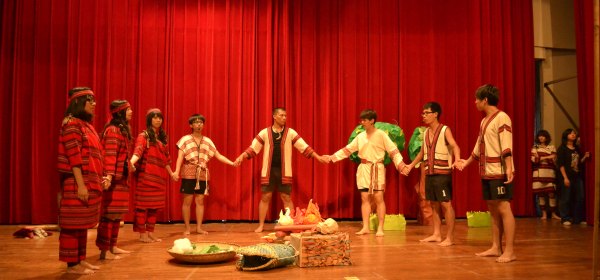
Written by Yi-Yu Lai. One afternoon in 2011, Hong-sui Lim visited a Kaxabu village due to his participation in an anthropological camp. This marked his first encounter with the Kaxabu people, one of the Plain Indigenous groups inhabiting the Puli Basins in central Taiwan. Lim was astonished by the small number of Kaxabu elders who still speak their mother tongue, as it is commonly believed that Plain Indigenous peoples have been assimilated by Han Chinese culture and have lost their own languages and traditions. As a result, Lim returned to the Kaxabu communities as an undergraduate student to learn more about their endangered cultural heritage and began collaborating with the Kaxabu people. 

Beyond Maps: Indigenous 3D Mapmaking as a Path to Indigenous Resurgence

Written by Sra Manpo Ciwidian. To assert Indigenous sovereignty over our land, especially the traditional territories, the Indigenous peoples of Taiwan have employed various approaches to demonstrate our rights. Making a three-dimensional map model of Indigenous communities is the most prevalent among these approaches. Since the late 1990s, when the Kucapungane community of Rukai people produced the first Indigenous 3D map model in Taiwan, contemporary Indigenous communities in Taiwan have been developing this community-based mapping method for over three decades. 

Storytelling Behind the Overseas Taiwan Indigenous Collections: Material Cultures as a Means to Connect with International Indigenous Communities

Written by Nikal Kabalan’an (Margaret Yun-Pu Tu). Taiwan’s Indigenous artefacts were taken, bought, brought, or even got stolen and ended up miles away from the Indigenous communities where they were made by the hands of Indigenous ancestors. Some of these Taiwan Indigenous collections were already kept in a foreign museum overseas for almost a hundred years. Some of these museums are devoted to reflecting the devastating colonial history and decolonising the space by, for example, rewriting the narratives, displaying their collections in more inclusive ways, and collaborating with the cultural communities from which these cultural holdings originated. The Burke Museum of Natural History and Culture in Seattle, Washington States, United States, where I am currently leading the review and engagement plan for the Indigenous Taiwan holdings with my colleagues, is one example of decolonising the museums.

Indigenous Youth Actions in Taiwan: Connecting Our Voices to the Global Stage 

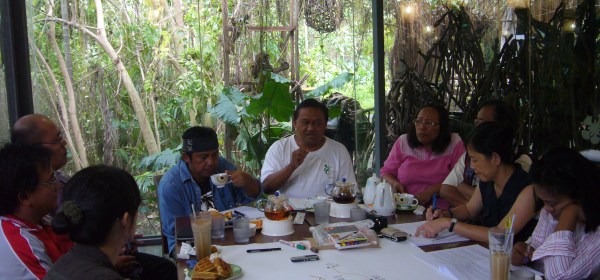
Written by Sra (Bo-Jun Chen). Taiwan’s Indigenous peoples are becoming increasingly concerned with various global issues that are also highly pertinent to our own situation in Taiwan, such as environmental, human rights, and cultural heritage issues. In recent years, for instance, Indigenous youth in Taiwan have realised the significance of language and identity revitalisation, which may assist us in combating oppression. Moreover, we have found that the insensitivity of our lands and ignorance of our history pose a far greater threat to us than the plundering of our resources and hazards to our lives. Some Indigenous youth are thus committed to overcoming obstacles influenced by colonialism and strive to bring our voices and agendas to the global stage. Through our participation on the international stage, we aspire to be heard and have more conversations about similar difficulties. 

Displaying Indigenous People’s “Heirlooms” in Museums? Lessons from the Heirloom Exhibition of Pingtung Indigenous Peoples Museum

Written by Drangadrang Kaljuvucing. “The Family Heirlooms of Slop-Dwelling Peoples” exhibition was the fruit of a competition to discover Indigenous heirlooms that still exist in Indigenous communities. It was the Pingtung Indigenous Peoples Museum (PIM) partnering with four other Indigenous museums in Pingtung County, including Wutai Pavilion, Sandimen Pavilion, Laiyi Pavilion, and Shizi Pavilion, to conduct exhibition collection, field surveys, and promotion as part of a project with the Ministry of Culture in Taiwan. The thirteen heirlooms for the exhibition, which included clothing, accessories, paintings, weaves, wood carvings, clay pots, and other living implements, originated from seven Indigenous towns in Pingtung County, except for Chunri Township. While the exhibited pieces were grouped into three categories: “Living Etiquette,” “Decorating Life,” and “Cultural Heritage,” the exhibition highlighted the diversity and uniqueness of the heirlooms revealed by their owners through interview processes.

History was Reconfigured at the Time of Discovery: The Life and Afterlife of Chiang Wei-Shui

Written by Fang-Long Shih. The life and afterlife of Chiang Wei-Shui (蔣渭水 1891–1931) have echoed what the film Rashomon has denoted: “History was not found at the time of its occurrence, but was reconfigured at the time of discovery” (dir. Akira Kurosawa 1950). In 1921, Chiang Wei-Shui founded Taiwan Cultural Association (TCA, 台灣文化協會), the first culture-based organisation in Taiwan’s history. The TCA was established “to promote Taiwan to a position of freedom, equality and civilisation”. The TCA also had a political aim to “adopt a stance of national self-determination, enacting the enlightenment of the Islanders, and seeking legal extension of civil rights”.

Why Does Taiwan’s Development in the Past Century Matter?

Written by Peter C.Y. Chow. By the end of the 20th century, most former colonies had become independent though few qualify as modern states. Taiwan is an exceptional case in modern development history. Although still a Japanese colony until WWII, Taiwan became a modernised country with remarkable achievements in socio-political and economic developments by the end of the 20th century. Its unique development trajectory is worthy of in-depth analysis such that other developing countries can share its experience in the struggle for modernisation.

Revitalising Indigenous Weaving Cultures Across Borders: Conversations and Collaborations between Taiwan and the Philippines

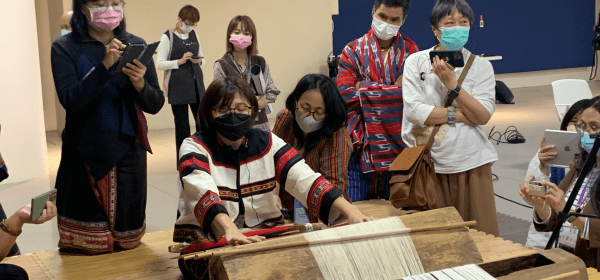
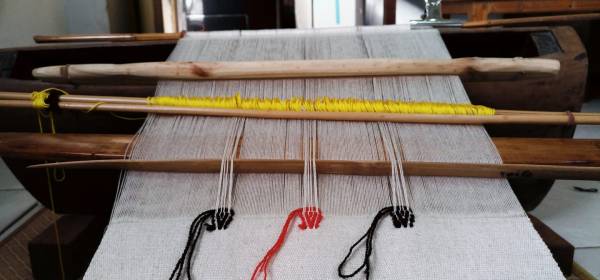
Written by Shau-lou Young. Weaving is a significant material culture in Indigenous Peoples’ society in Taiwan and the Philippines. In the past, hand-made textiles were necessities in their daily lives. However, with the introduction of fabrics into their society, only a few women continued to weave. Today, Atayal weavers in Taiwan and Ifugao weavers in the Philippines are working hard to revive their weaving culture. They brought back and conserved disappearing weaving techniques and knowledge and remade some long-lost textiles.

When You Weave, You Are Planting Seeds on the Land: An Indigenous Weaving Practitioner’s Experience

Written by Ipiq Matay. My name is Ipiq, which means “tiny” in Truku, and I am an Indigenous person from the Truku community of Taiwan. Despite my lack of height, I have a big heart. As a weaver in my community, I’d like to share ‘mhuma’, a Truku weaving skill which translates to “be planting”. This weaving technique can be seen in diamond-shaped patterns on women’s traditional clothing. Learning how to weave and create this pattern began my journey of connecting to my family history and the people of my community.

1 2 3 4 5