
Here we introduce our special issue on psychotherapy, psychoanalysis, and mental-health in Taiwan. Our authors discuss the stigma of mental health and the challenges of ‘talking cures’ in Taiwanese culture.

Here we introduce our special issue on psychotherapy, psychoanalysis, and mental-health in Taiwan. Our authors discuss the stigma of mental health and the challenges of ‘talking cures’ in Taiwanese culture.
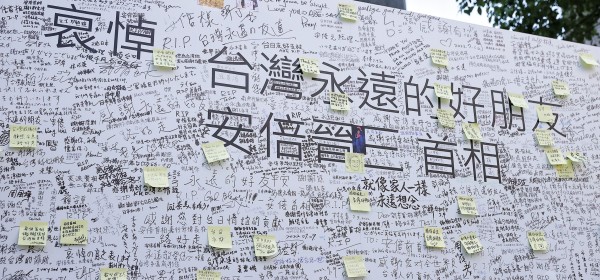
Written by Ti-han Chang. 11:30 am on the 08th of July in Japan, unexpected news of Shinzo Abe 安倍晉三 being shot during his public speech travelled quickly on the international news media. However, the very fact of this happening has profoundly shaken societies in the East Asian region. For Japan, it appears there is a need to reflect deeper on the homogeneous nature of its internal political structure; for other countries in the region, on their indissociable geopolitical dynamics with their close neighbour over the last few decades.

Written by Shih-Yueh Yang. By preserving the Chinese identity, Taiwan can mitigate its political differences with the Mainland and thus be the sustenance of the whole Chinese people for a free, democratic, and equally prosperous China. With such a great and just cause for the future of the Chinese nation, Taiwan will get its strongest defence, and the danger of wars will also be minimized in the first place.

Written by Hung-yi Chien. In short, I would argue that “being Sinitic” is not inconceivable. New students of Taiwan studies in overseas countries need elements of sinology to grow up. The lesson from the Taiwan studies programmes in Taiwanese universities suggests that a new discipline requires a fertile ground to nurture it. In countries where sinology is available, this “politically incorrect” discipline is inevitable to play an important role in recruiting new students to Taiwan studies.
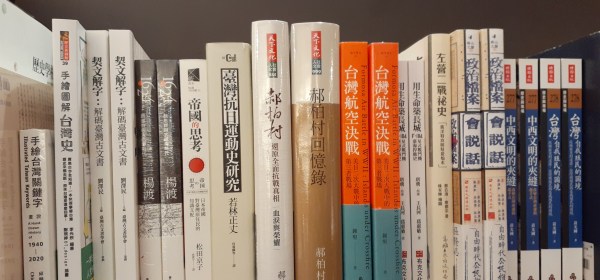
Written by T.Y. Wang and Christopher H. Achen. We believe, however, that Taiwan’s distinctness requires focused scholarly attention from those who study it. The academic infrastructure that will make real progress and productivity possible is one in which the study of Taiwan is its own academic specialisation, equal in standing to the study of China, Japan, Korea, Singapore, Vietnam, or any other part of Asia with a distinct identity. In our opinion, the distinct institutional structures for Taiwan studies that have developed should be continued and strengthened. Journals dedicated to research on Taiwan should also be encouraged and strengthened to make them visible and widely cited as flagship publications like China Quarterly.
 Taiwan Insight