Japanese Colonial/Occupational Histories in the National Museums: A Comparison Between Taiwan and Singapore

Written by Pin-Yi Li. In the postcolonial Asian context, national museums reflect the countries’ colonial histories and their transformation, offering the country’s incumbent political elites the opportunity to reinvent or adjust the initial museum discourses framed by the colonisers. For example, respectively built by the Japanese and British colonial governments, both the National Taiwan Museum and the National Museum of Singapore are the oldest public museums in each country.

Opportunities abound to ram up UK-Taiwan relations

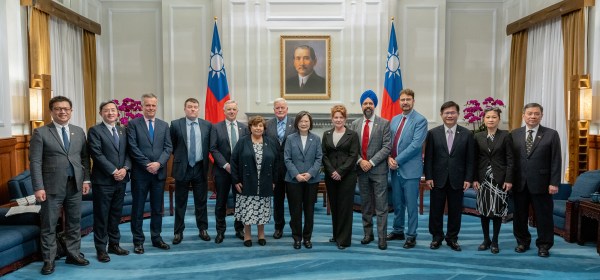
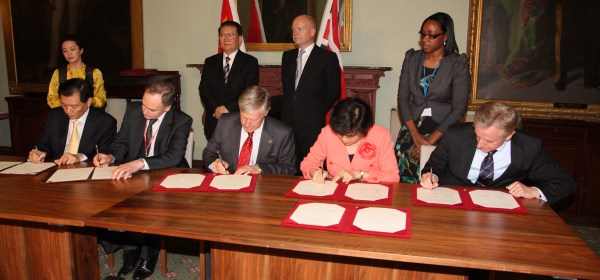
Written by Huynh Tam Sang and Phan Van Tim. By and large, there are ample opportunities for the UK and Taiwan to deepen their relationship, given Taiwan’s geopolitical importance and rising prominence as a robust democracy and resilient economy. Moreover, should London genuinely devote its time and energy to pushing its “Indo-Pacific Tilt”, engaging with Taiwan would benefit London as it helps the great power establish a firm footprint in the area while demonstrating the country as a responsible stakeholder in the region.

Who are the Allies of the Chinese Communist Party (CCP)? Neologisms, Netizens, and Nationalisms 

Written by Hsin-I Sydney Yueh. Recently, Taiwan’s Ministry of National Defense rejected a Japanese news report suggesting a widespread tendency among retired Taiwanese military officials to “sell out” their country. Wu Sz-Huai, a retired lieutenant general and incumbent opposition KMT party legislator, was among those who denounced this allegation.  

“Are we Chinese spies (共諜)?” Wu angrily asked this rhetorical question during a session of the National Defense Committee at Taiwan’s Legislative Yuan on March 2, 2023. While Wu denied being a Chinese spy, Taiwanese netizens teased him by sharing a photo of Wu and other retired Taiwanese military officials attending a CCP-hosted event, where they had sat attentively and listened respectfully to China’s leader Xi Jinping in 2016. Wu’s use of the term “Chinese spies” reminds us of another similar expression in Mandarin Chinese: “allies of the CCP” (中共同路人). This expression has recently gone viral in Taiwan’s online communities, used for self-mockery and as an attacking label.

Freedom Fighting: Taiwan’s Resistance against China’s Ethnonationalism   

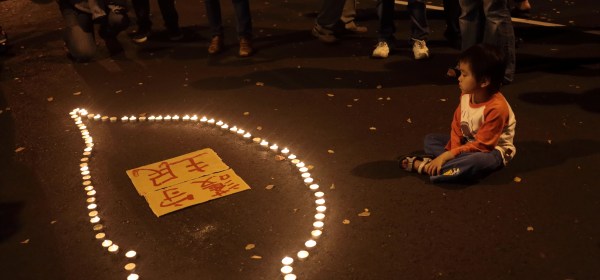
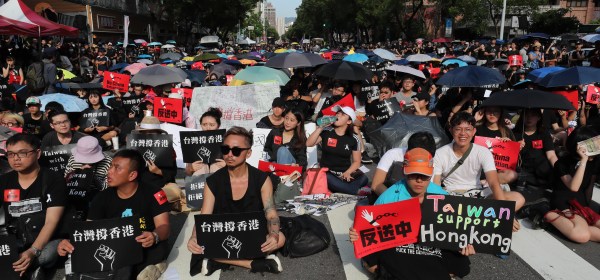
Written by Hsin-I Cheng. In the past decade, the world has heard the resisting voices of dissidents across Asia. From the 2014 Sunflower Movement to the Occupied Central Movement in Hong Kong later in the same year, citizens peacefully held their governments accountable. Since then, we have witnessed mass protests for freedom and transparency in nations. These challenges against authoritarianism generated transnational synergy, as demonstrated in the “#Milk Tea Alliance.” This movement started in 2020 when young Thai netizens fought cyberattacks against two Thai celebrities who expressed support for Taiwan and Hong Kong’s autonomy. Shockingly, two years later, the world witnessed Russia’s further invasion of Ukraine—it is a less militarily powerful neighbouring nation. Against these backdrops, we launched the book: Resistance in the Era of Nationalisms: Performing Identities in Taiwan and Hong Kong.

History was Reconfigured at the Time of Discovery: The Life and Afterlife of Chiang Wei-Shui

Written by Fang-Long Shih. The life and afterlife of Chiang Wei-Shui (蔣渭水 1891–1931) have echoed what the film Rashomon has denoted: “History was not found at the time of its occurrence, but was reconfigured at the time of discovery” (dir. Akira Kurosawa 1950). In 1921, Chiang Wei-Shui founded Taiwan Cultural Association (TCA, 台灣文化協會), the first culture-based organisation in Taiwan’s history. The TCA was established “to promote Taiwan to a position of freedom, equality and civilisation”. The TCA also had a political aim to “adopt a stance of national self-determination, enacting the enlightenment of the Islanders, and seeking legal extension of civil rights”.

For the UK, Taiwan Could Provide an Alternative to Confucius Institutes

Written by Adrienne Wu and Marshall Reid. For the United Kingdom, 2022 was a year of significant change, particularly in its approach to the People’s Republic of China (PRC). Following years of relatively cordial UK-PRC relations, London followed the example of many other European states by shifting to a far more sceptical, confrontational policy toward Beijing. While this transformation was the product of various factors—from growing concerns regarding China’s human rights abuses to rising awareness of the PRC’s coercive economic policies—it was heavily influenced by domestic political manoeuvring. Nowhere was this more evident than in the competition between Liz Truss and Rishi Sunak to succeed Boris Johnson as prime minister, in which both candidates sought to frame themselves as the most tough-on-China. In a move emblematic of this game of China-sceptic one-upmanship, Sunak made the bold claim that he would close all of the UK’s remaining Confucius Institutes, the PRC’s international Mandarin language learning centres.

Chu Yun-han: Influential Political Scientist, Promoter of Taiwan Studies and Sinology in Europe

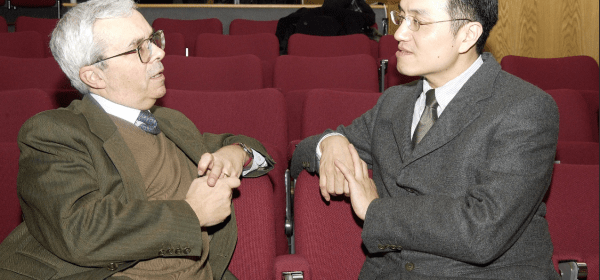
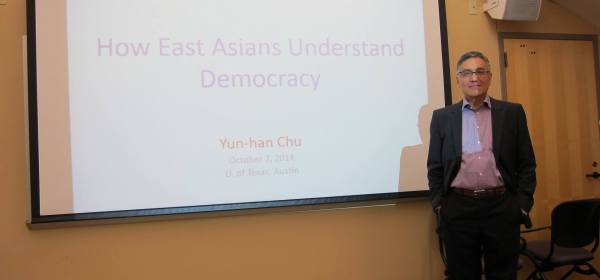
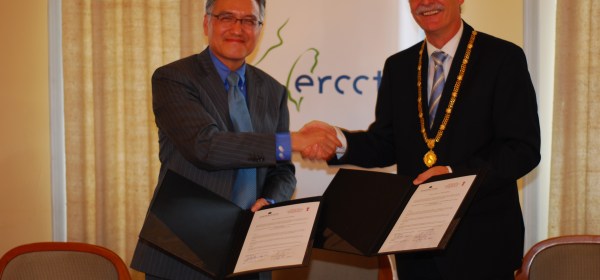
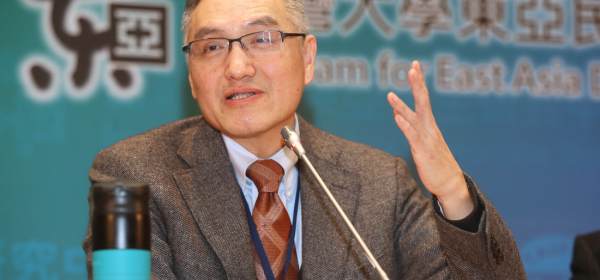
Written by Dafydd Fell and Robert Ash. It was with the greatest sadness that we heard of the passing of the influential Taiwanese political scientist Chu Yun-han. He died at home on 5 February 2023 – just two days after his 67th birthday. His loss is irreparable: through his own academic research and his tireless efforts as Executive Director of the Chiang Ching-kuo Foundation, he exerted an enormous influence on East Asian Studies throughout Europe, as well as in many other parts of the world.

“Kind and Gentle Soul”(「謙謙君子,溫潤如玉」): Remembering My Dear Friend Yun-han Chu (1956-2023)

Written by Tse-min Lin. The news came as a total shock. I had arrived in Taiwan just five days earlier to visit the new Taipei School of Economics and Political Science that Yun-han had helped establish. I knew he was ill and had been hoping to visit him after being unable to do so for five years. That is never going to happen now. Yun-han was a dear friend for 40 years. His passing is a heart-breaking personal loss.

Chu Yun-han (67), An Eminent Scholar and President of Taiwan’s CCK Foundation, Died on February 5th, 2023

Written by Gunter Schubert. It was a spring day in 2007 when I entered the commercial building at Tun Hua North Road, where the headquarters of the Chiang Ching Kuo Foundation (CCKF) were located on one of the upper floors. I came to meet Chu Yun-han in his capacity as CCKF president and introduce to him my idea to establish a Taiwan research centre at the University of Tübingen. I had prepared a detailed presentation and pondered every detail that could jeopardise my proposal’s consistency.

In Memoriam: Missing Yun-Han

Written by Yu-Shan Wu. Gone is Yun-han, a true friend. We were colleagues at National Taiwan University and Academia Sinica for over half a century. He is a world-class political scientist, a gentle junzi in the finest Confucian sense of the term, a deep thinker who cares about the fate of the country and the world, and a master of delicate tastes in life. These are the four integral aspects of Yun-han’s personality that I am sure Yun-han would like us to keep in mind when thinking of him.

Cross-Strait Relations: De-coding What’s “New” for the New Year?

Written by Raian Hossain. Despite such heightened tension in cross-strait relations across 2022, President Xi Jinping and Tsai Ing-wen have delivered their English and Lunar new year speeches, showing signs of certain tolerance and a softer tone toward each other. The message from both sides of the Taiwan Strait is not random but rather driven by political objectives and motives likely to determine the cross-Strait relations in the upcoming years. Although speeches by President Xi Jinping and Tsai Ing-wen cover numerous angles, this article uses some specific lenses of the Politics of Security, the local and presidential election of Taiwan, and pandemic politics while de-coding the Cross-strait relations for the near future.

Xi’s 2022-2023 Remarks Deepen Internal Division in Taiwan

Written by Wei-Hsiu Huang. To sum up, based on the address to the 20th National Congress of CPC and the 2023 Lunar New Year Greetings by Xi Jinping, it is explicit that the Chinese mainland will exercise even more robust sharp power and attempt to break up Taiwan from within. Moreover, the Chinese Mainland, which is always wary of foreign powers interfering in Taiwan’s affairs, could use the same sharp power against democratic states such as the US and Japan. This is because many countries, not just Japan, already have developed strong economic interdependencies with the Chinese mainland, creating routes for China’s sharp power. It is an important issue for democracies: how to prevent dictatorships from using sharp power to exploit freedom of speech and collapse democracies from within.

1 15 16 17 18 19 61