Grandmother Islands: Oral Memory, Mother Tongues, and Literary Kinship between Taiwan and Scotland

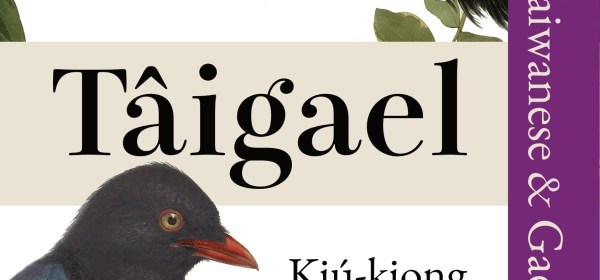
Written by Elissa Hunter-Dorans. This article reflects on how maternal and grandmaternal figures embody the preservation of Taiwanese and Gaelic. Through Tâigael, the author explores oral traditions, familial intimacy, and the “mother tongue” as both metaphor and surrogate caregiver, showing how literature sustains endangered languages and fosters cross-cultural kinship.

Tâigael: Orchids, Maternal Care, and a New Rosetta Stone

Written by Hannah Stevens and Will Buckingham. The article introduces Tâigael: Stories from Taiwanese & Gaelic, a translation project linking two minoritised languages through English and Mandarin as bridges. Writers reflect on linguistic solidarity, maternal legacies in “mother tongues,” risks of reinforcing hierarchies, and ecological fidelity in translation. Together, their essays highlight translation’s generative, resistant, and collaborative potential.

The Island Is Our Canoe: Taiwan–Guam Exchange Finds Connection Beyond the Stage

Written by Eloise Phillips. This article examines the 2025 Taiwan–Guam cultural exchange, led by Taiwan’s National Museum of Prehistory, which wove song, canoe building, and shared practices into island diplomacy. Through workshops, performances, and informal encounters, the program connected Austronesian communities across the Pacific, highlighting resilience, mutual reclamation, and living traditions of cultural practice, language, and art.

Distant Allies? Explaining U.S. Allies’ (In)action Over the Prospect of a Taiwan Strait Contingency

Written by Carlos Francisco Torres Morales. Using an alliance framework, this commentary argues that Tokyo and Seoul’s reluctance to convey support to Taipei publicly stems from strategic caution, since this could provoke the undesired effects they would seek to deter by extending clear security assurances, but also to retain flexibility in their redefining their stances vis-à-vis Taiwan (and China).

A New Era for UK-Taiwan Relations: Explaining the UK’s New Interests in the Indo-Pacific and Taiwan

Written by Peter (Hung-Yao) Chu. This article explores the development of UK-Taiwan relations since the Tsai Ing-wen administration until the current William Lai administration. It suggests that Brexit and China’s increasing assertiveness serve as two of the most important factors that contribute to the UK’s reassessment of its approach toward the Indo-Pacific and Taiwan.

Divided Not Doomed: Domestic Challenges for the Lai Administration’s Foreign Policy

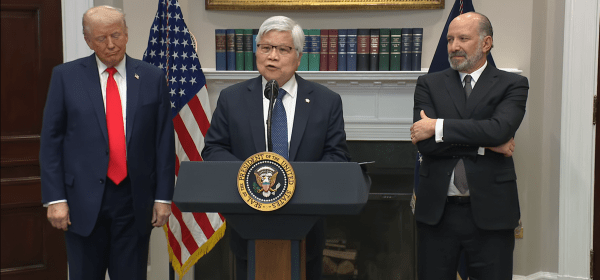
Written by Nils Peterson. This article analyses the domestic challenge for the Lai administration’s foreign policy under a KMT-aligned Legislative Yuan. The divided government poses two potential hurdles: the risk of domestic gridlock and fights over defence appropriation funding. These challenges will require some degree of compromise between the KMT and the DPP, reinforced by the recent recall campaigns.

The Strategic Defence Review 2025: Is The United Kingdom Finally Sticking Up For Taiwan?

Written by Alexandra Whitehead. This article assesses the importance of Taiwan in the UK’s Strategic Defence Review (SDR) published in June 2025. It argues that the SDR recognises Taiwan’s global significance in the context of countering China, both in security and economic terms. However, it lacks explicit contingency planning to support Taiwan and remains ambiguous towards China.

From Overcrowding to Opportunity: Taiwan’s Appeal for Indian Tourists

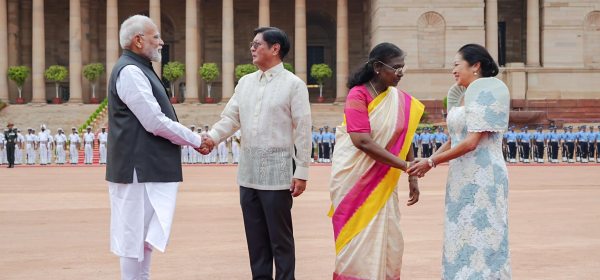
Written by Neeraj Mehra. This article discusses Taiwan’s untapped potential in India’s booming outbound tourism market, highlighting shared cultural ties, natural attractions, and democratic values. The author proposes that easing visas, improving air connectivity, boosting targeted marketing, and fostering educational exchanges may expand tourism, strengthen Taiwan’s soft power, and advance its New Southbound Policy goals.

Resolution 2758 and Taiwan’s Global Struggle for Recognition

Written by Yenting Lin. This article examines the misinterpretation and misuse of UN Resolution 2758, which defines China’s representation in the UN but not the status of Taiwan. But it has been used by Beijing to endorse the “One China Policy”. Pushback against China’s interpretation has begun to emerge in recent years as Taiwan’s contributions to international society are recognised.

How Fisheries Shaped Taiwan’s Pacific Diplomacy: A Case Study from Australia 

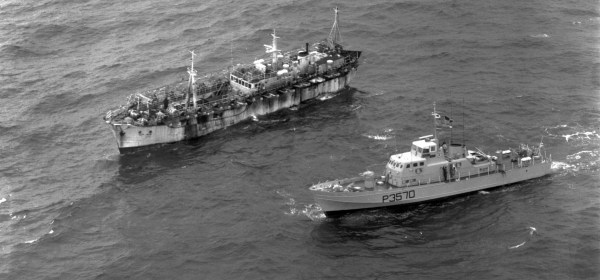
Written by Jess Marinaccio. This article examines how Taiwan’s post-1949 expansion into Pacific fisheries, amid shifting maritime laws and Pacific decolonisation, led to frequent illegal fishing incidents. These disputes complicated diplomatic ties, engaged both allies and non-recognisers of the ROC, mobilised diaspora communities, and entrenched fisheries, both legal and illegal, as central to Taiwan-Pacific relations.

1 2 3 4 5 61