Who Is Taiwanese: Rejection or Redefinition?

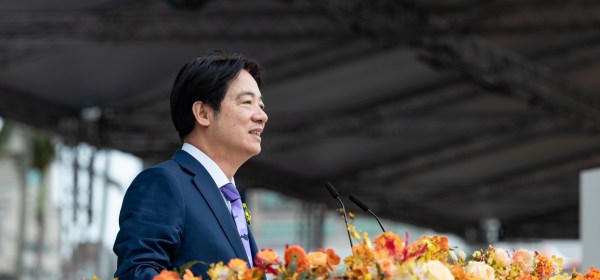
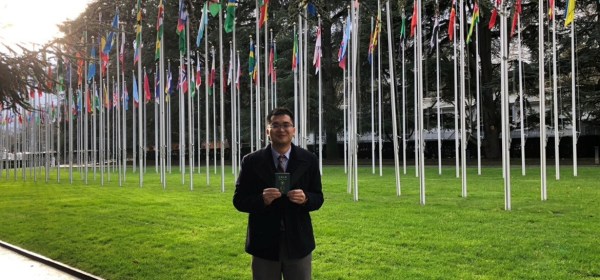
Written by Meng Kit Tang. This article explores the evolving debate over Taiwanese identity, contrasting two models: the rejectionist approach and the redefinition model. It examines the implications of each model for domestic cohesion, diplomacy, and national resilience, arguing that a redefinition approach provides Taiwan with a stronger foundation to navigate internal polarisation and external pressures.
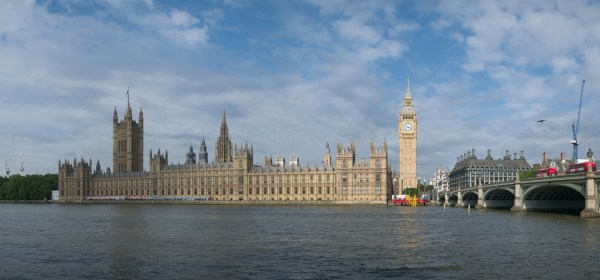
When Secrets Collapse: Implications of the China Spy Scandal on UK-Taiwan Relations

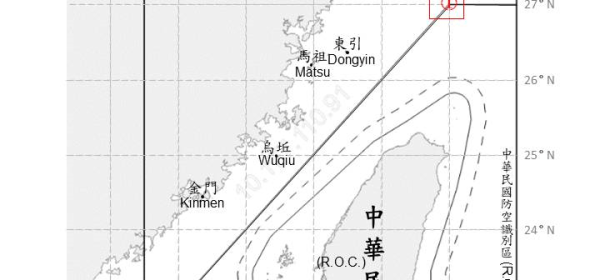
Written by Alexandra Whitehead. This article asks what the China spy scandal in the UK means for Taiwan and analyses both its opportunities and risks, including the need to reassess its relations with Beijing and to clarify its legal framework to match its political rhetoric. Putting them together, the case is unlikely to drastically change the course of UK-Taiwan relations. 

Taiwan in Global Discussions

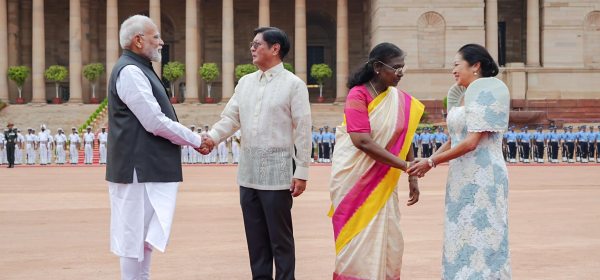
Written by Manoj Kumar Panigrahi. This article begins with Philippine President Marcos Jr.’s recent visit to India. It highlights the new bilateral agreements, investment, and his remarks on Taiwan that provoked Chinese and Taiwanese responses. The author then provides a critical examination of the India-China and India-Taiwan relationships, particularly situating Taiwan at the center of evolving regional security and economic dynamics.

Divided Not Doomed: Domestic Challenges for the Lai Administration’s Foreign Policy

Written by Nils Peterson. This article analyses the domestic challenge for the Lai administration’s foreign policy under a KMT-aligned Legislative Yuan. The divided government poses two potential hurdles: the risk of domestic gridlock and fights over defence appropriation funding. These challenges will require some degree of compromise between the KMT and the DPP, reinforced by the recent recall campaigns.

Resolution 2758 and Taiwan’s Global Struggle for Recognition

Written by Yenting Lin. This article examines the misinterpretation and misuse of UN Resolution 2758, which defines China’s representation in the UN but not the status of Taiwan. But it has been used by Beijing to endorse the “One China Policy”. Pushback against China’s interpretation has begun to emerge in recent years as Taiwan’s contributions to international society are recognised.

A Strategic Wake-Up Call: Insights from South Asia for Taiwan’s Defence Posture 

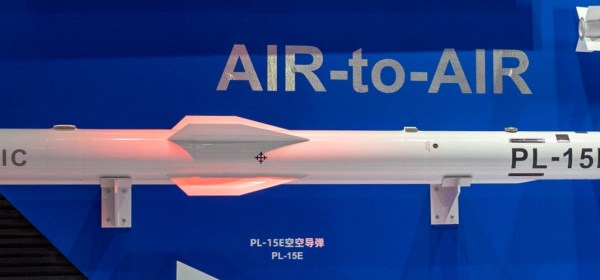
Written by Hsiao-Chen Lin. The article examines how South Asia’s recent strategic developments, particularly Pakistan’s use of integrated C4ISR systems, offer crucial insights for Taiwan’s defense. It highlights China’s export of integrated warfare doctrines and Taiwan’s efforts to enhance its resilience through defence reforms, societal readiness, and strategic realignment amidst evolving Indo-Pacific dynamics.

India-Pakistan Conflict: Lessons for Taiwan

Written by Sana Hashmi. This article discusses how the 2025 India-Pakistan conflict served as a critical case study for Taiwan, especially concerning a potential Chinese invasion. The author argues that China’s indirect support for Pakistan during the conflict allowed Beijing to test limited war scenarios, grey-zone tactics, and cognitive warfare strategies, mirroring Taiwan’s own strategic environment. This highlights Taiwan’s need to diversify its defense partnerships and enhance its resilience against disinformation.

What I Saw and Heard: Triangular Relations among Taiwan, China, and the Holy See

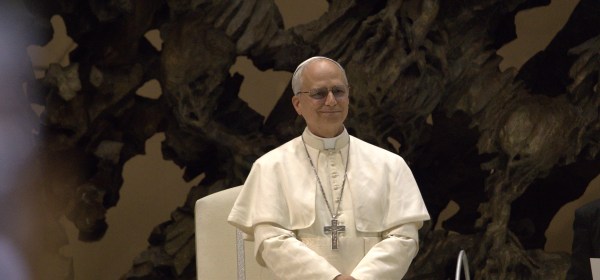
Written by Thomas Ching-Wei TU. This two-part article reflects on Taiwan’s diplomacy with the Holy See from a high-level politics perspective and examines how Taiwan can enhance cooperation. It argues that in addition to calling for religious freedom in China, the Taiwanese should understand the primary goals of the Vatican’s diplomacy and its differences with secular states. 

1 2 3 28