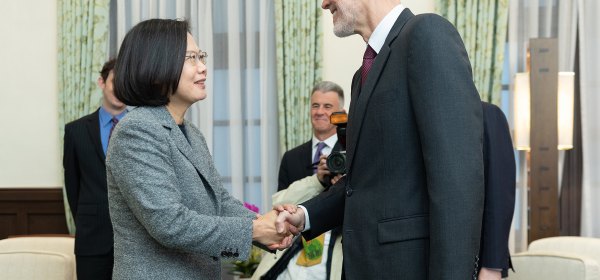
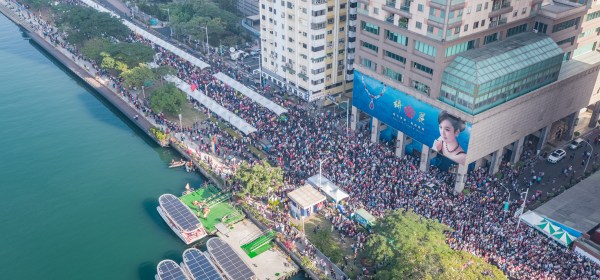
A clash or reconciliation of nationalisms across the Taiwan Strait?

Written by Zhidong Hao. In 2014, the Umbrella Movement in Hong Kong failed to persuade the Beijing government to grant them full universal suffrage for the election of the chief executive. Since then the so-called high degree of autonomy guaranteed by the Basic Law was eroded so much that Hong Kong was becoming more like Macau. Macau has been touted by the Central government as a perfect model of ‘one country, two systems’, but in reality, it is more like a model of ‘one country, one and a quarter systems’, i.e. an authoritarian system plus some press freedom.
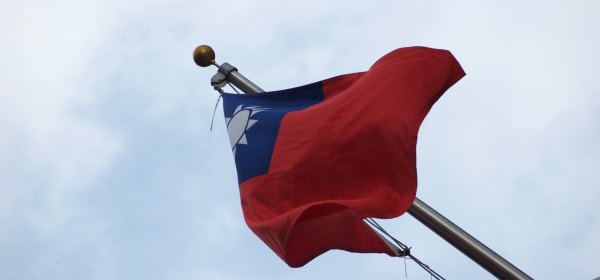
Can Taiwan decouple from the Chinese economy?

Written by Michael Reilly. In the medium to long-term, the coronavirus outbreak may turn out to be the high-water mark of foreign investment in China. Even before this, foreign companies were growing increasingly frustrated as the government increased minimum wage levels in provinces such as Guangdong and Fujian, and they also became frustrated with a growing burden of regulations and a bias in favour of domestic companies.

THE SIGNIFICANCE OF TAIWAN AS THE FIRST AND ONLY CHINESE DEMOCRACY

Written by Frédéric Krumbein. As the only Chinese democracy that has ever existed, Taiwan shows that Chinese culture, authentic democracy and respect for human rights can coexist. It is thus pertinent to ask – to what extent is Taiwan a bastion of democracy and human rights? How has Taiwan gone about promoting these values in the region, and how will it continue to do so moving forward?

Taiwanese perceptions of diplomatic recognition

Written by Timothy S. Rich. Taiwan must find new strategies in order to strengthen formal and informal ties. However, it should not over rely on expanding unofficial relations with the US or overlook the inconsistencies of Trump’s foreign policy that could impact Taiwan. For example, the Trump Administration’s decision to cut hundreds of millions of dollars in aid to El Salvador, Guatemala, and Honduras for two consecutive years provides a greater opportunity for Chinese influence in the region and greater pressure on Taiwan’s remaining diplomatic partners.

Wu Zhuoliu’s Orphan of Asia and the Madness of the Colonial Reality

Written by Makiko Mori. Wu Zhuoliu’s (1900–1976) Orphan of Asia is a renowned work of colonial Taiwanese literature. Surreptitiously written towards the end of Japan’s colonial rule in Taiwan (1895-1945), this semi-autobiographical novel bears a powerful witness to Taiwan’s deeply troubled, albeit legitimately modern, claim for the right to self-determination and self-representation.

What will the re-elected Tsai-DPP government’s foreign and defence policies look like?

Written by Yu-Hua Chen.
On January 11th 2020, the incumbent president of Taiwan, Tsai Ing-Wen, was re-elected to serve a second term as President of Taiwan by a land-slide majority. Tsai’s 8.17 million votes (57.1%) was a record high for Taiwan (well surpassing the record set by Ma Ying-jeou in 2008), and occurred in the backdrop of an unprecedented high turn out (19 million votes at 74.9% of the voting population). Yet the performance in the legislative election of Tsai’s party, the Democratic Progressive Party (DPP), was far less impressive.

The “Hong Kong factor” in the 2020 Taiwanese Presidential Election

Written by Adrian Chiu. A large number of Hong Kong people travelled to Taiwan, personally covering experiences, just to share the sentimental moment of the Tsai’s predicted victory. Hong Kongers were present at electoral rallies in Taiwan, waving the anti-ELAB movement flag and slogan, “Liberate Hong Kong, Revolution of Our Times.” Although these Hong Kong people may not vote in Taiwan, they nevertheless all campaigned for Tsai.

Taiwan’s 2020 elections: Rallying around the flag

Written By Wen-Ti Sung. Taiwan hosted its quadrennial presidential and legislative elections on 11 January 2020. Shaping the contours of these critical elections is first and foremost the impending US-China strategic rivalry, as manifested in the Hong Kong crisis and the resultant prioritisation of national security above all other campaign issues on the part of the Taiwanese electorate.

The Rise and Fall of a Populist Leader

Written by Po Lin. These three challenges, the collapse of a populist structure, human rights issues in the PRC, and the systematic changes in the international system all impacted Han Kuo-yu’s presidential campaign. These reasons explain why Han will be swamped in the trench fight during this presidential campaign. Han’s rise was unexpected and the outcome of his current political journey will be revealed on 11 January. The result of ROC’s presidential election will influence the stability of the region and the US’s Asia-Pacific grand strategy.

Taiwan’s 2020 Elections: A Losing Battle for Han Kuo-Yu and the KMT in Opposition?

Written by Mei-chuan Wei. Han’s campaign strategies were ‘unconventional’, especially given his position as the KMT candidate. For example, his rhetoric intentionally appeals to ‘common folks’ (shumin), the majority of whom are working class people and have been the main social base of the DPP’s political support. Han’s anti-elitist position was also considered unusual, for although the DPP is generally seen as increasingly elitist, the KMT has always been perceived to be the elitist party.

1 14 15 16 17 18 28