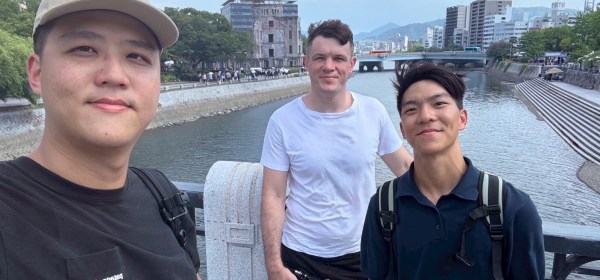
As Japan’s Relations With China Grow More Distant, Relations With Taiwan Improve

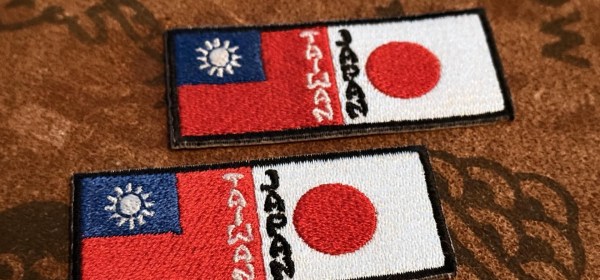
Written by Aleksandrs Gross. This article analyses recent Taiwan-Japan solidarity amid tensions between Japan and China. It captures how widespread and deep mutual support is at the grassroots, people-to-people level in both countries. The current tense political climate has only deepened the friendship between the two peoples. This benefits Taiwan and puts China in a tricky position.
A Third Front: The Pivot of Businesses Towards Activism

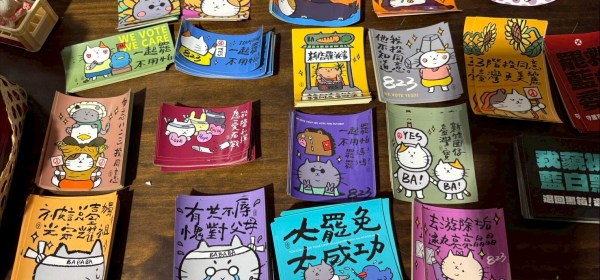
Written by Aleksandrs Gross. This article explores a unique phenomenon that occurred during the recalls – small businesses explicitly voiced their stance on the recalls. This mirrors similar patterns of Hong Kong during the pro-democracy movement in 2019. The author interviewed three pro-recall businesses to understand their stance and how they encourage constructive discussion without alienating opponents.

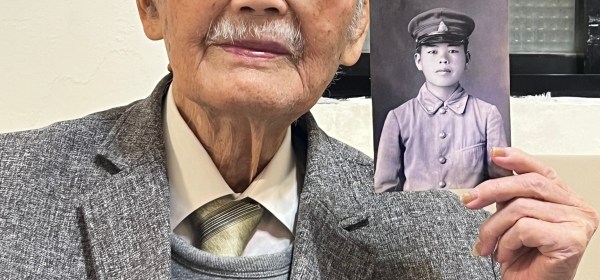
Eighty Years After the Battle of Okinawa, Thousands of Taiwan’s World War II Dead are Still Missing

Written by Bryn Thomas. This article interviews one of the thousands of Taiwanese who fought for Japan in the Battle of Okinawa. With at least 1000 Taiwanese troops took part and suffered a casualty rate of over 90% during the battle, the Okinawa Peace Memorial only listed 34 names of Taiwan’s war dead. The postwar political situation in Taiwan made it complex to honour these fallen soldiers.

“From Empire to Republic”: Taiwan, WWII, and Making a History Docuseries

Written by Bryn Thomas. This article takes us behind the scenes in the creation of the From Empire to Republic docuseries of TaiwanPlus News and this special issue. Taiwan’s World War II history made it to the headlines time and again in 2025, including President Lai Ching-te marking the 80th VE day in May to Lai drawing parallels between current Taiwan and the 1930s’ democracies when commemorating the VJ day.

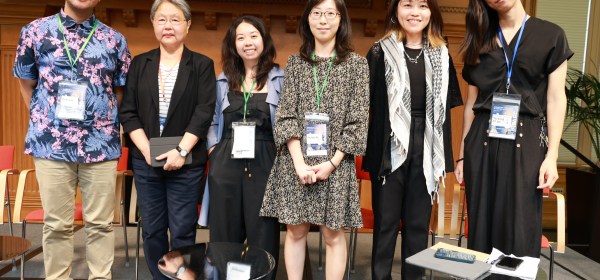
NATSA 2025 Opening Forum: Otherwise Relations between Taiwan and Southeast Asia

Written by the NATSA 2025 Programme Committee. This article shares the NATSA 2025 opening forum, “Otherwise Relations between Taiwan and Southeast Asia.” Adopting an “otherwise,” the forum challenges nationalistic views by centring Taiwan’s ongoing entanglements with Indigenous solidarity, migration, gender economics, human rights, and more, urging a new approach to Taiwan Studies.

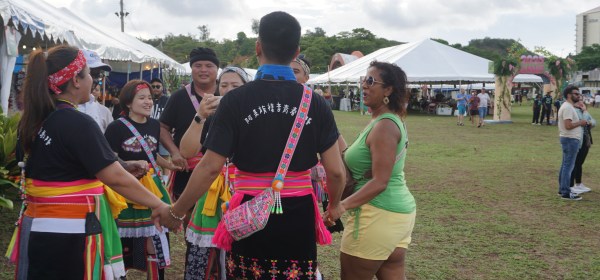
The Island Is Our Canoe: Taiwan–Guam Exchange Finds Connection Beyond the Stage

Written by Eloise Phillips. This article examines the 2025 Taiwan–Guam cultural exchange, led by Taiwan’s National Museum of Prehistory, which wove song, canoe building, and shared practices into island diplomacy. Through workshops, performances, and informal encounters, the program connected Austronesian communities across the Pacific, highlighting resilience, mutual reclamation, and living traditions of cultural practice, language, and art.

Distant Allies? Explaining U.S. Allies’ (In)action Over the Prospect of a Taiwan Strait Contingency

Written by Carlos Francisco Torres Morales. Using an alliance framework, this commentary argues that Tokyo and Seoul’s reluctance to convey support to Taipei publicly stems from strategic caution, since this could provoke the undesired effects they would seek to deter by extending clear security assurances, but also to retain flexibility in their redefining their stances vis-à-vis Taiwan (and China).

Navigating Taiwanese Identity: Second-Generation Multiculturalism in Conversation with Dr Pei-Chia Lan

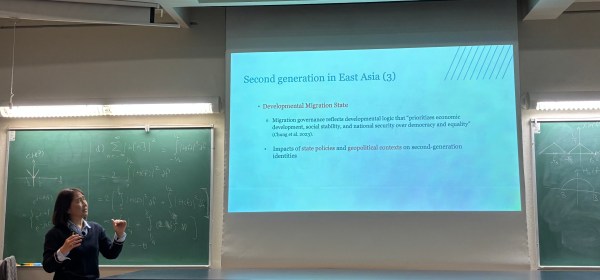
Written by Rose Kuo and Rachel Levine. The article is the first in this special issue in collaboration with the Center for Taiwan Studies (CTS) at the University of California, Santa Barbara. It recapitulates a talk by Dr. Pei-Chia Lan, hosted by CTS. Focusing on children of immigrant marriage migrants and their children, Dr. Lan examines identity struggles, social stigma, and geopolitical impacts. Her research highlights Taiwan’s evolving multicultural landscape and advocates for inclusive policies that support immigrant families and promote societal integration.

Taiwan’s NSP Enabling a Better World: Perspectives from the Next Generation

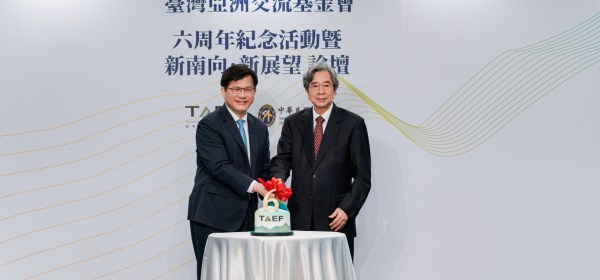
Written by Ian Yi-Rong Su. Taiwan is enhancing its New Southbound Policy (NSP) in response to Chinese threats, focusing on sharing economy, technology, and youth empowerment. The NSP strengthens ties with ASEAN countries and promotes Taiwan’s role in global supply chains, especially in semiconductors. The upcoming NSP+ aims to further enhance international partnerships and Taiwan’s global presence.

Reimagining Education: The Shift Towards Southeast Asian Students in Taiwan’s Universities

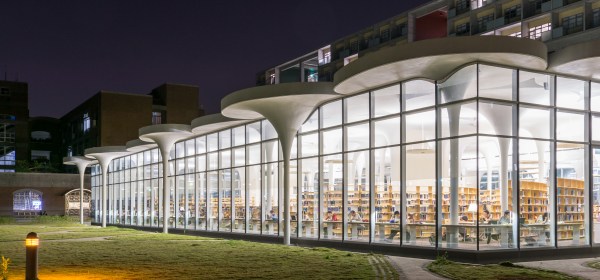
Written by Chia-Yuan Huang. This article reviews the shift of the origins of international students in higher education in Taiwan from mainland China to Southeast Asian nations such as Vietnam, Indonesia and Malaysia in the past few years. This could be attributed to the New Southbound Policy of the Tsai Ing-wen’s administration. This trend calls for more targeted admission policies and internships and job opportunities.

1 2 3 14