
Written by Michael Mo. To enhance the vitality of its democracy, Taiwan’s authorities should adopt the strategy used by other democratic nations of nurturing pro-democracy activists overseas in their election campaigns.

Written by Michael Mo. To enhance the vitality of its democracy, Taiwan’s authorities should adopt the strategy used by other democratic nations of nurturing pro-democracy activists overseas in their election campaigns.
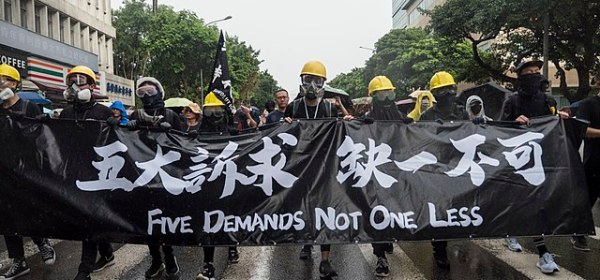
Written by Sanho Chung. It has been widely recognised that Hong Kong’s Anti-Extradition Movement in 2019 was the turning point of the 2020 General Election in Taiwan. In the last general election, Beijing’s hardline crackdown on the protests in Hong Kong gave rise to the Taiwanese’s mistrust of China and finally brought a big win to the Democratic Progressive Party (DPP), which was expected to lose both their majority over the Legislative Yuan and their presidency. But after three years of National Security Law (NSL) enactment in Hong Kong, the Hong Kong issue in this general election seems no longer as focal as it was. How should we make sense of this huge contrast in attention? Has “Hong Kong Influence” faded out totally?
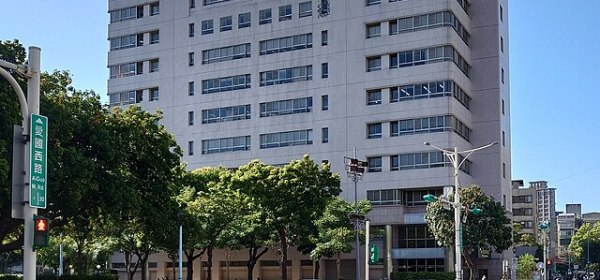
Written by Margaret Siu and Tommy Hall. In an era where digital technology permeates every aspect of our lives, national security strategies increasingly hinge on robust cybersecurity measures. This is particularly evident in the approaches of Taiwan and Japan, two democratic governments at the forefront of integrating advanced technological defences against emerging digital threats. The evolving cybersecurity strategies of Taiwan and Japan are not merely reactive measures to emerging threats but are emblematic of broader global trends where digital security is inextricably linked to political stability. Their experiences offer vital insights for other governments grappling with similar challenges, emphasising the importance of agility, technological innovation, and international cooperation in crafting national security strategies for an interconnected digital world.
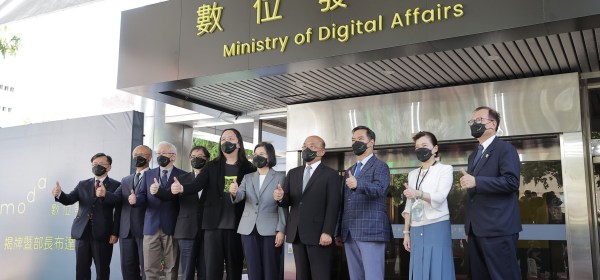
Written by Tommy Hall and Margaret Siu. In the digital age, politics and technology are more intertwined than ever, especially in East Asia. With nations like Taiwan wrestling with the balance between free speech and foreign interference and Japan pivoting towards advanced tech solutions for national security, the right balance remains elusive, and the stakes perennial. By exploring these critical intersections between online spaces and national politics, this work spotlights the challenges and opportunities that lie ahead for these East Asian democracies, as well as connecting the East Asian experience to the world at large.
Written by Michael MO. Hong Kong’s pro-democracy struggle was a hot-button issue in 2020’s Taiwan presidential election campaign. Both President Tsai and former head of Executive Yuan Su Tseng-chang took the city as a case in their speeches to remind the Taiwanese to defend the island and not turn Taiwan into another Hong Kong. Three years on, specific policies to guard the country against the potential legal and political harassment from the extraterritorial application of the NSL remain non-existent. While the issues of Hong Kong may no longer be a concern in the presidential race, the need to build a robust defence to protect Taiwanese interests in Hong Kong should still be on the political agenda of the island.
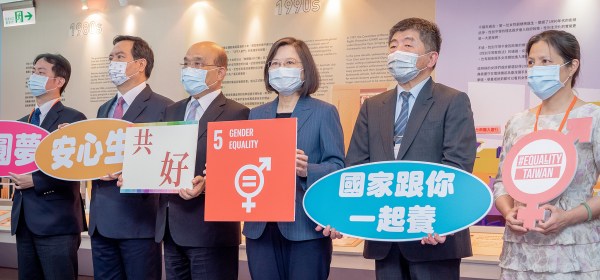
Written by Zoe Parrott. There is no doubt that, as three examples of major developed East Asian countries, Japan, South Korea, and Hong Kong are able to boast of countless laudable achievements. Furthermore, compared to other countries, all of these nations have impressive Human Development Indexes, ranking higher than the United States. However, there is one aspect of each of these nations that often flies under the radar – the infamous gender inequity these nations are characterised by. For concrete examples, look no further than DJSoda, who was sexually assaulted during her show in Osaka, Johnny Kitagawa, who, for decades, dangled “the price of stardom” as an explanation for his sexual abuse, and the four undergraduates who were sexually harassed and/or raped by their older 28-year-old peer at the Education University of Hong Kong. However, there seems to be one outlier among its peers – Taiwan, otherwise known as the Republic of China.
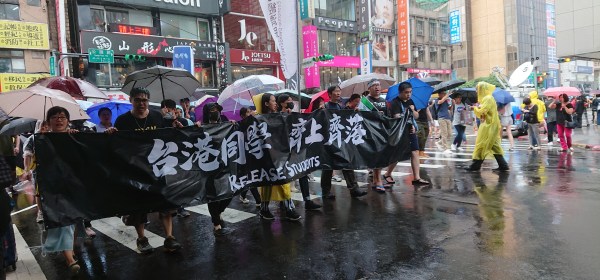
Written by Cheuk Kwan Lau. In January 2023, a BBC news article brought attention to the challenges faced by Hong Kongers who migrated to Taiwan. The news pointed out that Hong Kongers who migrated to Taiwan face institutional obstacles when applying for citizenship. Immigration laws in Taiwan were claimed to be outdated. The migrated Hong Kongers could legally inhabit Taiwan, yet they did not enjoy citizenship and civil rights.
Instead of exploring the various institutional obstacles they face, this article takes a unique approach by examining the perceptions of the Taiwanese young generation regarding the influx of Hong Kong immigrants. It aims to uncover the contemporary Taiwanese identity constructed by this demographic, previously seen as a strong ally of Hong Kong protestors during the 2019 Anti-Extradition Law Movement.

Written by Zeng Ee Liew. The term ‘colonial nostalgia’, or 戀殖 (lian zhi), has appeared more and more since the 2000s in the discourse used by Mainland China to describe the politicians or activists who advocate for democracy or even independence in both Taiwan and Hong Kong. Very often, those democracy or independence activists will be described as ‘traitors’ who still harbour lingering love or affection and pander to the former Western or Japanese colonial power and fail to show full patriotic love to the motherland. The use of such discourse can be seen from the lens of a broader effort by the Chinese government to delegitimise those pro-democracy activists, which will be explored further in this article.
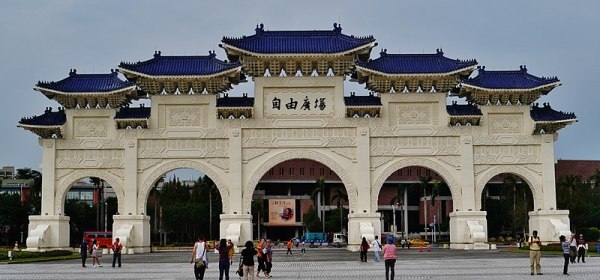
Written by Brian Hioe. Contemporary Taiwan is often hailed as a beacon of democracy in the region. Namely, Taiwan today holds free and fair elections after transitioning from its authoritarian past, which saw a history of one-party rule by the KMT. In various indexes of democracy, Taiwan usually scores highly regarding freedom of the press, speech, and expression. Part of the reason why Taiwan scores highly in contemporary indexes of democracy may be to differentiate Taiwan from China at a time of rising tensions between Western powers and China, raising questions about whether this proves a way that the Cold War framing of “free China” has subtly made a comeback. The underlying pressure to differentiate Taiwan from China has always been a substrate of Taiwan’s modern politics, whether in the present or in authoritarian times.

Written by Pin-Yi Li. In the postcolonial Asian context, national museums reflect the countries’ colonial histories and their transformation, offering the country’s incumbent political elites the opportunity to reinvent or adjust the initial museum discourses framed by the colonisers. For example, respectively built by the Japanese and British colonial governments, both the National Taiwan Museum and the National Museum of Singapore are the oldest public museums in each country.
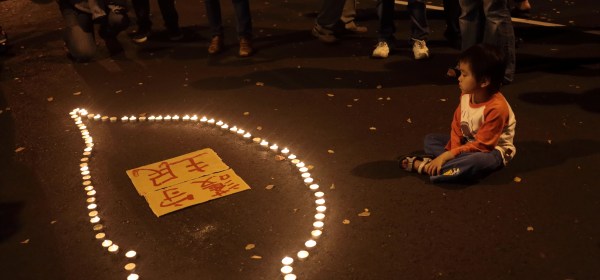
Written by Hsin-I Sydney Yueh. Recently, Taiwan’s Ministry of National Defense rejected a Japanese news report suggesting a widespread tendency among retired Taiwanese military officials to “sell out” their country. Wu Sz-Huai, a retired lieutenant general and incumbent opposition KMT party legislator, was among those who denounced this allegation.
“Are we Chinese spies (共諜)?” Wu angrily asked this rhetorical question during a session of the National Defense Committee at Taiwan’s Legislative Yuan on March 2, 2023. While Wu denied being a Chinese spy, Taiwanese netizens teased him by sharing a photo of Wu and other retired Taiwanese military officials attending a CCP-hosted event, where they had sat attentively and listened respectfully to China’s leader Xi Jinping in 2016. Wu’s use of the term “Chinese spies” reminds us of another similar expression in Mandarin Chinese: “allies of the CCP” (中共同路人). This expression has recently gone viral in Taiwan’s online communities, used for self-mockery and as an attacking label.
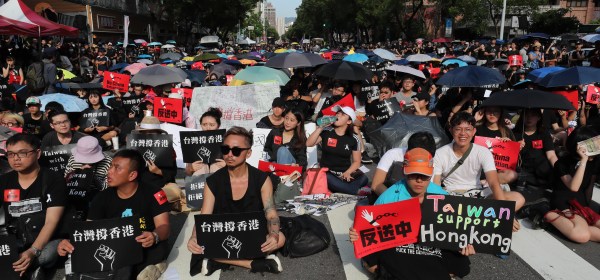
Written by Hsin-I Cheng. In the past decade, the world has heard the resisting voices of dissidents across Asia. From the 2014 Sunflower Movement to the Occupied Central Movement in Hong Kong later in the same year, citizens peacefully held their governments accountable. Since then, we have witnessed mass protests for freedom and transparency in nations. These challenges against authoritarianism generated transnational synergy, as demonstrated in the “#Milk Tea Alliance.” This movement started in 2020 when young Thai netizens fought cyberattacks against two Thai celebrities who expressed support for Taiwan and Hong Kong’s autonomy. Shockingly, two years later, the world witnessed Russia’s further invasion of Ukraine—it is a less militarily powerful neighbouring nation. Against these backdrops, we launched the book: Resistance in the Era of Nationalisms: Performing Identities in Taiwan and Hong Kong.
 Taiwan Insight