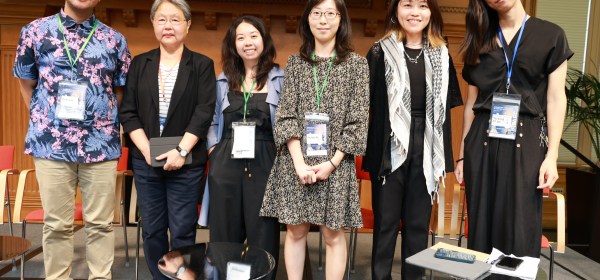
NATSA 2025 Opening Forum: Otherwise Relations between Taiwan and Southeast Asia

Written by the NATSA 2025 Programme Committee. This article shares the NATSA 2025 opening forum, “Otherwise Relations between Taiwan and Southeast Asia.” Adopting an “otherwise,” the forum challenges nationalistic views by centring Taiwan’s ongoing entanglements with Indigenous solidarity, migration, gender economics, human rights, and more, urging a new approach to Taiwan Studies.
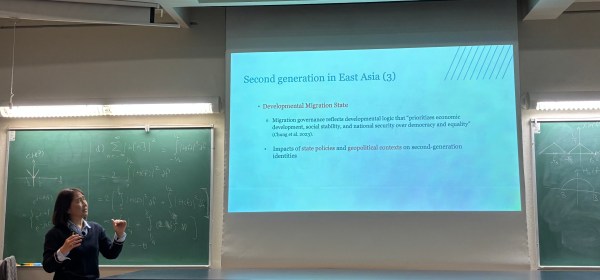
Navigating Taiwanese Identity: Second-Generation Multiculturalism in Conversation with Dr Pei-Chia Lan

Written by Rose Kuo and Rachel Levine. The article is the first in this special issue in collaboration with the Center for Taiwan Studies (CTS) at the University of California, Santa Barbara. It recapitulates a talk by Dr. Pei-Chia Lan, hosted by CTS. Focusing on children of immigrant marriage migrants and their children, Dr. Lan examines identity struggles, social stigma, and geopolitical impacts. Her research highlights Taiwan’s evolving multicultural landscape and advocates for inclusive policies that support immigrant families and promote societal integration.

Taiwan’s NSP Enabling a Better World: Perspectives from the Next Generation

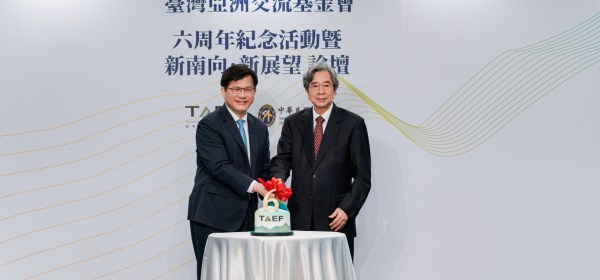
Written by Ian Yi-Rong Su. Taiwan is enhancing its New Southbound Policy (NSP) in response to Chinese threats, focusing on sharing economy, technology, and youth empowerment. The NSP strengthens ties with ASEAN countries and promotes Taiwan’s role in global supply chains, especially in semiconductors. The upcoming NSP+ aims to further enhance international partnerships and Taiwan’s global presence.

Reimagining Education: The Shift Towards Southeast Asian Students in Taiwan’s Universities

Written by Chia-Yuan Huang. This article reviews the shift of the origins of international students in higher education in Taiwan from mainland China to Southeast Asian nations such as Vietnam, Indonesia and Malaysia in the past few years. This could be attributed to the New Southbound Policy of the Tsai Ing-wen’s administration. This trend calls for more targeted admission policies and internships and job opportunities.

Clientelism, Social Movements, and Weak Ideology: Is Institutionalisation in Taiwan’s DPP Comparable with the Philippines’ Liberal Party?

Written by Russell Sherrard-Smith. This article compares Taiwan’s DPP with the Liberal Party of the Philippines, focusing on party institutionalisation and how it contributes to our understanding of the quality of democracy. The author looks at the two parties’ systemness, centralisation, leadership stability and other factors that significantly influence the countries’ democratic development.

Semiconductor and Renewable Energy: Taiwan-Vietnam Cooperation under New Leadership

Written by Tran Thi Mong Tuyen. Since the 1990s, Taiwan’s government has championed the “Go South” and “New Southbound” policies, catalyzing Taiwanese entrepreneurship across the Association of Southeast Asian Nations (ASEAN). Vietnam, boasting a stable economy, ample labour force, a youthful demographic, and rich natural resources, has emerged as a prime destination. This article focuses on the recent cooperation between Taiwan and Vietnam in different industries, and proposes potential future collaborative opportunities between the two.

Envisioning Migrant Worker Policy: Toward Dignity and Well-being 

Written by Hang-Tang Chen; translated by Yu-Chen Chuang. Taiwan needs to refine its migrant worker policies to focus not only on labour contributions but also on the well-being and dignity of the workers. Personal stories of migrant workers in this article reveal the necessity for comprehensive policies that address the physical and mental health needs, acknowledging the humanity behind the workforce.

Has Taiwan Escaped Nostalgia for Authoritarian Times? Taiwan and Regional Comparisons

Written by Brian Hioe. Contemporary Taiwan is often hailed as a beacon of democracy in the region. Namely, Taiwan today holds free and fair elections after transitioning from its authoritarian past, which saw a history of one-party rule by the KMT. In various indexes of democracy, Taiwan usually scores highly regarding freedom of the press, speech, and expression. Part of the reason why Taiwan scores highly in contemporary indexes of democracy may be to differentiate Taiwan from China at a time of rising tensions between Western powers and China, raising questions about whether this proves a way that the Cold War framing of “free China” has subtly made a comeback. The underlying pressure to differentiate Taiwan from China has always been a substrate of Taiwan’s modern politics, whether in the present or in authoritarian times.

Japanese Colonial/Occupational Histories in the National Museums: A Comparison Between Taiwan and Singapore

Written by Pin-Yi Li. In the postcolonial Asian context, national museums reflect the countries’ colonial histories and their transformation, offering the country’s incumbent political elites the opportunity to reinvent or adjust the initial museum discourses framed by the colonisers. For example, respectively built by the Japanese and British colonial governments, both the National Taiwan Museum and the National Museum of Singapore are the oldest public museums in each country.

Freedom Fighting: Taiwan’s Resistance against China’s Ethnonationalism   

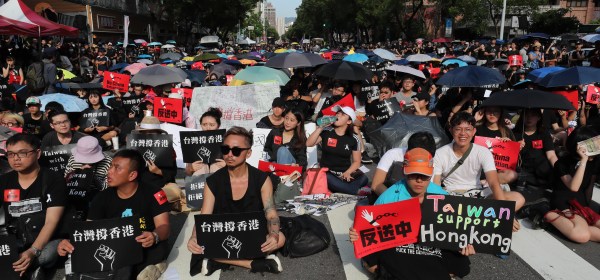
Written by Hsin-I Cheng. In the past decade, the world has heard the resisting voices of dissidents across Asia. From the 2014 Sunflower Movement to the Occupied Central Movement in Hong Kong later in the same year, citizens peacefully held their governments accountable. Since then, we have witnessed mass protests for freedom and transparency in nations. These challenges against authoritarianism generated transnational synergy, as demonstrated in the “#Milk Tea Alliance.” This movement started in 2020 when young Thai netizens fought cyberattacks against two Thai celebrities who expressed support for Taiwan and Hong Kong’s autonomy. Shockingly, two years later, the world witnessed Russia’s further invasion of Ukraine—it is a less militarily powerful neighbouring nation. Against these backdrops, we launched the book: Resistance in the Era of Nationalisms: Performing Identities in Taiwan and Hong Kong.

1 2 3 5