A lesson from the Russo-Ukrainian war for Taiwan: Connection

Written by Patricia Elnakhal, H.K. Wind and Fengze Strategy. Currently, the controllable intensity on the Taiwan Strait can potentially escalate. The growing frequency of analogous cases that several military aircraft from the mainland flying into the island’s air defence zone cause the intensity on this territory, while the situation is still under control because these actions are mainly for strategic purposes. More importantly, none of the powers is fully prepared for uncontrollable collisions, but the situation’s development indeed keeps invisibly escalating. As a lesson from the Ukraine war, Taiwan has to construct an unbroken and heavy rope connecting itself to the international community to prepare well earlier for various possibilities. The connection between Taiwan and the international community could be observed through two main aspects: the diplomatic interactions connecting to international politics and the economic development connecting to the international market.

Ethno-culture in national identity formation: what lesson can we learn from Taiwan?

Written by Olga Daksueva. The Russia-Ukraine war brought back discussions on national identity and how it is formed. National identity consists of two components: ethnocultural and political. Ethno-culture is often viewed as “the core of a nation and national identity,” which includes language, history, culture, and religion. It is argued to become the passé and to be replaced by the political component, which is designed through state sovereignty and territorial boundaries, delimiting the extent of nations and, by doing so, forming commonalities within the nations. However, the fact that we share a common territory is insufficient to get attached to the country. States also utilise various means to shape salient national identity through “rediscovery, reinterpretation and regeneration of [national] community.”

The Sunflower, the Umbrella, and the Square: How Three Protest Movements in 2014 Foreshadowed Russia and China’s Foreign Policy Approaches in 2022

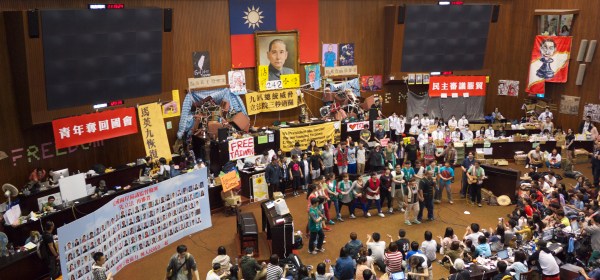
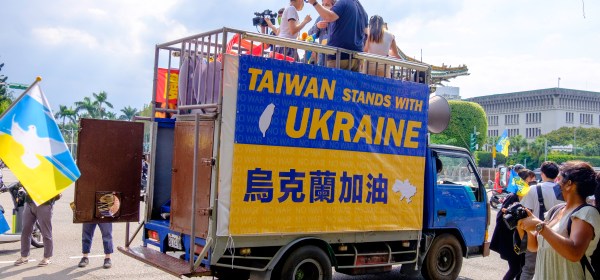
Written by Max Dixon. Therefore, the grievances, tactics and repression of the protest movements outlined here enable a clear foreshadowing of the approaches of Russia and China that would follow. Yet where Ukraine and HK saw their political systems collapse in their post-movement societies, the strength of Taiwan’s democratic institutions and values prevailed. This resulted in negotiating with the Sunflower Movement’s strains and the calls to repress it, which have seen a stronger Taiwan emerge.

Shared but Particular: A Proposal to Pitch Taiwan Research in Sinology and beyond

Written by Josie-Marie Perkuhn and Hung-yi Chien. Therefore, we call for a more comprehensive cross-perspective and interdisciplinary academic dialogue to encounter the current segregations and broaden the community by strengthening the interconnectivity. Although some topics, such as identity politics and the cross-strait tension, have caught particular attention in recent years, Taiwan studies still lack some ‘infrastructure’ that helps new students of Taiwan to grow upon it. With this sort of infrastructure, even if Taiwan lose its existence as an independent entity in the future, the shared discipline of sinology researching Taiwan, in particular, will last, and Sinitic knowledge will become the common heritage of human beings.

Divided Reaction to the Ukraine Invasion in Taiwan

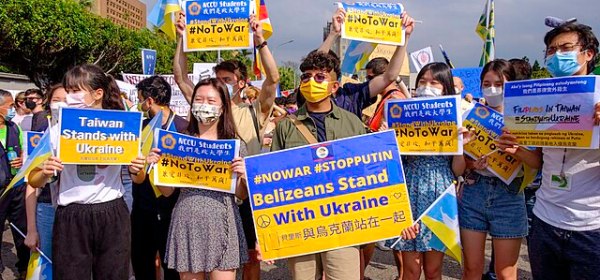
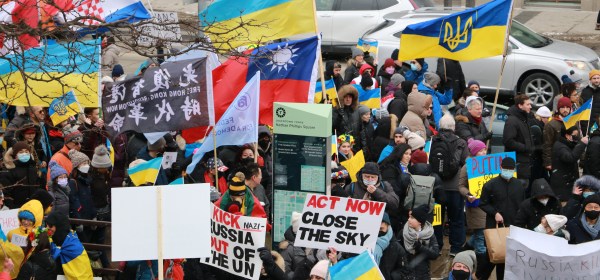
Written by Brian Hioe. The Tsai administration has presented somewhat mixed messaging on the invasion of Ukraine. When questioned by opposition lawmakers, officials such as Premier Su Tseng-chang have rejected comparisons between Ukraine and Taiwan, stating that the two contexts are sufficiently different and cannot be compared. On the other hand, President Tsai Ing-wen has said that Taiwan stands with Ukraine as a fellow democracy and has condemned Russia’s actions. Contributions from her administration have included the establishment of a relief fund.

Taiwan’s Middle Power Humanitarian Diplomacy

Written by Huynh Tam Sang. As the resurrection of great-power politics has tragically befallen smaller powers, Taiwan has enhanced its agency via embracing humanitarian diplomacy and has sought a meaningful role in the global arena by supporting like-minded countries. The lesson from Taiwan’s humanitarian diplomacy is that when democracy is exposed to challenges, middle powers should potentially play a responsible role by investing in diplomatic support and humanitarian aid to vulnerable people.

‘Today’s Ukraine is Tomorrow’s Taiwan’?

Written by Chieh-chi Hsieh. In sum, there is no reason to believe that imminent conflict in the Taiwan strait would occur after the Russia-Ukraine war outbreak. However, it is imperative to underscore that the proposition is not formed based on comparing Taiwan’s relative advantages over Ukraine. Instead, it is underlined by how the ongoing war has been perceived by not only Taiwan’s general public and government but also Xi and the CCP.

What Does the Ukraine Crisis Tell Us About the Fate of Taiwan?

Written by Raian Hossain. The Russian invasion of Ukraine raises a serious concern over international peace, security, and stability. This led to numerous debates among analysts, academics, and journalists over the possibility of Beijing’s aggregation toward Taipei. There are good reasons why such concerns are in discussion. Chinese fighters’ incursion of Taiwan’s Air Defence Zone has become a regular practice in recent times. Hence, these lead toward analysing the possibility of the Peoples Republic of China (PRC) invasion of the Republic of China (ROC), often known as Taiwan, using the lens of security, political economy, and diplomacy.

Ukraine and Taiwan: Comparison, Interaction, and Demonstration

Written by Yu-Shan Wu. Comparisons have been made between Ukraine and Taiwan, with the ominous implication that Taiwan may become Ukraine in the foreseeable future, i.e., a weak country attacked by its much stronger neighbour. Most of the comparisons are shallow in that they simply draw on the obvious power asymmetry that exists between Russia and Ukraine and between mainland China and Taiwan, as well as the hostile intention of the mighty country toward the lesser power. However, the structural similarities between the two cases run much deeper.