Will the KMT’s Generational Divide Harm its 2024 Election Prospects?

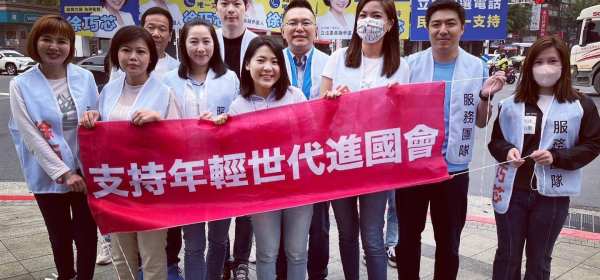
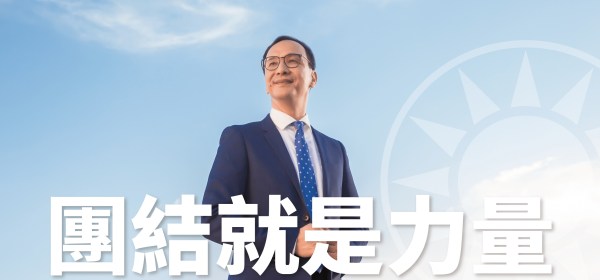
Written by Andrew LaRocca. Caesar, The Planet of the Apes protagonist who incites a rebellion to usher in a new civilization, was recently drawn into the KMT’s internal debates when Taipei City councillor Hsu Chiao-hsin changed her Facebook profile picture to Caesar amidst her escalating battle with senior legislator Fei Hongtai. In the comments, netizens joked: “How many terms can upper leaders serve? How old are those seniors?” Hsu’s Caesar reference reflected a sentiment expressed by many Taiwanese youths: the KMT and its leaders are out of touch with Taiwan’s younger generations.

The KMT Selects Its Presidential Candidate: Can Uniting All Non-Green Friends Make Taiwan Go Blue in 2024?

Written by Jasper Roctus. The results of the KMT’s ambiguous drafting (徵召) procedure of its presidential nominee, which commenced after its leadership took control of the process, should be announced by May 20. The KMT’s selection committee nevertheless already appears reluctant to accept Terry Gou’s eccentric rhetoric and, most prominently, fears electoral outfall over his close China ties. Gou himself also frequently alludes to his extensive bonds with the Chinese mainland by boasting about the leverage he holds in solving the hostile status quo across the Taiwan Strait. Considering that the KMT is still reeling from the landslide defeat of Han Kuo-yu in 2020, its last maverick businessman presidential nominee, the selection of the softer-spoken Mayor Hou as its candidate for 2024 appears to be a foregone conclusion. By early April, the KMT had allegedly already reached an internal consensus on its candidate – a clear reference to being ready to select Hou.

Hou You-yi and Terry Gou in the KMT nomination process: electoral prospects for 2024

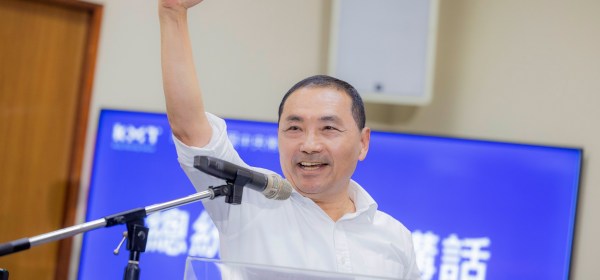
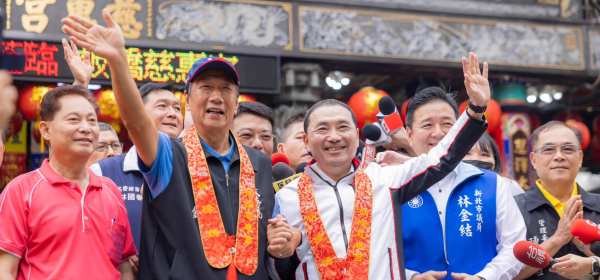
Written by Mingke Ma. Unlike the nomination process for the General Election in 2020, the Chinese Nationalist Party (中國國民黨, KMT) decided to forgo a party primary election to nominate its presidential candidate for the upcoming General Election in 2024 to ‘avoid internal strife’. New Taipei City Mayor Hou You-yi (侯友宜) and the founder of Foxconn, Terry Gou(郭台銘), have publicly declared their interest in endeavouring for the KMT’s presidential nomination. In this piece, I will show that although Hou seems more likely to receive the KMT’s final nomination, Terry Gou remains an important asset for the KMT’s overall electoral prospects.

Internal Divisions, Regardless of the Outcome: The KMT’s Troubled Candidate Decision-Making Process

Written by Brian Hioe. At this stage in the election, the KMT has already announced some of its planned legislative candidates. In addition, the KMT is slated to announce its presidential candidate sometime this month, with a party congress planned in July. But the KMT’s process to decide both the presidential and legislative candidates that the party will field in the 2024 elections has already been controversial. Moreover, the primary outcome threatens to further divide the party at a time when the pan-Blue camp is already plagued by in-fighting. Likewise, the controversies that have already occurred reflect the party’s unresolved internal divisions at a time when the party likely needs unity if it hopes to prevail in the 2024 elections.

Battle for the KMT: For election or ideology?

Written by Adrian Chiu. It was generally thought that political parties are either election-based or ideology-based, depending on the factions dominating the party. The Chinese Nationalist Party (KMT), having lost two presidential elections in a row, are now at crossroads to decide which they are for. As a mainstream party in a two-party system, the KMT is generally assumed to be aimed at winning elections. But as a former authoritarian party, adapting to electoral politics has always been tricky for the party. The increasingly vocal ‘deep blue’ faction within the party also seemed to suggest otherwise. As the general elections draw near, the temperature is rising for the battle for the party.

Wave Makers on Netflix: A Vision of Taiwanese Politics Not ‘Amid Tensions’  

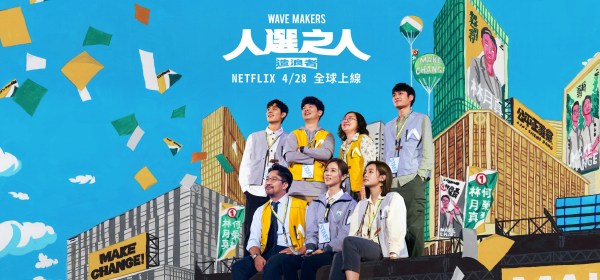
Written by Chieh-Ting Yeh. “Wave Makers” (2023; ​人選之人-造浪者​) is a new drama on Netflix about political staffers trying to win a presidential election in the last few months of the campaign. This may sound like the premise of many television shows in the political intrigue genre, but it is the first of its kind from Taiwan to be available to a worldwide audience. The drama addresses various political issues relevant to contemporary Taiwan, including environmental concerns, energy policies, and workplace sexual harassment, reflecting the ongoing public debates on these topics. But it is glaring in what it is missing: Taiwan-China relations.

Can Democracy be fed (or fed up)? Economic Factors Towards Democratic Development and Political Efficacy in Taiwan Presidential Election (1996-2020)

Written by The Fengze Strategy. Taiwan’s 2024 presidential election is approaching. Although candidates from different major parties have yet to stand out representing their parties, economic development has been considered an essential issue in every campaign. Some political entrepreneurs thought that democratic values could not be sufficient for economic development; in other words, citizens who prefer economic development the most would consider the so-called democratic value to be “a castle in the sand”. In this article, we will examine the presidential elections in Taiwan from 1996 to 2020 through the basic factor of economic development, the gross domestic product (GDP).

How Does Recipients’ Corruption Taint the International Image of Taiwan’s Foreign Aid?

Written by Ernie Ko. Taiwan’s foreign aid, officially known as official development assistance (ODA), has rarely been mentioned as a good practice in the circle of international press and international aid agencies. On the contrary, corruption, inefficiency, non-transparency, and unaccountability are often associated with the recipient countries of Taiwan’s aid. So, the question is, does this negative stereotype unavoidable?

Europe’s Dream of Strategic Autonomy

Written by Gunter Schubert. Slowly, the dust settles after French President Emmanuel Macron’s remarkable performance during his state visit to China from April 5-7. However, it is a safe bet that his statements on the danger of the European Union (EU) being drawn into a war by the US because of Taiwan, a place of no interest to Europeans, will have long-lasting repercussions for the transatlantic relationship.

Not A New Story: Tracing the History of Corruption in Tainan

Written by Jonathan Leung. Earlier this year, the Speaker and Deputy Speaker of Tainan City Council, Chiu Li-li and Lin Chih-chan, were arrested on suspicion of involvement in a bribery case related to the speaker election last December. However, this is not the first time incidents concerning the speaker election in Tainan City Council have made headlines. Accidents and controversies have arisen several times, drawing attention to the Tainan City Council’s speaker election held every four years in December.

From Kuomintang to Democracy: The Evolution of Clientelism and Its Legacy

Written by Matthew Yi-Hsiu Lee. The democratic performance in Taiwan today is evident, but this does not mean that it does not have a dark side. Recently, during the by-election of a legislator in Nantou, some people held cameras to supervise whether others voted, which violated the privacy and rights of the general public. These people are brokers and part of a more extensive authoritarian legacy. They monitor whether voters go to vote, which may also involve vote-buying fraud and serving so-called “local factions.” However, what are the mysterious “local factions”? Why do they appear? And what impact do they have on democracy?

Recognising the ‘Taiwan Issue’: Analysing the Impact of the UK Government’s Integrated Review Refresh

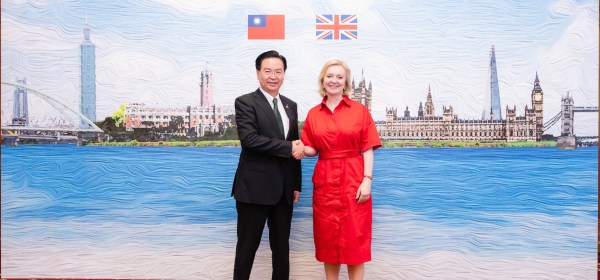
Written by Max Dixon. The British Government’s ‘refreshed’ foreign policy document, released in March 2023, emphasised the increasing parallels drawn between the plight of Ukraine amidst Russian aggression and the threat posed to Taiwan by increasing Chinese assertiveness. The Integrated Review Refresh 2023, the first clear enunciation of British Prime Minister Rishi Sunak’s foreign policy approach, sought to revise the 2021 Integrated Review. The Refresh formally recognises tensions in the Taiwan Strait for the first time in British foreign policy yet addresses Taiwan with a degree of tentativeness that will necessitate greater clarity in the future.

1 23 24 25 26 27 93