Trump’s Liberation Day Tariffs and Potential Impacts on Taiwan

Written by Dr Chieh-chi Hsieh. This article asks the question of whether Trump’s tariffs on Taiwan signal a potential divergence of his foreign policy on cross-Strait relations. It argues that although the country needs to remain cautious, the long-term impact might be less severe than one expects. Recent developments suggest that the Trump administration has not altered its foreign policy.

Will Trump’s Tariffs Hamper the Taiwan-US Trade Relationship

Written by Yun-Chieh Wang. This article analyses the potential impact of Trump’s reciprocal tariffs on the Taiwanese sectors with high value of export to the US, and the impact on the Taiwan-US trade relationship. With the strong economic ties between Taiwan and the United States, it is undeniable that the additional tariff imposed by the Trump administration would affect Taiwanese exports negatively.

The Impact of Trump’s Recent Tariffs on Taiwan’s Trade, Investment, and Economic Prospects

Written by Alexander C. Tan. This article argues that Taiwan finds itself in a uniquely vulnerable position in the shifting landscape of international trade. The Taiwanese economy is heavily reliant on international trade. Taiwan is also excluded from major regional trade agreements such as the RCEP and CPTPP, limiting its options for diversifying trade relationships and mitigating the impact of tariffs.

The Trump Tariffs, Semiconductors, and US-Taiwan Trade Relations

Written by Tom Meinderts. This article discusses the effects of Trump’s tariffs and the options available for Taiwan’s trade policies. Given the importance of the US market for Taiwan’s semiconductors, it is unsurprising that Taiwan has already started negotiations to lower the tariffs. As other options remain unattractive, these negotiations may become the most important in Taiwanese history.

Trump’s Tariffs 2.0: New Effects and Implications to Taiwan

Written by Guan-Yi Leu. This article analyses the effects of Trump’s tariffs on Taiwan economically and geopolitically. The main concern in Taiwan was the uncertainty and unpredictability caused by the policy. It also discusses Taiwan’s response to it, both in terms of government and businesses. Taiwan’s economy has shown resilience amidst geopolitical risks and has weathered previous conflicts.

Trump, Tariffs and Taiwan – walking a tightrope

Written by Michael Reilly. This article argues that the implications of Donald Trump’s tariffs for Taiwan are much more serious than a potential 0.43% hit to its GDP growth because the US and China are its two largest export markets, placing Taiwan on the front line of the trade war. Nevertheless, the choices of Taiwan are likely to be forced upon it by the decisions of American companies.

Bridging Taiwan’s Blue-Green Divide: The Twentieth Anniversary of the 2005 Chen-Soong Meeting (扁宋會)

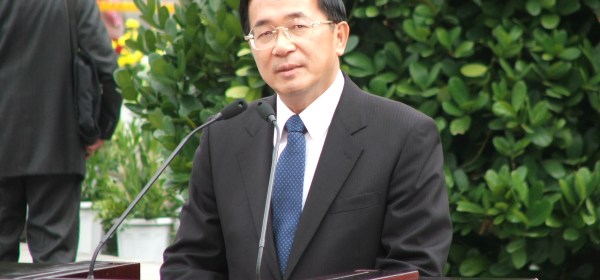
Written by Jasper Roctus. This article revisits a rare moment of bipartisanship from two decades ago when the DPP’s incumbent president Chen Shui-bian met with the PFP leader James Soong. The meeting offers insights into the possibilities and limits of political reconciliation in Taiwan in 2025. Even politically opposed figures can agree to embrace greater tolerance and goodwill.

Heads-up to the KMT: Why the botched budgeting compilation and political impasse in the Legislative Yuan may be more costly for the Kuomintang?

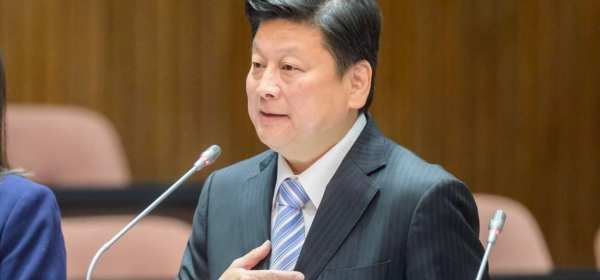
Written by Dr Chieh-chi Hsieh. This article argues that the KMT will suffer more substantial political backlash than the TPP both in the short term and long term. The KMT legislators will face the nationwide recall motions, while the TPP will not lose any of their legislators. The KMT is also going to bear the electoral cost of the internalisation of the cross-Strait confrontation.

Who Are the Victims of Taiwan’s Cultural Budget Disputes? The Invisible Right to Cultural Participation for People with Disabilities

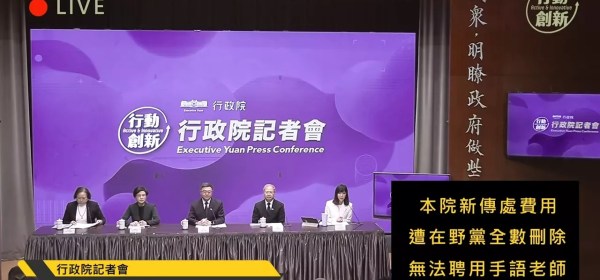
Written by Hsin-Yi Chao. This article discusses cultural equity and the rights of persons with disabilities in Taiwan. It examines cultural equity subsidies since 2016, noting that despite overall budget growth, cultural equity funding remains unstable. The author highlights a case where budget cuts led to the suspension of sign language interpretation services and proposes policy recommendations to strengthen cultural equity implementation.

1 7 8 9 10 11 94