The Implications of Recent India-Pakistan Conflict for Taiwan: Raising Awareness of Security Threat and Strengthening Will to Resist Aggression

Written by Mei-chuan Wei. This article examines the recent India-Pakistan conflict’s implications for Taiwan, highlighting the importance of developing advanced defence systems like data links and integrated air defence. It underscores the critical need for Taiwan to bolster public awareness of security threats and cultivate an unwavering will to resist potential Chinese aggression, viewing these as crucial for national defence.

Lai Ching-te’s Leadership on the Line in Taiwan’s Budget Standoff

Written by Meng Kit Tang. Taiwanese President Lai Ching-te faces a critical leadership test amid a budget standoff with an opposition-controlled legislature. Key defence cuts, including Taiwan’s submarine program, raise security concerns. Lai must balance strong leadership and negotiation to avoid political paralysis. Lessons from Taiwan’s political history offer guidance for effective crisis management.

Taiwan’s Looming Budget Crisis: A Stress Test for Democracy and National Security

Written by YouHao Lai and Gahon Chiang. This article explores the procedural and substantive controversies of the unprecedented budget cuts and their impact on Taiwan’s government and national security, ad what might come next. The cuts disrupt the core government’s functions and policy implementation and efforts to strengthen its self-defence. It is a test of national will to ensure Taiwan’s long-term security.

The Porcupine Strategy: Taiwan’s Road to Self-Defense

Written by Dominika Remžová and Dominika Urhová. The article begins with the modernisation of China’s military and its implications for Taiwan’s defense strategies. It emphasises the need for Taiwan to adopt asymmetric warfare approaches amid increasing Chinese military pressures and to reform its armed forces. Taiwan’s reliance on its critical semiconductor industry is also highlighted, showcasing its strategic importance.

Rethinking Data Sovereignty: From Regulating to Facilitating Utilisation

Written by Kai-Chih Chang. This article explores the evolving global data landscape and the challenges of data sovereignty. Although traditional notions of state jurisdiction over data remain relevant, the borderless nature of the internet necessitates a new regulatory framework that balances the needs and interests of businesses, governments, and other stakeholders to realise the multifaceted value of data in driving economic growth and innovation.

Navigating data sovereignty: lessons for Taiwan

Written by Zach Meyers. The concept of data sovereignty presents challenges for Taiwan, which relies heavily on open digital trade. While Taiwan’s Personal Data Protection Act allows cross-border data transfers with some restrictions, it still faces difficulties in asserting its standards due to its smaller market size and reliance on larger economies. To navigate these challenges, Taiwan may benefit from supporting multilateral data standards and strengthening its role as a key tech partner globally.

Taiwan’s Internet Governance: A Democratic Framework for Multistakeholder Participation and Global Connectivity 

Written by Anthony Lee. This article explores Taiwan’s Internet governance model, underlining its commitment to democratic principles and multistakeholder participation. Taiwan’s success in this area will depend on confronting challenges such as adapting to emerging technologies, ensuring privacy protection, and navigating geopolitical pressures while upholding democratic values and fostering international partnerships.

The Most Critical Resilience Questions of Them All: Taiwan’s Undersea Cables  

Written by Charles Mok and Dr Kenny Huang. This article examines Taiwan’s critical reliance on its undersea cable system for digital resilience in the face of potential blockades and disruptions. It emphasises the need for Taiwan to enhance its strategy by expanding partnerships to position itself as a regional “transfer station” for digital traffic while fostering investment and cross-sector collaboration to strengthen its connectivity infrastructure.

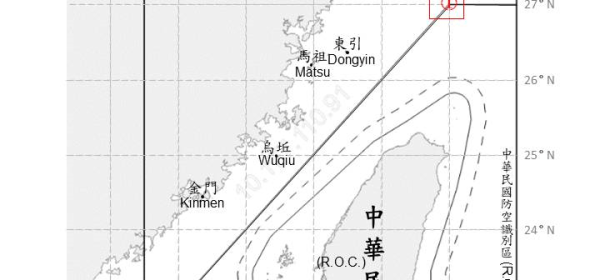
The trend of Grey Zone Conflict by China toward Taiwan during the presidency of Tsai Ing-Wen

Written by Ping-Yang Chao. This article examines China’s Grey Zone Conflict strategy employed since the Tsai Ing-wen’s presidency. These incursions became more frequent and intensive particularly after the visit of former US House speaker Nancy Pelosi. China is attempting to establish a “new normal” and intimidate Taiwan without triggering war and international intervention.

Taiwan’s Semiconductor Industry in the “Chip Wars” Era 

Written by Gunter Schubert. Taiwan’s security is largely determined by the government’s ability to promote the resilience of Taiwan’s high-tech industries, especially semiconductors, to ensure their international competitiveness and crisis resilience. Based on this fact, this article raises two subsequent questions: what strategies are the Taiwanese semiconductor industry pursuing to secure its technological edge and markets in the new global power constellation? And what is the Taiwanese government doing to strengthen the country’s economic security, which arguably depends essentially on maintaining Taiwan’s leading position in the global high-tech industry over the long term? 

1 2 3 4 12