Taiwan Studies in Europe in 20 years: Looking forward to another 20 years

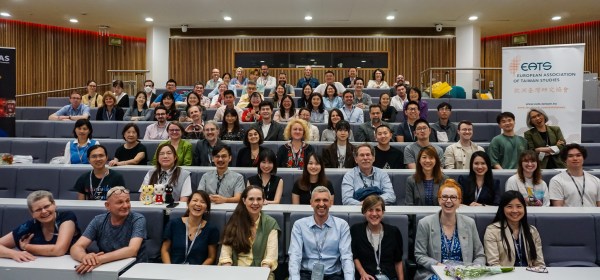
Written by Isabelle Cockel and Chun-yi Lee. The 20th Annual Conference of the European Association of Taiwan Studies (EATS) was held at the School of Oriental and African Studies (SOAS), University of London, on 26th – 28th June 2023. More than 120 participants joined this intellectual festival. A fire drill flushing out all the participants from the SOAS Main Building on the second day added a memorable highlight to the otherwise smooth proceeding of a panel-packed conference. Taiwan Insight featured four conference papers from the 3rd to the 12th of July as part of the celebration. This postface reflected upon the steady growth of Taiwan Studies, as demonstrated by them, in the past twenty years in Europe and beyond.
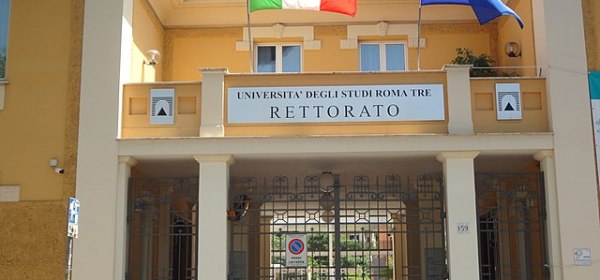
The Development of Taiwan Studies at Roma Tre University

Written by Rosa Lombardi and Silvia Schiavi. Since 2012, Roma Tre University carried out a series of activities to promote the knowledge and dissemination of Taiwanese culture and literature, contributing to the development of Taiwan studies in Italy. Before that, there was very little or no space devoted to Taiwanese literature in Italian universities, and courses in modern and contemporary Chinese literature mainly still deal with Chinese mainland literary production. Given this scarcity of studies on Taiwan in Italy, Prof. Rosa Lombardi and Dr Silvia Schiavi have promoted and implemented a series of events to raise awareness about the island and foster a better understanding of the Sinophone world through the introduction of Taiwan’s rich culture, history and literature to the students and the general public.

What is the significance of the dialogue with the Dutch community in Vancouver for 2023 TAIWANfest in Canada? 

Written by Charlie Smith. The Dutch Cultural Association of B.C. is trying to tell a more nuanced and complete story of the Netherlands, including the experiences of those who lived under Dutch colonial rule. Moreover, the association’s goal is to provide a richer understanding of how Dutch descendants should act as visitors on the unceded lands of Indigenous nations in Canada’s westernmost province. Oostindie believes that this has set his organization up well for a collaboration with this year’s TAIWANfest in Vancouver and Toronto. Oostinde discusses how Taiwan, the Netherlands and Canada can “have heartfelt discussions that bring these hidden histories forward. And we can learn about what it means for contemporary politics, how we work together, and how we consider democracies.” 

Beyond Chinese: The Evolution of Taiwanese-Canadian Identity in Canada

Written by Charlie Smith. At the height of the pandemic in 2020, a cultural producer generated considerable discussion within the Taiwanese diaspora in North America. It came when Charlie Wu wrote an article declaring: “I’m a Taiwanese Canadian, not a Chinese Canadian.” It was the managing director of the Asian-Canadian Special Events Association’s personal response to being constantly labelled as Chinese in his adopted country. In fact, Wu was even included in the list of the top 100 influential Chinese Canadians in British Columbia in a 2006 article in the Vancouver Sun. 

Queering the Intergenerational Remembrance of the White Terror

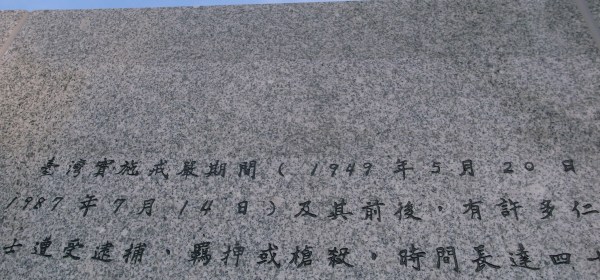
Written by Linshan Jiang. In 2020 and 2021, the National Human Rights Museum and Spring Hill Publishing released two literary collections on the White Terror in Taiwan (1947–1987): a four-volume novel collection entitled Making the Past in the Moment (2020) and a five-volume essay collection, entitled Soul and Ash (2021), co-edited by two Taiwanese writers, Hu Shuwen (1970– ) and Tong Weiger (1977– ). “White Terror” refers to the 50-year oppressive rule by the Chinese Nationalist Party (Kuomintang, KMT) in Taiwan after the Republic of China took over Taiwan from Japan in 1945. Then the KMT lost the Chinese Civil War (1945–1949) and was exiled to Taiwan in 1949. As a result, it is officially known as the martial law period. Although it should be admitted that the concept of “white terror” may not encompass every aspect of the martial law period, my focus is on the continuing oppression of the people due to KMT’s authoritarian rule, and I will mainly use White Terror to refer to this period in this article.  

Understanding Taiwanese Literature Beyond Borders

Written by Jenna Tang. Literature from Taiwan is considerably underrepresented in the English-speaking world. Several literary themes are specific to the place, its languages, cultures, and history that haven’t been fully explored over time. As a Taiwanese writer and translator myself, I am often questioned: “How do these books from Taiwan travel across borders?” 

Taiwanese Literature through the Lens of World Literature: Publications in 2022 and 2023

Written by Jessica Ssu-Chieh Fan. The past year, from 2022 to 2023, has witnessed some exciting achievements in Taiwanese literature. Malaysian-Chinese Taiwan-based novelist Chang Kuei-hsing won the Newman Prize for Chinese Literature, one of the most prestigious literary prizes for contemporary prose and poetry written in Chinese. From the discourses surrounding this literary event, including Chang’s acceptance speech and the remarks by Chang’s nominator E.K. Tan, some evolving trends related to broader paradigm shifts in Taiwanese literary studies can be discerned. Both Chang and Tan referenced the hybrid transcultural aesthetic influences epitomised by Chang’s literary style, which Tan described as “a unique branch of Chinese literature as world literature.” Another Taiwanese writer who has garnered significant international attention is Kevin Chen. His novel Ghost Town, translated into English by Darryl Sterk, was featured on the Best Books of World Literature of 2022 by Library Journal and on the longlist of the PEN Translation Prize 2023.

Situating Taiwanese Literature in the Framework of World Literature 

Written by Pei-yin Lin and Wen-chi Li. World literature, a term for which Goethe is usually credited as the first proponent, has generated discussions in the West since the second half of the 20th century, particularly since the late 1990s. Casanova’s sociological studies of the “world republic of letter,” Moretti’s call for a “distant reading” and attention to variations in the genre, and Damrosch’s shying away from the literary canon to the circulation of texts are oft-quoted examples. These discussions have left noticeable impacts on the discipline of comparative literature, encouraged us to step out of the usual aesthetics confined by “great tradition”, as Leavis notes, and expanded our understanding of a literary canon beyond Shakespeare and Flaubert to include Mahfouz and Cao Xueqin. Nevertheless, these narratives cannot escape their European and North American backgrounds. Examples proposed by scholars or readers, such as The Guardian’s “The 100 Greatest Novels of All Time,” are often coloured by the Euro-American centrism in which Western works emerge, receive canonisation, circulate within Europe and North America, and subsequently are distributed to the rest of the world.

Taiwanese Literature Beyond Taiwan

Written by Chee-Hann Wu. On 12 March 2023, Taiwan lost to Cuba in a World Baseball Classic qualifier, eliminating the former from the tournament. For most people, Taiwan and Cuba are like two parallel lines with almost nothing in common except their passion for baseball. If you use “Taiwan” and “Cuba” as keywords for a quick Google search, the first ten pages are all about baseball, with a few random advertisements from travel agencies. What if the relationship between the two is more than that? What if the fate of the two countries is intricately intertwined? Huang Chong Kai’s The Formosa Exchange begins with such a premise.

Three Musketeers against Mis/disinformation: Assessing Citizen-led Fact-checking Practices in Taiwan 

Written by Chiaoning Su and Wei-Ping Li. From sophisticated disinformation campaigns to patriotic trolling and clickbait, the flood of mis/disinformation has become a global phenomenon. Studies have shown that Taiwan’s young democracy ranks as one of the countries most exposed to misleading viewpoints or false information from foreign forces, especially China. These campaigns often seek to demonise high-profile Taiwanese politicians and divide Taiwanese society. They also aim to steer Taiwan away from anti-China policies or international alliances, notably with the United States.  

Who are the Allies of the Chinese Communist Party (CCP)? Neologisms, Netizens, and Nationalisms 

Written by Hsin-I Sydney Yueh. Recently, Taiwan’s Ministry of National Defense rejected a Japanese news report suggesting a widespread tendency among retired Taiwanese military officials to “sell out” their country. Wu Sz-Huai, a retired lieutenant general and incumbent opposition KMT party legislator, was among those who denounced this allegation.  

“Are we Chinese spies (共諜)?” Wu angrily asked this rhetorical question during a session of the National Defense Committee at Taiwan’s Legislative Yuan on March 2, 2023. While Wu denied being a Chinese spy, Taiwanese netizens teased him by sharing a photo of Wu and other retired Taiwanese military officials attending a CCP-hosted event, where they had sat attentively and listened respectfully to China’s leader Xi Jinping in 2016. Wu’s use of the term “Chinese spies” reminds us of another similar expression in Mandarin Chinese: “allies of the CCP” (中共同路人). This expression has recently gone viral in Taiwan’s online communities, used for self-mockery and as an attacking label.

“Governing by Memes”: COVID-19, Conspiracy, and Digital Democracy in Taiwan 

Written by Wen Liu and Hsin-I Sydney Yueh. The COVID-19 pandemic has significantly rearranged our social relations and affective connections. Amid disinformation and virus-origin conspiracy theories circulating across the social landscape, governmental responses to the pandemic have included various public health measures, such as lockdowns and mask mandates, and political measures, such as escalating geopolitical conflicts between the United States and China. Around the world, fear has been one of the most prominent affective responses to the pandemic, as driven by disinformation practices, intensified geopolitics, and our raw psychic fear about the unknown.

1 2 3 4 35