How the Subaltern Feels? A Dialogue on Emotions, Field-work and Subalternity

Written by Beatrice Zani and Lara Momesso. Marriage migration is a glocal phenomenon that refers to the interlink between marriage and mobility within a globalised world. During the last decades, Taiwan has become an illustrative site for global marriages: countries such as China, Vietnam, the Philippines and Indonesia are the main sending societies of females who decide to marry abroad.

International Human Rights Law, Constitution and ‘A Nation Founded upon the Principles of Human Rights’

Written by Kuan-Wei Chen. In Taiwan, which experienced authoritarian rule after World War II, the pursuit of human rights protection was an important task in the process of democratization. The first political party rotation took place in 2000, and during the inauguration of President Chen Shui-bian from the Democratic Progressive Party (DPP), he declared the important policy guidelines of ‘a nation founded upon the principles of human rights as a goal.

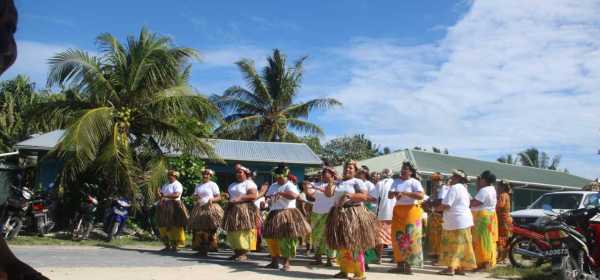
Rethinking Diplomacy and its Cultural, Social, and Political Contexts: The Diplomacies of Tuvalu, the Pacific, and Taiwan

Conceptions of diplomacy held in Taiwan and Pacific nations like Tuvalu, Kiribati, the Marshall Islands, and Palau have often come into conflict. One example is how Taiwan’s presidential visits to the Pacific have been conducted and received. Since the Chen Shui-bian administration came to power in 2000, Taiwanese presidents have attempted to visit most if not all of Taiwan’s allies. However, in the Pacific, these visits are often quite abbreviated.

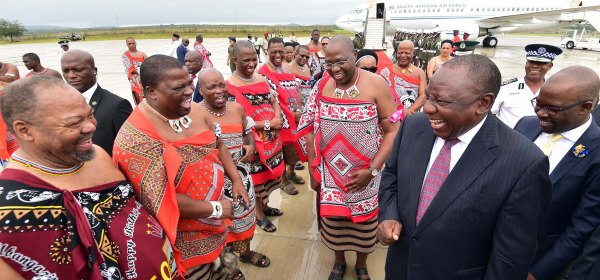
Losing Burkina Faso and Gripping eSwatini: A Comparative Study of Taiwan’s Diplomacy in Sub-Saharan Africa

Written by Megan Convielle. Given these factors of regional pressure, security, and internal political structure, it is important to re-evaluate the framework that gauges the role of diplomatic relations for the future of Taiwanese foreign policy. Previous research has shown that economic assistance plays a large role in small-state diplomacy, but this framework appears to be outdated in how Taiwan’s diplomatic relations are currently shifting.

Asking ‘what it does’ rather than ‘what it is’: The invisibility and opportunity of Taiwan’s role on the global health stage

Written by Kai-Yuan Cheng, Po-Han Lee, Po-Chang Tseng, Yunhung Jordy Tu, Shun-Te Wang. In this context, the exclusion of the Taiwanese people – currently represented by the Republic of China – from the largest world health institutions (e.g. WHO, United Nations) is no longer justifiable. Nonetheless, the reanimated Cold-War dynamics between China and the US have marginalised the Taiwanese people’s needs and voices yet again.

Evaluating the impact of Taiwan’s fertility policy

Written by Wen Shan Yang. In 2010 Taiwan’s total fertility rate (TFR, the number of children who would be born per woman during her life time using an estimation based on the current year) of 0.89 was so low that it became a member of a dubious club: the lowest-low fertility countries in the world club. According to this estimate, a woman in Taiwan will have borne less than one child after passing her child-bearing age of 49.

Taiwan and Global Health

Written by Jane Pei-Chen Chang and Kyle Kai-Yuan Cheng. If there is a single strongest conviction behind Taiwan’s tireless fight for its representation in global health, it is that Taiwan takes it as a responsibility to work together for the advancement of human health as a whole.

1 18 19 20 21 22 35