Migrants’ Voice in Taiwanese Documentaries: Narrative, Language and Space

Written by Adina Zemanek and Lara Momesso. Since the early 2000s, immigrants from mainland China and Southeast Asia have been an increasingly visible component of Taiwan’s social and public landscape. As such, they have received growing recognition both in terms of legal provisions and in the public discourse. An example of this acknowledgement is the December 2019 issue of Taiwan Panorama, a promotional magazine issued by the Ministry of Foreign Affairs. Half of this issue is dedicated to highlighting migrants’ presence in Taiwan. One of the articles calls for listening to their unique life stories, which would have the transformative effect of understanding the world from a new perspective and dismantling preconceptions about Southeast Asian cultures.

Explaining Cross-Strait Relations with Theories of European Integration

Written by Frédéric Krumbein. The European Union has the densest integration region globally, whereas current trends in cross-strait relations point to a further divide between both sides. Despite noticeable significant differences between the European Union and cross-strait relations, theories of European integration provide a useful framework to analyse the past, present, and future of relations between Taiwan and the Chinese mainland. Four major theories of regional integration that were developed for or applied to the European integration process will be used to analyse cross-strait relations: neofunctionalism, historical institutionalism, liberal intergovernmentalism, and postfunctionalism.

‘Bringing Back Transnational Relations’: Non-State Actors in Taiwan’s New Southbound Policy

Written by Ratih Kabinawa. Drawing from Risse-Kappen’s seminal book and his framework of domestic and international structures, this article explains Taiwan’s long-standing engagement with non-state actors in promoting its foreign policy objectives in Southeast Asia via a case study of the New Southbound Policy (NSP). After enjoying some success in maintaining semi-official contacts with Southeast Asian countries during the cross-Strait relation détente, the election of Tsai Ing-wen compelled Taiwan to bring transnational relations back into its foreign policy. In 2016, Taiwan’s newly elected president, Tsai Ing-wen, introduced a foreign policy flagship that stressed the essential role of people-to-people diplomacy in promoting Taiwan’s foreign policy objectives in Southeast Asia.

Energy Transition in-the-Making: How Offshore Wind Energy Interacts with Local Society in Taiwan

Written by Tsaiying Lu. “Go Nuclear to go green.” Under this catchphrase, during Taiwan’s 2018 referendum, pro-nuclear activists have successfully framed green energy as “unstable” and “unmatured” electricity-generating technology. They proposed to abolish Section 1 of Article 95 of the Electricity Act, which states terminating all nuclear power plants by 2025, was passed with a 40.27% approval. The result is a significant setback not only to President Tsai Ing-Wen’s (2016-2024) energy policy, “Nuclear-Free Homeland by 2025,” but also to offshore wind energy’s (OWE) development.

Changing Circumstances Call for Taipei to Lift Its Effort in Promoting Democracy on China and beyond

Written by Chen Jie (陈杰). There are remaining concerns urging the government of democratised Taiwan to support democratic causes and human rights in China. In fact, for the Tsai Ing-wen administration, these issues have strengthened. Despite their disdain for the one China project, politicians of the Democratic Progressive Party (DPP) share the sentiment that Taiwan’s own democratisation inspires China. This is echoed internationally. The former US Vice President Mike Pence spoke positively about Taiwan’s “embrace of democracy” and the example it had set for “all the Chinese people.”

On the Many Reasons People Study Endangered Languages

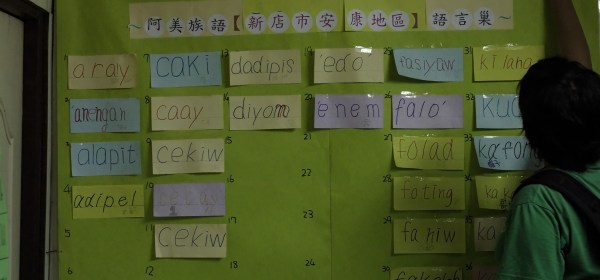
Written by P. Kerim Friedman. We often assume that all language learning serves the same purpose: communicating with native speakers of the target language. The truth is that this is not always the case. There are many other reasons people might decide to learn a language: It might be a requirement for school, work, or citizenship. A philosopher might want to read German, and a linguist might only desire to learn enough Japanese to analyse the language’s grammatical or phonetic structure. Many people worldwide learn Hebrew, Latin, or Arabic as part of their religious training and only use those languages in that limited context.

A Taiwanese Soft Power?

Written by Nissim Otmazgin. Now that Taiwan has largely shed its Cold War KMT image and has gone through a democratisation process, it can project itself as a peaceful, prosperous, and above all, democratic country that might be a good ally for pro-democracy forces across the region? Given its regional setting in Northeast Asia, how does Taiwan tap into surrounding soft power competition and promote an international agenda? 

Transition and Transformation: The Naming Dilemma in Today’s Taiwan Cinema

Written by Yiling Pan. What is the Taiwanese identity in today’s Taiwan Cinema? In 2008, Taiwan’s Cinema began to get back on its feet after an extended lull, with several new directors successively releasing critically acclaimed first works, such as Chung Mong-hong’s Parking, Tom Lin Shu-yu’s Winds of September and Gilles Yang’s Orz Boyz!. However, it took Wei Te-sheng’s debut, Cape No. 7, to become a box-office hit and arouse widespread interest in Taiwanese film. .

The Global Story of Traditional Chinese Medicine in Italy, China and Taiwan

Written by Daniele Mario Buonomo. The diffusion and practice of Traditional Chinese medicine (TCM) is an important issue both in the Chinese and Western worlds. In European and Western countries, TCM, and specifically acupuncture, is increasingly popular. In 1979, for the first time, acupuncture and moxibustion received the attention of the World Health Organization. TCM’s importance has even been stressed in 2010 by UNESCO, who inscribed acupuncture and moxibustion on the Representative List of the Intangible Cultural Heritage of Humanity.

A Response to Trauma through Puppetry and Performative Reenactment

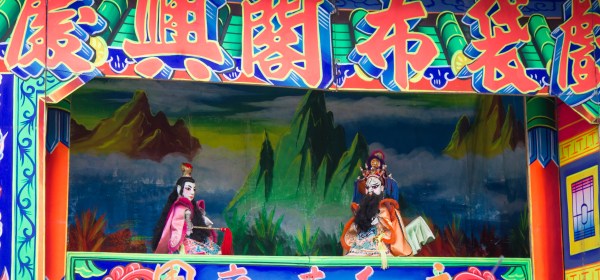
Written by Chee-Hann Wu. Puppets are mysterious creatures with lives and narratives different from that of humans. With its poetic and metaphorical nature, puppetry can unfold untold stories, censored or silenced. Flip Flops Theatre’s Lala: The Singing Bear (2019) and I Promised I Wouldn’t Cry (2019) are examples of puppets’ potentiality to access and tell these stories. Both pieces, designed for adults and children, adopt puppetry as a medium to address trauma under the White Terror. 

Joshua Wen-Kwei Liao (1905 – 1952): A Founding Theorist of Taiwanese Independence

Written by Kuan-Wei Wu 吳冠緯. Like his East-Asian contemporary intellectuals, Joshua was a product of both Western and Eastern traditions during those divided times. His reflection on statehood enfolds different trends of twentieth-century thought. This makes him a complex but intriguing thinker. When previous studies emphasise his political and nationalistic engagement, it should be noted that his way of thinking and philosophical methodology is also worthwhile to research.

Keynote speech at the Yushan Forum (part II)

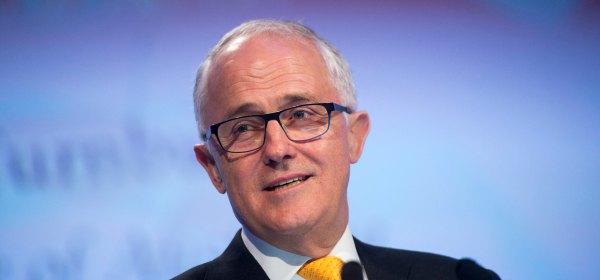
Written by Malcolm Turnbull. Countries that displease China have been threatened with economic consequences. It might be boycotting Japanese retailers; or stopping tourism to South Korea. Or as we have seen in Australia, holding up beef exports and slapping tariffs on wine. On the other hand, and especially in the developing world, billions are being offered for infrastructure development through the Belt and Road initiative.

1 4 5 6 7 8 35