From Conservation to Governance: Advancing Connectivity through Nature-based Strategies within the Taiwan Ecological Network 

Written by Hwa-Ching Lin, Chih-Chin Shih, Hsiao-Tien Hsieh, and Chia-Tzu Chen. This article explores how Taiwan’s conservation vision has broadened from isolated reserves to an island-wide ecological network. Through data-driven planning, nature-based strategies, and cross-sector cooperation, the governance model contributes to ecosystem services that are essential to public safety, human well-being, and sustainable economic development.

Co-Weaving Taiwan Ecological Network – Satoyama in Practice 

Written by Paulina G. Karim. This special issue, co-produced by Taiwan’s Forestry and Nature Conservation Agency and the Taiwan Partnership for the Satoyama Initiative, presents a “3-in-1” people-centred conservation strategy combining the Taiwan Ecological Network, Community Forestry, and Satoyama approaches. It shows how Indigenous and local communities steward the island’s bio-cultural landscapes.

My PhD Mentor, Tu Laoshi

Written by Linshan Jiang. This memorial essay reflects on the author’s time with Professor Tu Kuo-ch’ing, a deeply influential poet, scholar and the founder of the Center for Taiwan Studies at the University of California, Santa Barbara, who passed away earlier this year. His passing left a profound and unexpected void. This essay shares how Professor Tu introduced the author to Taiwanese literature and supported her academic journey.

Navigating Taiwanese Identity: Second-Generation Multiculturalism in Conversation with Dr Pei-Chia Lan

Written by Rose Kuo and Rachel Levine. The article is the first in this special issue in collaboration with the Center for Taiwan Studies (CTS) at the University of California, Santa Barbara. It recapitulates a talk by Dr. Pei-Chia Lan, hosted by CTS. Focusing on children of immigrant marriage migrants and their children, Dr. Lan examines identity struggles, social stigma, and geopolitical impacts. Her research highlights Taiwan’s evolving multicultural landscape and advocates for inclusive policies that support immigrant families and promote societal integration.

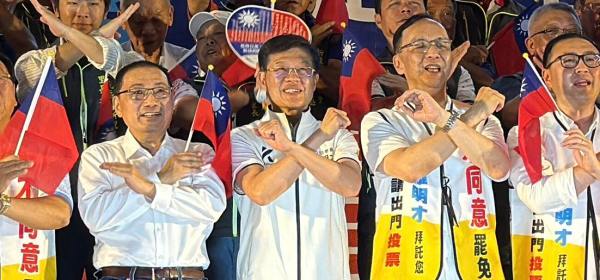
KMT Likely to Cry Foul Over Referendum Decision by Central Election Commission

Written by Brian Hioe. The Central Election Commission (CEC) has approved a referendum on resuming operations for the recently shuttered Ma-anshan nuclear power plant, while rejecting a referendum on capital punishment. Although the KMT pushed for both referendums as part of its electoral strategy, it did not appeal to the general public with either referendum, perhaps reflecting weakness of the KMT at the local level.

China and Russia’s Cognitive Domain Influences: The Strategic Use of Narrative Manipulation

Written by Wen-Qing (Sarah) Jiang. This article studies the increasing use of cognitive tactics in information operations by China and Russia. The internal political polarisation makes Taiwan and the EU especially vulnerable to these campaigns. The article contrasts the responses of Taiwan and Transnistria to cognitive warfare, highlighting the importance of a resilient government and a vibrant civil society.

Reimagining Chiayi: A Youth-Driven Project for Regional Revitalisation

Written by Yu-Jui (Ray) Cheng. This article discusses how the Chiayi Youth Project revitalises Taiwan’s Chiayi City by empowering young people through cultural events and innovation competitions. The project fosters local engagement, creativity and identity. With rising youth participation and a growing population, it allows a repositioning of Chiayi as a vibrant, youth-friendly city amid national demographic challenges.

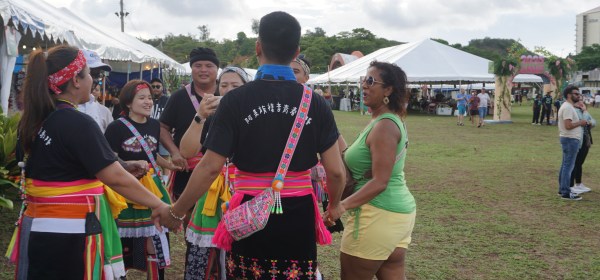
Siraya Groups Take Stand Against KMT Effort to Deny Indigenous Recognition to Pingpu Groups

Written by Brian Hioe. Siraya civil society groups oppose a KMT proposal to create a “Pingpu Indigenous” category, arguing it undermines their full legal recognition mandated by a 2022 Constitutional Court ruling. The debate reflects ongoing struggles over identity, resources, and recognition amid shifting political dynamics and the KMT’s efforts to defund Indigenous institutions.

V4-Taiwan Industrial Cooperation as a Strategic Response to a Shifting Global Order

Written by Filip Křenek. The EU faces new dependencies on U.S. LNG and Chinese clean tech, with the Visegrád Four (V4) particularly exposed to these pressures yet well-positioned to benefit from the green transition. This article argues that Taiwan is advancing its energy transformation and technological edge amid rising geopolitical tensions, creating opportunities for V4-Taiwan collaboration.

1 8 9 10 11 12 134