The Trump Tariffs, Semiconductors, and US-Taiwan Trade Relations

Written by Tom Meinderts. This article discusses the effects of Trump’s tariffs and the options available for Taiwan’s trade policies. Given the importance of the US market for Taiwan’s semiconductors, it is unsurprising that Taiwan has already started negotiations to lower the tariffs. As other options remain unattractive, these negotiations may become the most important in Taiwanese history.

Trump’s Tariffs 2.0: New Effects and Implications to Taiwan

Written by Guan-Yi Leu. This article analyses the effects of Trump’s tariffs on Taiwan economically and geopolitically. The main concern in Taiwan was the uncertainty and unpredictability caused by the policy. It also discusses Taiwan’s response to it, both in terms of government and businesses. Taiwan’s economy has shown resilience amidst geopolitical risks and has weathered previous conflicts.

Trump, Tariffs and Taiwan – walking a tightrope

Written by Michael Reilly. This article argues that the implications of Donald Trump’s tariffs for Taiwan are much more serious than a potential 0.43% hit to its GDP growth because the US and China are its two largest export markets, placing Taiwan on the front line of the trade war. Nevertheless, the choices of Taiwan are likely to be forced upon it by the decisions of American companies.

Taiwan Is My Favourite: K-pop Fans in The Bluebird Movement 

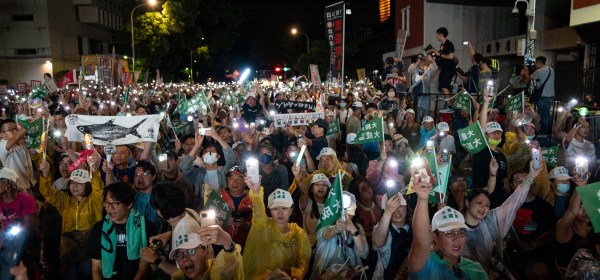
Written by Lorraine Pan. This article discusses K-pop and the use of lightsticks in the Winter Bluebird Movement in Taiwan in December 2024. Taiwanese K-pop fans used lightsticks to express their political views, drawing inspiration from similar actions in South Korea. Pan argues that the movement showcased the fan community’s power and challenged negative perceptions, highlighting their active engagement in political issues.

Diplomacy on Rails: Strengthening Taiwan-Japan Relations Through Railway Culture

Taiwan and Japan use railway diplomacy to strengthen cultural and technological ties through heritage preservation, tourism, and smart rail innovation. Unlike China’s debt-driven projects, their approach prioritises sustainability and soft power. Expanding collaborations into Southeast Asia and integrating AI-driven rail systems will enhance their influence in the Indo-Pacific region.

Teasing Romantic and Literary Appetite: Reading Taiwan Travelogue

Written by Mu-Hsi Kao Lee. The article explores the experience of reading Taiwan Travelogue as a translated historical yuri novel. Kao Lee reflects on how the narrative, despite its clear genre and straightforward plot, evokes a sense of both satisfaction and longing in the reader. The article highlights the story’s ability to interweave historical and cultural details with the protagonists’ emotional connection, examining themes of desire, identity, and the complexities of relationships within a specific historical context.

Savouring Taiwan’s History and Experience: Reflections on the Taiwan Travelogue and Its Book Talk

Written by Tun-Jung Kuo and Li-Ting Chang. This article reflects on a book talk discussing Taiwan Travelogue, highlighting how the novel uses food to narrate Taiwan’s colonial history, cultural hybridity and female perspectives. Through detailed depictions of cuisine and memory, it challenges historical narratives and deepens understanding of Taiwan’s evolving identity amid Japanese colonial influence and localisation.

Food is politics, and so is travel. 

Written by Chee-Hann Wu. This article discusses Taiwan Travelogue and its US book tour earlier this year. It highlights the controversial marketing strategy, the extensive use of footnotes to enrich the historical context, and the categorisation of the novel as queer literature due to the evident, though subtle, romantic undertones between the two female protagonists.

Revisiting Research: Indigenous Peoples as Non-State Diplomatic Actors in the Public/Cultural Diplomacy of Taiwan 

Written by Dr Carla Figueira. This article reflects on the 2024 IJTS Open Access Award-winning paper, “Indigenous Peoples as Non-State Diplomatic Actors in the Public/Cultural Diplomacy of Taiwan: A Case Study of Dispossessions: Performative Encounter(s) of Taiwanese Indigenous Contemporary Art.” It highlights the value of engaging with the personal and social contexts shaping research outputs. It celebrates the growing academic focus on Indigenous Peoples and cultural diplomacy, foregrounding Taiwan’s unique position.

1 10 11 12 13 14 134