Distance Between Goals and Actions: The Challenges of Implementing Legal Frameworks for Climate Change Adaptation in Taiwan 

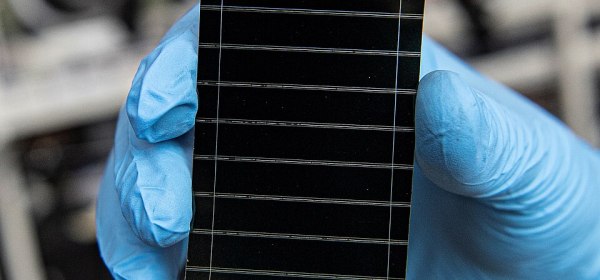
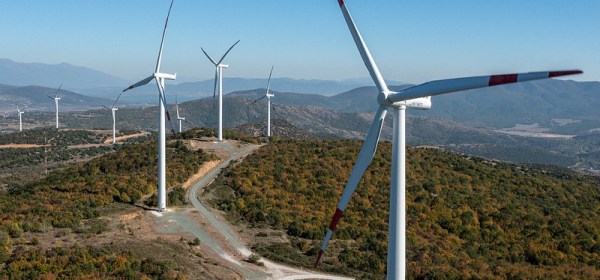
Written by Chien-Liang Lee. This article examines the evolution of Taiwan’s legal framework for climate change adaptation, identifying gaps between the current framework and the adaptation goals. It argues that the most critical missing link is the lack of robust normative connections between the various special administrative laws. It calls for more cohesive legal mechanisms to better connect multiple relevant sectors involved in climate adaptation actions.

Rukai Tribe’s Millet Farming: Indigenous Knowledge and Climate Change Adaptation Wisdom 

Written by Tzu-Ming Liu. The article discusses how the Rukai tribe’s traditional millet intercropping system not only sustains their food security and cultural heritage but also serves as an effective adaptation strategy to climate change. It also critiques government policies and economic shifts that have neglected these Indigenous practices, leading to environmental injustice and increased vulnerability to extreme weather events.

Climate Change Adaptation in Taiwan: Empowerment Workers and Mental Health Challenges in Post-Morakot Reconstruction  

Written by Tzu-Ming Liu. Based on the author’s experience participating in reconstruction after the 2009 Morakot Typhoon, this article focuses on the role of disaster companions (empowerment workers) who connect disaster victims with external resources, highlighting the need for their mental health support for companions and strengthened communication with the government.

Conservation and adaptation go hand in hand: on the role of Taiwan Ecological Network in fostering resilient landscapes and seascapes 

Written by Paulina G. Karim and Kuang-Chung Lee. This article discusses how the Taiwan Ecological Network integrates conservation and adaptation strategies to build resilient landscapes and seascapes in the face of climate change, biodiversity loss, and pollution. The authors highlight community-based resilience assessments and adaptive co-management practices, demonstrating the role of Indigenous and local knowledge in safeguarding both ecological systems and community well-being in Taiwan’s socio-ecological production landscapes and seascapes.

Taiwan’s NSP Enabling a Better World: Perspectives from the Next Generation

Written by Ian Yi-Rong Su. Taiwan is enhancing its New Southbound Policy (NSP) in response to Chinese threats, focusing on sharing economy, technology, and youth empowerment. The NSP strengthens ties with ASEAN countries and promotes Taiwan’s role in global supply chains, especially in semiconductors. The upcoming NSP+ aims to further enhance international partnerships and Taiwan’s global presence.

Taiwan Studies Teaching: The Experience of Connecting Teaching and Event Programmes at SOAS University of London

Written by Dafydd Fell. The article traces the establishment of the Taiwan Studies Programme at SOAS and explores how it integrates Taiwan Studies courses with an extensive event program, including lectures, film screenings, and alumni talks. The strategy enhances student engagement, sustains interest in Taiwan-related studies, and fosters academic-community interaction. By combining teaching with real-world experiences, the Taiwan Studies Programme at SOAS successfully maintains a long-term and sustainable environment for Taiwan studies.

Teaching Taiwan by teaching languages – Performative Interpretation Strategies for Taiwanese Language Learning – A Case Study at Inalco

Written by Chan-yueh Liu. This article emphasizes the importance of teaching Taiwan through its multilingual heritage, advocating for the inclusion of Taiwanese languages (Tâi-gí in academic programs. It introduces “Performative Interpretation Strategies” at Inalco in France, which engages students through performance, music and digital content creation. The approach enhances language learning by fostering creativity, cultural immersion, and communicative competence.

“Mapping Taiwan Teaching” at Trier University: Teaching Taiwan in Script, Speech, and Performance

Written by Thomas Fliß. This article introduces the workshop “Mapping Taiwan Teaching – Teaching Taiwan in Script, Speech and Performance” at Trier University, which focused on teaching Taiwan through language, culture, and performance. Scholars and educators explored Taiwan’s geopolitical significance, linguistic diversity, and cultural identity. The event featured interdisciplinary panels on Taiwan’s literature, theatre, and education, highlighting the need for expanded Taiwanese language courses and intercultural learning methods.

Reimagining Education: The Shift Towards Southeast Asian Students in Taiwan’s Universities

Written by Chia-Yuan Huang. This article reviews the shift of the origins of international students in higher education in Taiwan from mainland China to Southeast Asian nations such as Vietnam, Indonesia and Malaysia in the past few years. This could be attributed to the New Southbound Policy of the Tsai Ing-wen’s administration. This trend calls for more targeted admission policies and internships and job opportunities.

Indigenous Sovereignty Under Threat: The Fight Against Recent Legislative Setbacks in Taiwan 

Written by Indigenous Youth Front. This article examines the 2024 amendment to the Organization Act of the Council of Indigenous Peoples. It places this controversial amendment within the broader context of the long-term marginalisation of Indigenous peoples in political participation and advocates for actions that uphold genuine Indigenous self-determination.

2024 Taiwan Theatre Report: A Gray Area

Written by Yi-Ping Wu. The 2024 Taiwan Theatre Report analyses the trends in Taiwan’s theatre scene, highlighting the rising popularity of musicals and comedy while addressing the impact of the #MeToo movement. Finally, the government’s launch of the Taipei Theatre Awards signals institutional support, even as the industry faces challenges balancing commercial success with artistic and social responsibility.

1 13 14 15 16 17 134