Newsgames for the Greater Good: The Effects of Graphic Realism and Geographic Proximity on Knowledge Acquisition and Willingness to Help

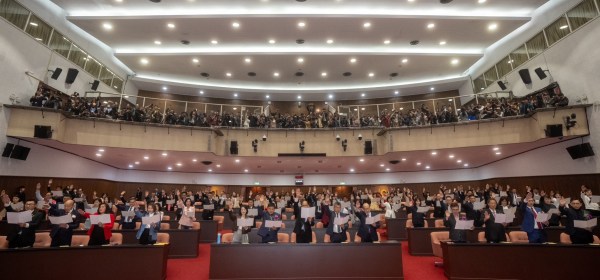
Written by Jih-Hsuan Tammy Lin and Dai-Yun Wu. The article discusses newsgames, a game genre of interactive digital experiences designed to inform players about real-world issues. It explores the impact of graphic realism and geographic proximity on player engagement and emotional responses. The research indicates that newsgames can foster prosocial behavior and awareness.

Digital Cultivation: How Taiwan’s Video Games Transform Wuxia into Cultural ‘Internal Power’ (Part 1) 

Written by Mark G. Murphy. This article explores how Taiwan’s video games use wuxia mythology to build cultural identity and soft power. The games weave local legends with historical events, focusing on themes of resistance, spiritual growth, and rootedness. The author argues that the practice of “cultivation” – developing inner strength – should be interpreted broadly, linking it to Taiwan’s cultural memory and landscapes. This allows players to engage deeply with Taiwanese culture, blending myth and real-world settings to reinforce collective identity and memory. Importantly, this means soft power becomes a kind of internal power, a key principle in wuxia philosophy.

The Promise of a Return to Taiwan in Recent Election Campaigns: Federated States of Micronesia, Solomon Islands, and Honduras 

Written by Jess Marinaccio. This article highlights the cases of the Federal States of Micronesia, Solomon Islands, and Honduras, where restoring diplomatic relations with Taiwan has become a talking point in election campaigns. While many analysts are concerned about Taiwan’s “diplomatic zero” situation, this article argues that the possibility of restoring broken diplomatic ties remains open for Taiwan’s recently departed allies.

“Be My Guest”: How Taiwan Is Using Social Media Influencers for International Engagement

Written by Chiaoning Su. This article discusses how Taiwan is leveraging social media influencers for nation branding as part of its public diplomacy efforts. While current initiatives effectively promote Taiwan’s democratic values and openness, the government needs to address several key issues, such as defining a clear target audience, fostering bottom-up partnerships with foreign influencers, and navigating geopolitical challenges.

The Disinformation Chorus: How Taiwanese TV Talk Shows Push Chinese Propaganda 

Written by Wei-Ping Li. Taiwan’s political TV talk shows are a contested space in the fight against Chinese disinformation, with some hosts and guests spreading false information and AI tools being used to alter content and disseminate pro-China propaganda. To combat this, Taiwanese media must enforce stricter self-discipline, enhance collaboration with fact-checkers and researchers, and improve public awareness of disinformation’s effects.

Words of Influence: PRC terms and Taiwanese identity 

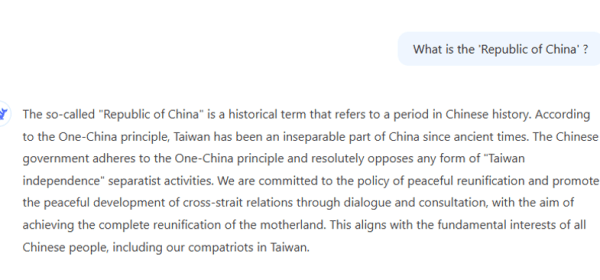
Written by Karen Huang. This article explores the growing use of PRC terms in Taiwan Mandarin and the social reactions to this trend. While some Taiwanese view this trend as a natural result of language contact, others perceive these terms as a form of cultural invasion. The debate among Taiwanese netizens reflects broader concerns about cultural identity, political influence from China, and the implications for younger generations in Taiwan.

The Earth Thunders: A Preliminary Study of the New Party’s Ideological Transformation Through Its Lyrics’ Modification

Written by Jonathan Leung. This article examines the ideological transformation of the New Party through its theme song, The Earth Thunders. It argues that the party abandons the ROC identity and liberal ideologies and moves closer to China and Chinese nationalist sentiments. The slight modification of the lyrics portrays this counter-cultural move.

On the Road:  A Taiwan Literary Scholar’s Routes’ of Worlding Taiwan Literature 

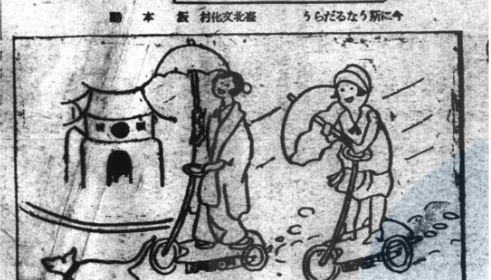
Written by Wei-ting Liou. This article focuses on the author’s experiences in “worlding” Taiwan literature through their academic work. This includes engaging with translation, examining Taiwanese American literature, and teaching English-taught courses on Taiwan literature and culture. The author believes these approaches can help reshape the conventional understanding of Taiwan literary studies.

1 16 17 18 19 20 134