Cybersecurity and National Security in Taiwan and Japan

Written by Margaret Siu and Tommy Hall. In an era where digital technology permeates every aspect of our lives, national security strategies increasingly hinge on robust cybersecurity measures. This is particularly evident in the approaches of Taiwan and Japan, two democratic governments at the forefront of integrating advanced technological defences against emerging digital threats. The evolving cybersecurity strategies of Taiwan and Japan are not merely reactive measures to emerging threats but are emblematic of broader global trends where digital security is inextricably linked to political stability. Their experiences offer vital insights for other governments grappling with similar challenges, emphasising the importance of agility, technological innovation, and international cooperation in crafting national security strategies for an interconnected digital world.

Computational Propaganda and Democracy in Taiwan: AI’s Impacts on Pre-Existing Challenges

Written by Tommy Hall and Margaret Siu. When generative, artificial intelligence (AI) programmes are used with malicious intent in the realm of politics, the resulting “deepfakes” can be both convincing (at a glance) and extremely damaging to the target’s image. This article will argue that a unified and proactive response is necessary for Taiwan to successfully navigate the gauntlet of challenges created by AI in a democratic political environment.

The Digital Evolution in Taiwan and Japan: Implications for Political Communication

Written by Tommy Hall and Margaret Siu. The digital era has revolutionised political communication, with profound effects in Asian democracies, notably Japan and Taiwan. This exploration delves into the intricacies of how political entities in these countries harness digital platforms. It aims to unpack the varied strategies they employ, the challenges they confront, and the opportunities they seize within the digital realm. Our analysis will not only highlight the distinct tactics and responses shaped by each country’s unique cultural, legal, and historical contexts but also examine the broader implications these digital transformations hold for political engagement and democratic discourse in the region.

Digital Governance Perspectives for Taiwanese and Japanese Civil Society

Written by Tommy Hall and Margaret Siu. In the digital age, politics and technology are more intertwined than ever, especially in East Asia. With nations like Taiwan wrestling with the balance between free speech and foreign interference and Japan pivoting towards advanced tech solutions for national security, the right balance remains elusive, and the stakes perennial. By exploring these critical intersections between online spaces and national politics, this work spotlights the challenges and opportunities that lie ahead for these East Asian democracies, as well as connecting the East Asian experience to the world at large.

Invisible Nation Documentary is Making Taiwan More Visible

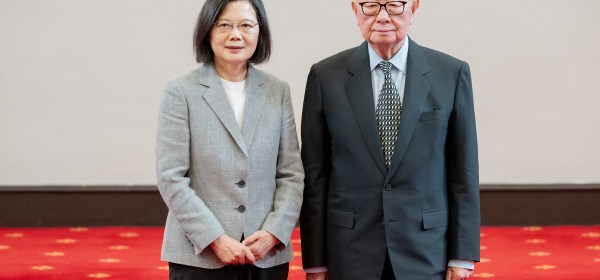
Written by Shawna Yang Ryan and Gerrit van der Wees. During the past weeks, a new documentary about Taiwan, Invisible Nation, has been making the rounds at various film festivals in the United States and Europe, including the International Documentary Film Festival Amsterdam on November 14-18, 2023.  Invisible Nation is the work of Vanessa Hope, who built up the film around the everyday life of President Tsai Ing-wen, in the process creating a fascinating picture of how the low-key President is ably leading Taiwan towards a better future.

From A Black Pot to Kuroshio Odyssey 

Written by Jiun-Yu Liu. Kuroshio Odyssey: Maritime Memories, Culture, and Landscapes (follows as KO) is a mini exhibition held at the Burke Museum in Washington State, USA (Oct 14 – Nov 28). KO focuses on two key themes: the diverse Indigenous cultures and the stunning natural landscapes in eastern Taiwan. As a multi-media exhibition, KO showcases material collections from multiple Indigenous communities in eastern Taiwan and includes an immersive element as visitors can access QR codes that provide images and detailed information about the selected pieces. In addition to the onsite exhibition, two Indigenous Taiwanese guest curators working in Taiwan and New Zealand have chosen wonderful artefacts from the Indigenous Peoples Cultural Development Center collection and converted them into an online exhibition to echo and enrich the KO exhibition content.

Wandering Back and Forth in The Sea of Books and Cultural Holdings – In Searching of Indigeneity, Positionality, and Self-identity 

Written by Nikal Kabala’an (Margaret Yun-Pu Tu). This article presents a reflective account from my perspective as one of the curators. It primarily focuses on the “behind the scenes” aspects, adopting an “inside out” approach to share my personal life experiences and the journey of research and curation as a mixed-background Taiwan Indigenous person from the Pangcah/’Amis community and a Ph.D. Candidate studying abroad in the fields of Indigenous Studies, Taiwan Studies, and Law. Supported by the main organisers—the Taiwan Academy in Los Angeles, the Burke Museum, and the Tateuchi East Asia Library (TEAL)—along with the co-organizers and their collaborative and generous sponsorships, I hope to unfold the narratives and open the dialogues driven by a passion for interdisciplinary pursuits. 

Kuroshio Odyssey: Bridging Cultures and Hearts Across Continents 

Written by Ellen Y. Chang. The Taiwan Studies Arts & Culture Program at the University of Washington (UW) proudly presents Kuroshio Odyssey: Maritime Memories, Culture, and Landscapes. This initiative celebrates the rich Indigenous cultures of Taiwan and underscores their profound ties to the Pacific Northwest. It features a multi-sited exhibition at the Burke Museum and the UW Tateuchi East Asia Library, an online display hosted by Taiwan’s Indigenous Peoples Cultural Development Centre, and a series of family-friendly events. With four curators—Zuzule Demalalade, Nikal Kabala’an (Margaret Yun-Pu Tu), Jiun-Yu Liu, and Tien-Li Schneider—representing diverse ethnic backgrounds and possessing unique socio-cultural and institutional expertise, the program embraces a multitude of perspectives. Their partnership extends beyond borders, connecting Taiwan to the Pacific Northwest.

Improving Conditions of Artistic Labour and Local Economic Sustainability 

The essence of cultural policy lies in nurturing and stimulating social creativity, which involves both the preservation of classics and the kindling of future possibilities. The durability of policy development hinges on the transmission of memory and skills. Rather than being a political display, citizens occupy a central role in artistic performance, whether as creators or audience members. Does the support for creators aim to ensure the vitality and competitiveness of society, to enhance cultural production, or does its impact merely extend to safeguarding welfare measures? 

Cultural Technology and Cultural Communication Sustainability: What Is the Next Step for the “Cultural Technology Agenda”?

The rapid advancement of digital technology has brought immense convenience to human society, transcending geographical boundaries that national and geographical divisions once imposed. Information, communication, and cultural content, as well as film, television, and audio products, can now circulate across vast distances, expanding the reach and influence of transnational culture. Nations that are actively developing cultural technology and communication systems are faced with multifaceted concerns, including issues related to information security, the preservation of national identity and voice, the cultural rights of their citizens, democratic participation, collective memory, artistic creation, labour security, as well as economic and industrial considerations.

Cultural Assets and Spatial Redevelopment for Sustainability 

Since the Ministry of Culture introduced the “Regeneration of Historic Sites” policy in 2017 to harmonise cultural and spatial governance, counties and cities have been grappling with a range of challenges involving restoration, repurposing, operational management, and interdepartmental coordination. While these issues are not new, the substantial investment in the “Regeneration of Historic Sites” policy has shed light on the ongoing struggles in cultural asset management. Today, cultural heritage is no longer solely a cultural concept; it has evolved into a medium and a realm for reflecting and reconstructing urban and rural environments. Whether we refer to it as “cultural heritage” or “cultural inheritance,” the emphasis remains on preserving cultural value. Consequently, alongside the growth of developmentalism, the spirit and techniques of preservation, maintenance, and reuse have become pivotal benchmarks for reshaping urban and rural environments.

Cultural Sustainability as A Practice of Democracy

In the context of sustainable development, culture is seen as an important component of development, along with the economy, society and the environment, which are all interrelated. For the development of a country, it is necessary to go beyond the economic perspective and adopt a cultural approach, incorporating cultural policies as a key element of the development strategy. This also implies the re-democratisation of culture in all policies and actions. To actively participate in cultural activities and give their voices in determining development goals and means of development. The bottom-up approach, with the idea of people as the subject, will promote the shaping of public culture on the one hand and the practice of cultural democracy on the other.  

1 30 31 32 33 34 134